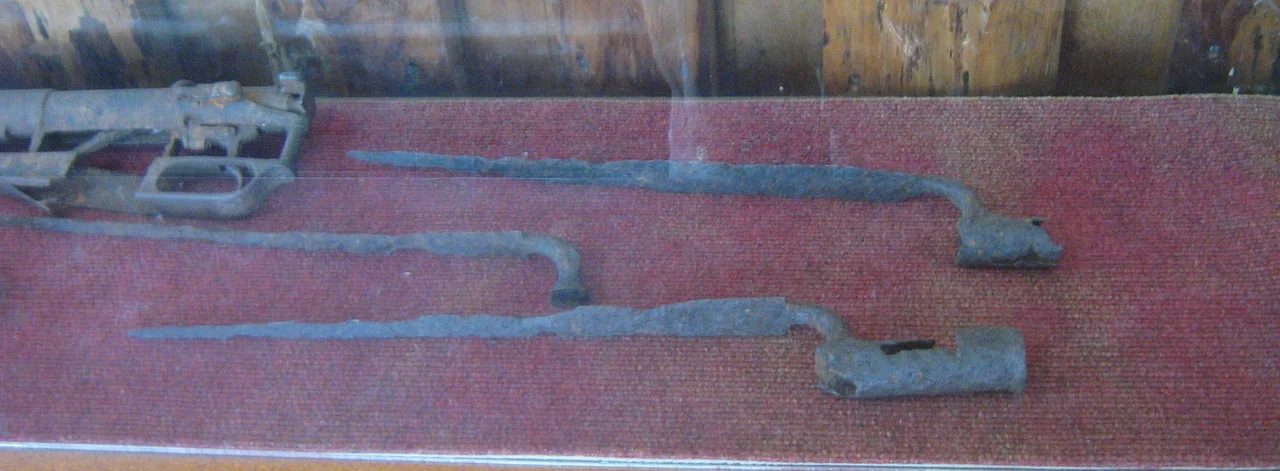

Battle of Mocopulli
By 1824 the Spanish flag had fallen almost everywhere in South America, but not here. While the new Chilean republic celebrated its independence, the rainy archipelago of Chiloé remained stubbornly, genuinely loyal to the crown, the last royalist holdout in the country. On April 1 that loyalty was tested in the marshes of Mocopulli, near Dalcahue, where a republican army that had landed on the island walked into a waiting ambush. The fighting in the boggy clearing was the bloodiest of the whole campaign, and when it was over the patriots were sailing back to the mainland. Chiloé would stay Spanish for two more years.
The Island That Would Not Join
Chiloé's loyalty was not imposed from Madrid; it was real. Throughout the long Chilean War of Independence the archipelago had backed the royalist cause, and the crown enjoyed broad support among the islanders themselves. This made Chiloé a thorn for the young republic, a Spanish stronghold on its own southern flank, and it had already cost the patriots dearly. In 1820 the daring Lord Cochrane, fresh from capturing the great fortress complex at Valdivia with a few hundred men, landed William Miller and a small force on the island, hoping to repeat the miracle. Instead Miller's sixty men were mauled at the Battle of Agüi and forced back to their ships. Chiloé had drawn first blood, and it would not be the last time.
Freire's Invasion
When Ramón Freire became supreme director of Chile in 1823, one of his first acts was to plan the conquest of the island that still defied the republic. In March 1824 his army crossed the Chacao Channel, the narrow, treacherous strait that separates Chiloé from the mainland. They took the village of Chacao without a fight, pushed south, and landed troops at the town of Dalcahue. The plan was a pincer: one column would strike north from Dalcahue toward the royalist capital at San Carlos de Chiloé, today's Ancud, while a second force landed in the north of the island. The republicans were confident. They had a sizable army and the momentum of a continent that had already thrown off Spain.
The Trap in the Marsh
The royalist commander on Chiloé, the formidable Antonio de Quintanilla, did not wait to be surrounded. His men chose the ground at Mocopulli, a marshy glade along the patriot line of march, and lay in ambush. When the republican column came on, led in the field by Colonel Jorge Beauchef against royalists under Colonel José Rodríguez Ballesteros, the islanders sprang the trap. The fight that followed was long and savage, the worst bloodletting of the entire invasion. Beauchef, refusing to break, rallied his troops and even managed to dislodge the royalists from some of their positions before the day ended. But it was not enough.
The Cost of the Clearing
The price was paid in young men on both sides. Of roughly six hundred patriots who entered the fight, somewhere between two hundred fifty and three hundred fell killed or wounded, nearly half the force, an appalling rate for a single afternoon. The royalists, fielding perhaps a thousand men, lost between one hundred twenty and two hundred. These were not abstractions but soldiers and conscripts, many of them islanders fighting fellow Chileans within sight of their own villages, a civil war in miniature fought in a swamp. The wounded were too numerous to carry forward. Whatever ground Beauchef had taken, his shattered column could not hold it.
Two More Years for the Crown
Strategically, Mocopulli was a royalist victory. The patriots retreated to Dalcahue, re-embarked, and sailed back to Chile, the invasion abandoned. The defeat handed the islanders a powerful symbol of resistance and delayed Chiloé's absorption into Chile until 1826, when Freire returned with a stronger expedition. Only then did Quintanilla finally surrender, and the last Spanish garrison in the country lowered its flag at Ancud. South America's independence wars effectively ended on this archipelago, two years after Mocopulli, where a marsh near Dalcahue had bought the crown its final reprieve. Today a roadside monument marks the clearing, and the battle is commemorated each April on the ground where so many fell.
From the Air
The Battle of Mocopulli was fought near Dalcahue in the central-eastern Chiloé Archipelago, at approximately 42.33°S, 73.71°W, in low marshy ground a short distance inland from the sheltered eastern coast. The site sits beside the modern road between Castro and Dalcahue. Mocopulli Airport (ICAO SCPQ), Chiloé's principal commercial airfield, lies essentially at the battle site, taking its name from the same locality; Puerto Montt's El Tepual (SCTE) on the mainland is the regional gateway. The terrain is gentle and green, often under low cloud and rain typical of Chiloé's oceanic climate; clear views favor the austral summer.
Nearby Stories
- Ancud 22 km away
- Chiloe Island 31 km away
- Chaitén Volcano 51 km away
- Puerto Montt 62 km away
- Pumalín Douglas Tompkins National Park 62 km away
- Parque Tantauco 75 km away
- 1687 Peru Earthquake 2984 km away
- The Nazca Lines: Art Made for the Sky 3064 km away