
RAF Cosford
Amy Johnson, the most famous female aviator of pre-war Britain, used to land at Cosford. She was flying for the Air Transport Auxiliary, the civilian ferry pool that delivered new aircraft from factories to squadrons during the Second World War. Cosford was the place she brought Spitfires from, in twos and threes, and the place she brought damaged bombers back to for repair. The grass strip was a mudbath in winter and an obstacle course of taxiing trainers in summer. She did this run more than once before her own ferry flight ended in 1941 in the Thames Estuary in circumstances that have never been fully explained. Cosford has been a working RAF station ever since: nearly nine decades, no fighter squadrons, just a quiet steady factory of trained airmen.
Built in a Hurry, 1938
Cosford opened in 1938 as an aircraft maintenance, storage and technical training station, part of the rapid expansion of the RAF as Hitler's intentions became impossible to ignore. The site was in Donington parish, but to avoid confusion with a nearby army depot the new station was named after Cosford Grange House on the south-west edge of the airfield. The Fulton Block, built between 1938 and 1939 in the Moderne style by the Air Ministry architect J H Binge, was the largest single barrack block in the United Kingdom, designed to house 1,000 personnel. It was named after Captain Fulton, an early Air Force pioneer, and paid for by his widow Lady Fulton. The block is Grade II listed and is still in use, now for technical training. No 2 School of Technical Training opened the same year and went on to train 70,000 airmen during the Second World War in engine, airframe and armament trades.
The Ferry Pool and the Hospital
No 9 Maintenance Unit arrived in March 1939 and within months was preparing Spitfires for the squadrons. No 12 Ferry Pool ATA was formed at Cosford, and its pilots, many of them women, flew brand-new fighters out to operational airfields and brought damaged or obsolete aircraft back to be cannibalised. After the Fall of France in 1940 a depot for Free Czechoslovak personnel joining the RAF Volunteer Reserve was set up here. The same year saw the opening of RAF Hospital Cosford, the most westerly RAF hospital in Britain, a sprawl of wooden spurred huts staffed by Princess Mary's RAF Nursing Service. It would become the main centre for repatriated prisoners of war. By 1948 more than 13,000 returning POWs had passed through its wards. Men from the Japanese camps in the Far East needed long-term care that often lasted years. The hospital was open to civilians as well as servicemen until it closed at the end of 1977; it was demolished in 1980.
The Indoor Track and the U-Turn
Generations of RAF Boy Entrants, teenage technical apprentices, were trained at Cosford in the 1950s and 1960s. The station's enormous indoor sports complex, built around a banked indoor running track, became famous nationally through televised athletics championships in the 1960s and 1970s. In 2001 the Defence Training Review proposed handing technical training to a private consortium and moving everything to a new mega-campus at RAF St Athan in Wales. The plan dragged on for over a decade. Then in December 2012 it changed: training would move to Lyneham in Wiltshire instead. Then in September 2015, in what local papers called a U-turn, Defence Secretary Michael Fallon announced that Cosford would not be closing after all and would in fact be expanding, with a fourth training school moving in from St Athan. Cosford remains today the home of the Defence School of Aeronautical Engineering, No 1 School of Technical Training, the Defence School of Photography, No 1 Radio School and the RAF School of Physical Training.
Walking the Museum
Cosford is also home to a major branch of the Royal Air Force Museum. The collection here is the strongest in the country for research and development aircraft, including one of two surviving prototypes of the BAC TSR-2, the multi-role combat aircraft that Harold Wilson's government scrapped in 1965 and which RAF veterans still talk about with sustained regret. The Cold War Exhibition opened on 7 February 2007 and contains the only collection of all three V-bombers, the Valiant, the Victor, and the Avro Vulcan, on display in one place anywhere in the world. Walking around the Vulcan, looking up at the great delta wing tucked under the hangar lights, you can begin to imagine what it was like to fly one of these toward the Soviet Union in the years when nuclear deterrence was the daily routine of the RAF. The conservation hangar and the test flight collection round out a museum that is among the best aviation collections in Europe, and admission is free.
The Airshow
Following the closure of RAF Leuchars and the runway resurfacing at RAF Waddington, Cosford now hosts the only Royal Air Force airshow officially supported by the RAF in Britain. The first show was proposed in 1978 and the event has run annually ever since, with one exception: 2003, when the Iraq War left no operational aircraft available to fly displays. The Cosford runway is only 1,200 yards long, which is too short for most modern military jets, so visiting aircraft fly displays direct from their home bases or stage overnight at the nearby RAF Shawbury, whose runway is 300 yards longer. The airshow raises substantial sums for RAF charities: 115,000 pounds in 2016, and a centenary show in 2018 marked 100 years of the Royal Air Force. The station badge incorporates an oak tree, a reference to the Royal Oak at Boscobel a few miles away, where Charles II hid after the Battle of Worcester in 1651: from acorns, the badge suggests, great oaks grow.
From the Air
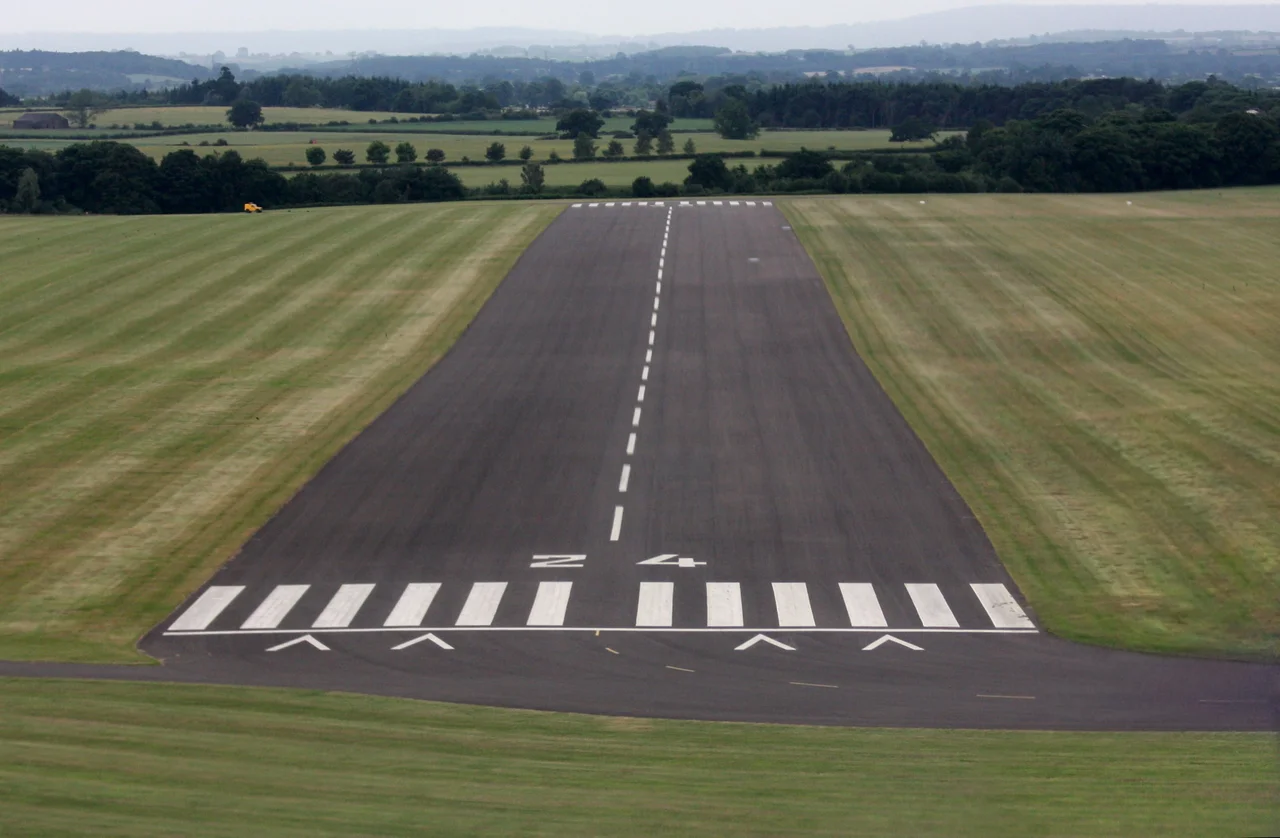
Located at 52.64 N, 2.31 W in south-east Shropshire, just north-west of Wolverhampton. Cosford (EGWC) has a 1,200 yard paved runway oriented roughly 06/24. From 2,500 to 4,000 feet, the airfield sits between Albrighton (south) and the M54 (north), with RAF Shawbury (EGOS) 14 nm north and Wolverhampton Halfpenny Green (EGBO) 5 nm south-east. Active military station: check local NOTAMs and ATC frequencies before transit.
Nearby Stories
- Welshampton Rail Crash 1.4 km away
- Knowle and Dorridge Rail Crash 1.4 km away
- Bewdley 2.3 km away
- Tamworth Castle 4.4 km away
- Battle of Mortimer's Cross 8.1 km away
- Wedgwood 8.8 km away
- Derby Museum and Art Gallery 19 km away
- Powis Castle 24 km away