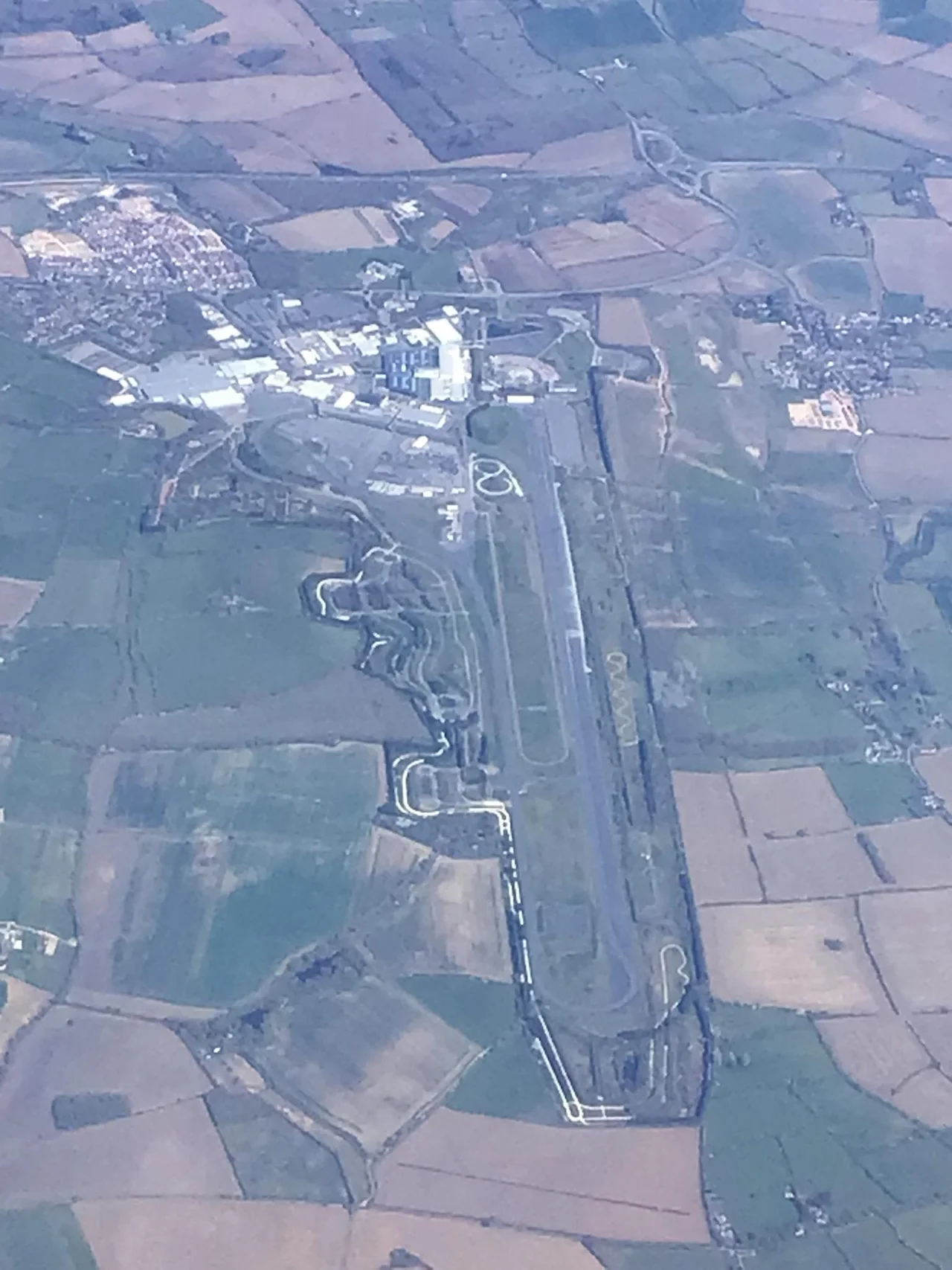

RAF Gaydon
On 1 March 1954 the Royal Air Force re-opened a wartime training airfield in south Warwickshire to a much larger purpose. The Cold War was ten years old; the British government had decided it needed an independent nuclear deterrent; and the new four-engine jet bombers that would carry that deterrent - the Valiant, the Victor, the Vulcan - needed runways longer and stronger than anything wartime Britain had built. RAF Gaydon's new main runway was laid that year, with Operational Readiness Platforms and a Gaydon-type hangar tall enough and wide enough to swallow a V-bomber whole. On 1 January 1955, No. 138 Squadron RAF reformed at Gaydon as the first operational unit of the V-force, equipped with the nuclear-capable Vickers Valiant B.1. The British nuclear deterrent had a postcode.
Wartime Beginnings
Gaydon opened in July 1942 as a satellite to RAF Chipping Warden, immediately occupied by No. 12 Operational Training Unit flying Vickers Wellingtons and Avro Ansons. The pupils were a mixed group of Allied aircrews - mainly Canadians, Czechs and New Zealanders - and the training was hard and dangerous. The Wellingtons were tired; the weather over the Warwickshire farmland could turn quickly; the crews were inexperienced by definition. From July 1943 the airfield was also used by No. 22 OTU as a satellite of RAF Wellesbourne Mountford, and the OTU pupils there flew genuine operational sorties as part of their training, including bombing missions and air-sea rescue patrols. A small specialised unit, No. 312 Ferry Training Unit, trained pilots in the particular skills needed to ferry military aircraft across oceans to where the war wanted them. The airfield's original control tower, a standard wartime bomber-type, was demolished sometime before 1955 when the V-force buildings replaced it.
138 Squadron and the Valiant
The Vickers Valiant was the first of the three V-bombers to enter service - less famous than the delta-winged Vulcan that came after it, but the type that made the British strategic nuclear deterrent operational. The aircraft were painted gloss anti-flash white to reflect the heat of a nuclear detonation. 138 Squadron's Valiants did not stay long at Gaydon; the squadron moved to RAF Wittering on 18 November 1955, less than eleven months after standing up. Gaydon's role then shifted to training, becoming the operational conversion unit for new V-bomber crews coming through. Throughout the late 1950s and into the 1960s, the air around Gaydon was thick with the deep four-engine drone of Valiants, then Victors, working out their procedures on a runway built precisely for the purpose.
From Bombers to Navigators
When Flying Training Command took over the airfield, No. 2 Air Navigation School arrived flying the Vickers Varsity, a piston-engined twin used to train back-seat navigation crews. They flew Varsities at Gaydon for nearly five years before moving to RAF Finningley in May 1970, by which point the school had become part of No. 6 Flying Training School. After 1970, Gaydon held the Strike Command Special Avionics Servicing Unit for a year - quiet, technical work supporting the front-line force from the workshop benches - before that unit was disbanded on 1 December 1971. Control of the airfield then passed to No. 71 Maintenance Unit at RAF Bicester. The end was visibly approaching. The airfield closed to military operations on 31 October 1974. No. 637 Gliding School continued to operate at Gaydon until 1977, the last RAF presence on the field.
What Closed and What Continued
In 1974 the 43 Officers' Married Quarters were still in use, occupied by US Air Force personnel and their families serving at other British bases - a small American footprint inside a British airfield in the last weeks of its military life. The Airmen's Married Quarters were used by the local council. The OMQs were vacated in 1978 and demolished. The AMQs survived to become the core of the village of Lighthorne Heath - civilian housing inside the perimeter of what had been an RAF station, an unusually direct conversion of military property into civilian community. Many of the original wartime and early-1950s buildings were demolished. The airfield control tower and the two main Gaydon-type hangars were among the structures retained, although only one of the hangars now keeps its original outline. The buildings were not preserved for sentiment; they were kept because they were big and well-built and still useful.
The Runway Becomes a Test Track
In 1978 British Leyland bought the airfield. The transformation that followed was both unusual and somehow inevitable: a runway laid in the early 1950s to launch V-bombers became a test track for British motor cars. The main runway was widened and re-marked into a four-lane straight, capable of holding multiple vehicles at speed for instrumented runs. Cross-country tracks for off-road testing were laid across the rest of the airfield. The Gaydon-type hangars - built around the Valiant's wingspan - housed wind tunnels and styling studios. The two specific kinds of engineering ambition that had used this site - the strategic deterrent of the 1950s and the world-leading 4x4 manufacturers of the late 20th century - left two layers of intent on the same ground. From the air, the two are still mostly distinct. From the test-track itself, they are continuous.
From the Air
RAF Gaydon lies at 52.186 degrees N, 1.492 degrees W, about 1 mile north-west of Gaydon village. Best viewed from 3,000-3,500 feet. The wartime and early Cold War runway pattern is still clearly readable from the air: a substantial main runway aligned roughly east-west, two shorter cross runways, and the perimeter dispersal pans. The Jaguar Land Rover engineering centre, the Aston Martin facility, and the British Motor Museum now occupy the original RAF site. Coventry Airport (EGBE) is 13 nautical miles north-east; Birmingham Airport (EGBB) is 22 nautical miles north-west. The M40 motorway runs about 4 nautical miles to the east of the airfield.
Nearby Stories
- RAF Defford 3.6 km away
- Great Witcombe Roman Villa 4.1 km away
- Coventry War Memorial 4.5 km away
- Hagley Hall 4.6 km away
- Battle of Naseby 5.4 km away
- Silverstone Circuit 5.9 km away
- Waddesdon Manor 8.8 km away
- Woodstock Palace 15 km away