
The Railroad Fire
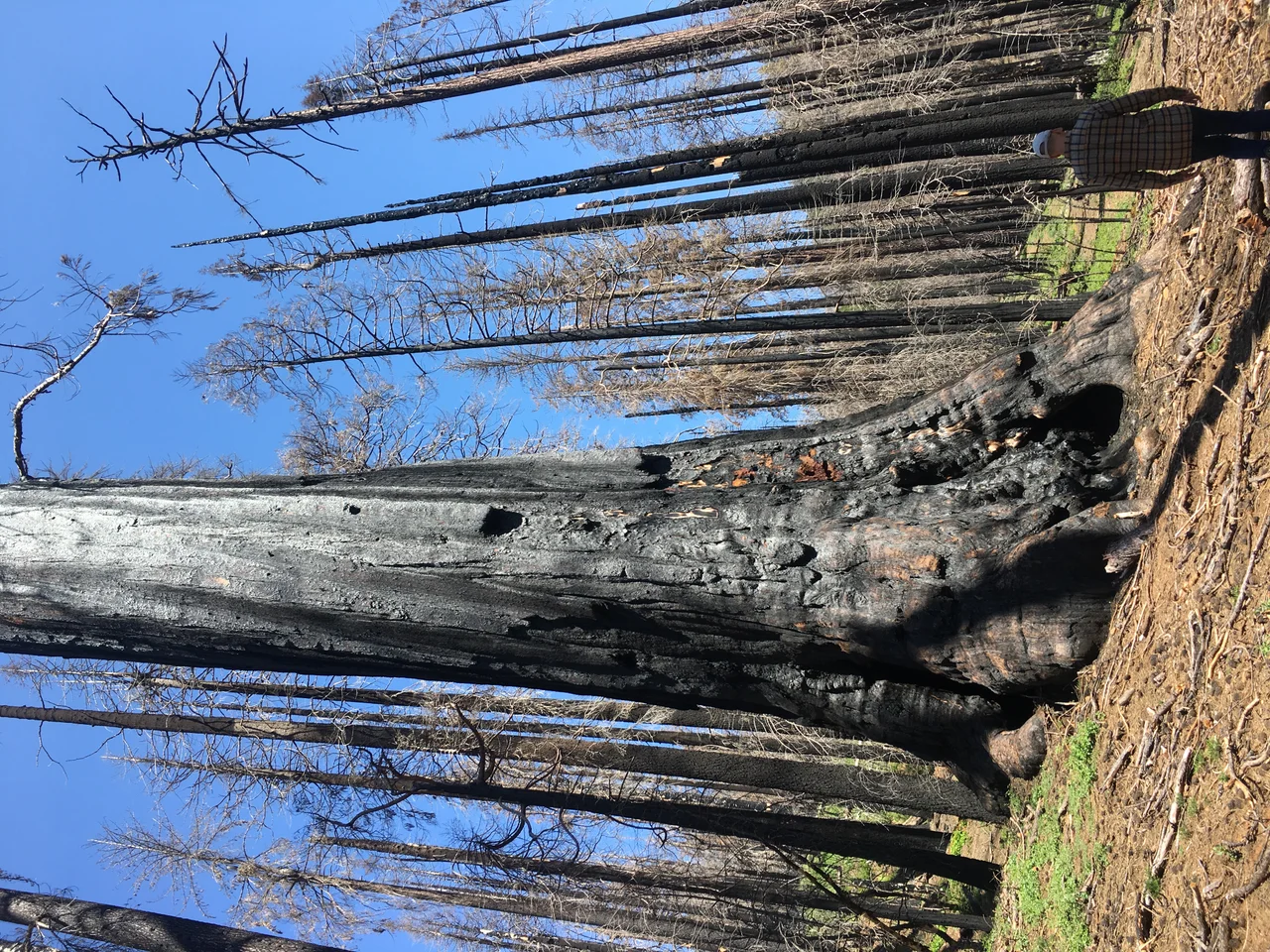
On Labor Day weekend 2017, firefighters in the Sierra National Forest wrapped nineteenth-century log cabins in aluminum foil. The image was surreal: historic structures in Nelder Grove swaddled in reflective sheeting like enormous baked potatoes, heat shimmering off the foil as flames advanced through the forest. The Railroad Fire, named for the nearby Yosemite Mountain Sugar Pine Railroad, had been burning since August 29. It would consume 12,407 acres before crews finally contained it on October 24. But the numbers that mattered most were smaller and harder to replace. Thirty-eight of Nelder Grove's ninety-two monarch sequoias died in the blaze, trees that had survived centuries of natural fire only to succumb to a conflagration intensified by drought and a century of misguided fire suppression.
Fuel for a Century
Giant sequoias are fire-adapted. Their bark, which can grow two feet thick, insulates them against the low-intensity blazes that historically swept through Sierra Nevada forests every few decades. Fire opens their cones and clears competing vegetation, scattering tiny seeds onto nutrient-rich ash. But for most of the twentieth century, the Forest Service suppressed wildfire wherever it appeared. Decades of suppression allowed dense undergrowth and deadfall to accumulate on the forest floor, creating fuel loads that natural fire cycles would never have permitted. When the Railroad Fire reached Nelder Grove, it did not behave like the gentle ground fires sequoias had evolved to withstand. It climbed into the canopy. The 2011-2017 California drought had stressed the trees further, weakening their defenses. The result was a fire hot enough to kill organisms that had been alive since before the fall of Rome.
Wrapping History in Foil
Nelder Grove's human history is tangled with its ecological one. The grove is named for John Nelder, a hermit who lived among the giant trees in the late 1800s and died when fire consumed his cabin in 1889. Before that, the Madera Flume and Trading Company felled 277 giant sequoias in the grove between 1880 and 1892, each more than four feet in diameter, leaving stumps so large that firefighters in 2017 posed standing atop them for photographs. The Shadow of the Giants National Recreation Trail, built in 1965, had become one of the region's most beloved hikes, threading visitors beneath the canopy of the surviving monarchs. When the Railroad Fire advanced, crews wrapped the grove's historic cabins in heat-resistant sheeting. The cabins survived. Many of the trees they were built to honor did not.
Smoke Over Yosemite
The fire's reach extended well beyond its burn perimeter. By September 6, smoke from the Railroad Fire and two other concurrent blazes had degraded air quality across the region. Yosemite National Park issued an unhealthy air quality advisory. In Wawona, just miles from the fire's edge, the U.S. Forest Service classified conditions as hazardous. Yosemite High School sent students home early. Tourism cratered during what should have been one of the park's busiest seasons. Highway 41, the main southern approach to Yosemite, ran directly through the fire zone, and closures forced travelers into long detours. A DC-10 Very Large Air Tanker fought the blaze from above, dropping retardant across the steep Sierra terrain while over a thousand personnel worked the fire lines on the ground.
What Fire Leaves Behind
The aftermath reshaped the grove. Where monarchs once shaded the forest floor, sunlight now pours through gaps in the canopy. Portions of Nelder Grove became what ecologists call a snag forest, a landscape of standing dead trees that, despite its bleak appearance, provides critical habitat for woodpeckers, insects, and fungi. The Shadow of the Giants trail was permanently closed in 2018, its route too dangerous beneath unstable snags. But fire is not only destructive for sequoias. In the burned areas, researchers found something unexpected: seedlings. Giant sequoia cones release their seeds most effectively after fire, and the cleared, ash-enriched soil proved ideal for germination. The grove's future depends on whether these seedlings can grow fast enough to replace what was lost, a process measured not in years but in centuries.
From the Air
Located at 37.449°N, 119.650°W in the Sierra National Forest between the communities of Sugar Pine and Fish Camp, at approximately 5,000-6,000 feet elevation. The burn scar from the Railroad Fire is visible from altitude as a patchwork of dead gray snags and recovering green vegetation on the western slopes of the Sierra Nevada. Nelder Grove sits east of Highway 41, the main route from Fresno to Yosemite. Yosemite's South Entrance is roughly 10 miles north. Fresno Yosemite International (KFAT) is the nearest major airport, about 50 miles to the southwest. Mariposa-Yosemite (KMPI) is closer but smaller.
Nearby Stories
- Coarsegold, California 0.6 km away
- The Lodge That Outlasted the Gold 3.1 km away
- The Curve Over the Canyon 14 km away
- Camp Mather 17 km away
- Mono Lake: Where Salt Towers Rise From Dying Water 28 km away
- California Central Valley Grasslands 30 km away
- Mono Lake 56 km away
- Sequoia: Standing Among the Largest Living Things on Earth 102 km away