.jpg)
Ramal Talca-Constitución
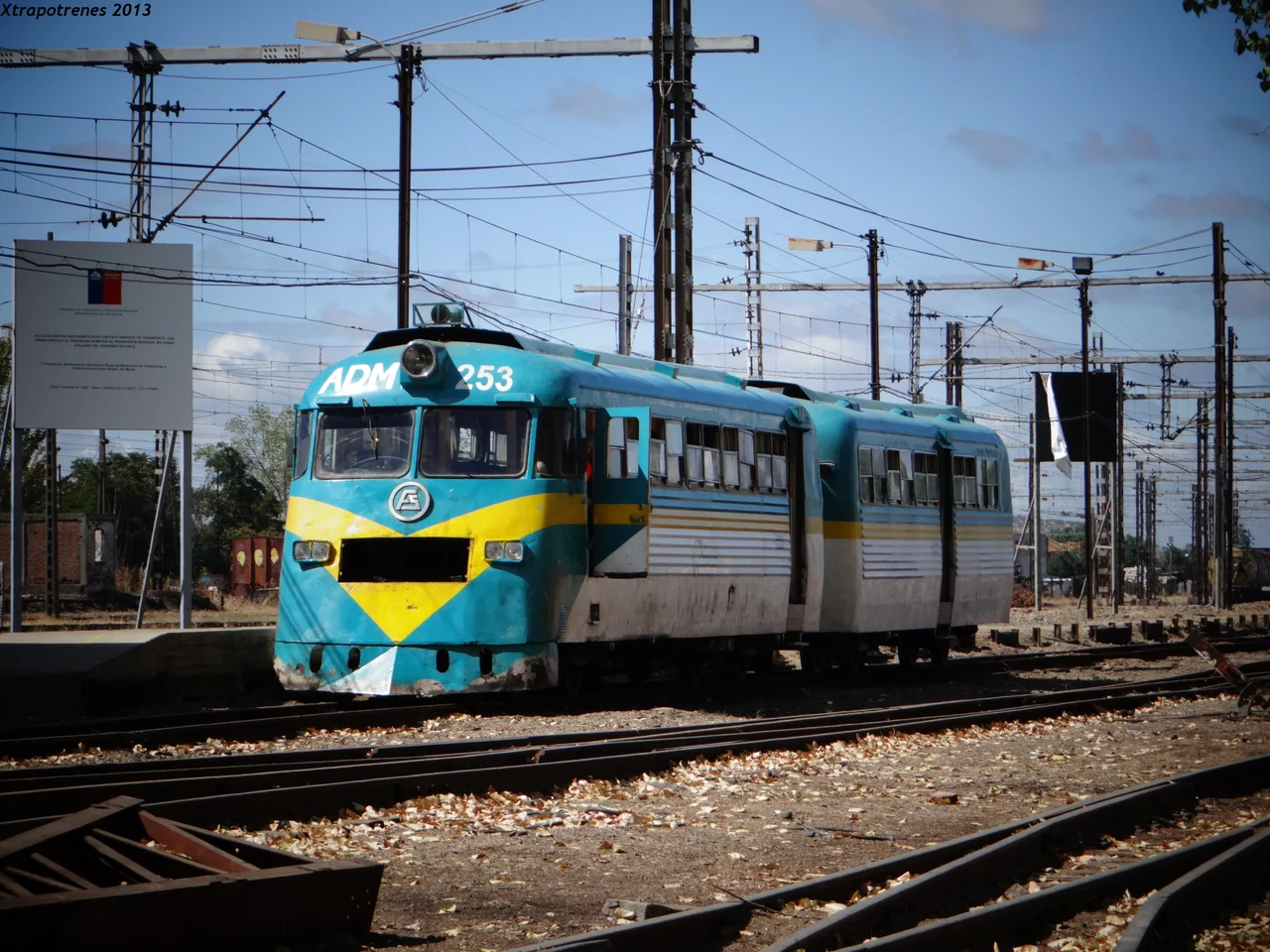
There is one passenger train left in Chile that runs on tracks barely a meter wide, and you board it in Talca. The buscarril, half bus and half railcar, pulls out and follows the north bank of the Maule River for about three hours, swaying past vineyards and willow thickets until the Pacific finally opens ahead at Constitución. For most of the villages strung along its 88 kilometers, this is not a tourist novelty. It is the only way out.
The Last of Its Kind
Once, narrow-gauge branch lines threaded all through Chile, feeding the main north-south trunk. One by one they closed, until only the Ramal Talca-Constitución survived. It is the country's last metre-gauge passenger railway, declared a national monument on May 25, 2007, an asset the law says cannot be destroyed. In 2018 the World Monuments Fund placed it on its watch list of endangered places after forest fires scorched the valley. The line earns its protection not for spectacle but for stubbornness: it still does the job it was built to do, more than a century on.
Twenty-Five Years of Track
Building the ramal was a marathon. The North and South American Company broke ground in 1889, and the first steam train ran from Talca to Curtiduría on August 13, 1892. Construction then crawled westward for almost twenty-five years, spanning seven Chilean presidencies before the present Constitución station finally opened in December 1915. The great obstacle was the wide Maule itself. The Banco de Arena bridge that carries the line across the river was built between 1908 and 1915 by the French firm Schneider et Cie and is widely attributed to the workshop of Gustave Eiffel. Until it stood, the original Constitución station perched on a sandbank, reachable only by crossing the water.
Estación Poeta and the Bread of the Embers
Halfway down the line, at the 44-kilometer mark, sits González Bastías. Because a single track serves the whole route, trains traveling in opposite directions must meet and pass here, so every run pauses. During the stop, passengers buy rescoldo, a hearty country bread baked in hot embers and often eaten with pork sausage and hard-boiled egg. The town was renamed for a local poet, and its station carries a second name: Estación Poeta. In a normal year about 90,000 people ride the ramal for work, errands, and visits. When the 2010 earthquake and the tsunami that wrecked Constitución station halted service, the press reported villages turning into ghost towns until the trains came back.
New Cars on Old Rails
The line nearly died of neglect as cars and buses lured passengers away, but in 2025 something unexpected happened. Three new Brazilian-built two-car railcars arrived, the first fresh equipment ordered in more than half a century, with stations slated for renovation and talk of double-tracking. The plan is to add capacity without losing the line's soul, preserving the legendary 1970s German railbuses that have become heritage of the Maule Region. The state operator keeps a regular service running, and locals along the route still have priority over tourists. On the Ramal Talca-Constitución, the people who need the train most still come first.
From the Air
The Ramal Talca-Constitución runs east to west across Chile's Maule Region, from Talca near 35.43°S, 71.65°W down to the Pacific coast at Constitución near 35.33°S, 72.41°W. From the air the route reads as a thread following the north bank of the Maule River through a corridor of farmland and forest with no major parallel road, threading between the Andean foothills inland and the Coastal Range. Panguilemo Airport (ICAO SCTL, IATA TLX) lies just northeast of Talca at the eastern end; Carriel Sur International (ICAO SCIE) at Concepción serves the wider region to the south. Trace the line at 3,000 to 5,000 feet AGL to follow the river's bends; the Banco de Arena bridge is the standout landmark where the rails leap the broad Maule. Best flown in clear, dry summer conditions, as winter fog often fills the river valley.
Nearby Stories
- Yerbas Buenas 8.2 km away
- Battle of Mataquito 13 km away
- Santa Olga 19 km away
- Altos de Lircay National Reserve 20 km away
- Chanco, Chile 42 km away
- Uruguayan Air Force Flight 571 79 km away
- Witches' Cave 109 km away
- 1687 Peru Earthquake 2250 km away