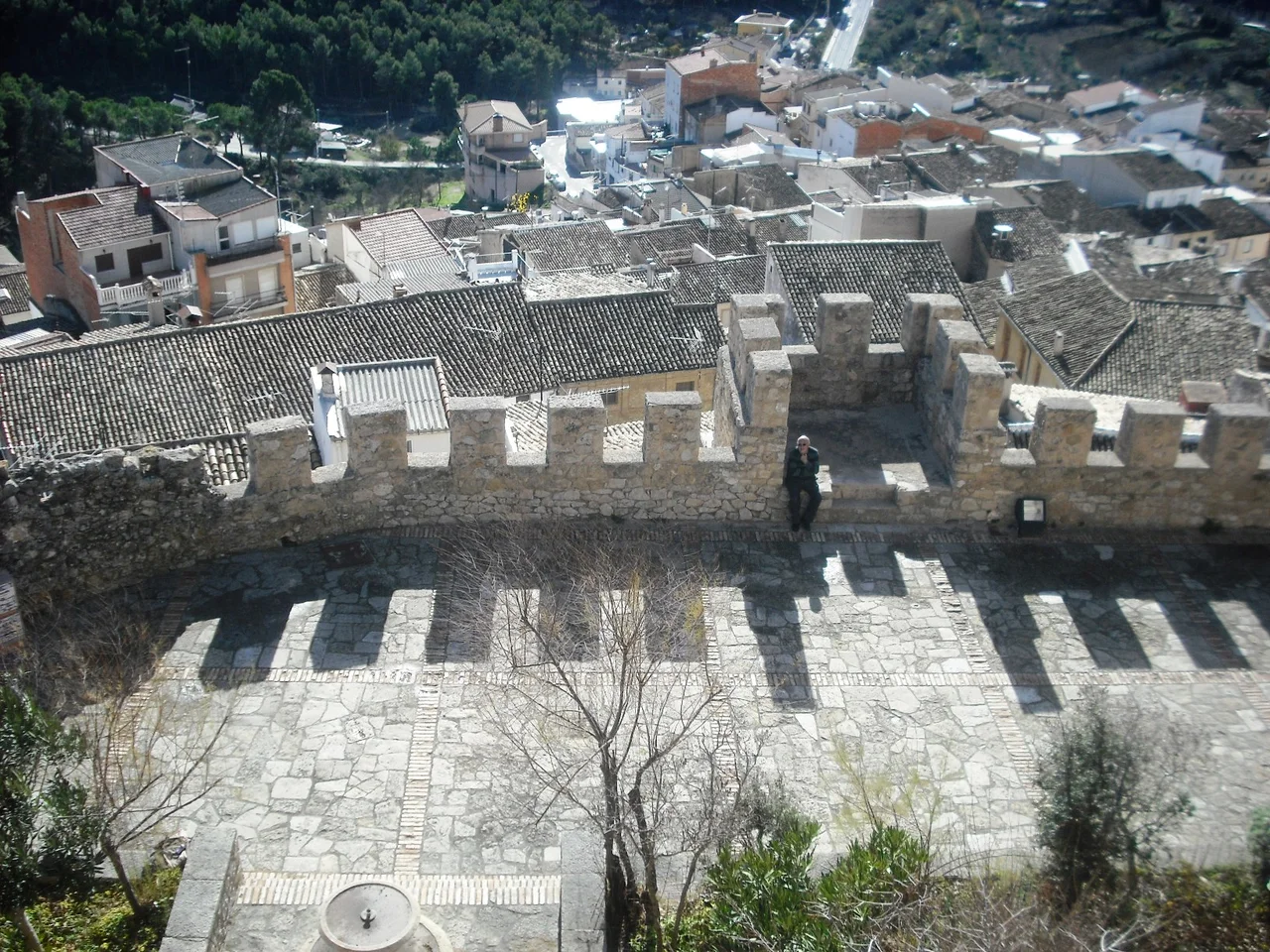

Route of the Castles of Vinalopó
Travel the seventy-five kilometers of the Vinalopo valley in the interior of Alicante province and you are rarely out of sight of a castle. Fortress after fortress crowns the hilltops, one of the densest concentrations of medieval defenses in all of Spain, strung together today as the Route of the Castles of Vinalopo. There is a hard reason for such abundance: this narrow valley was a border, not once but twice over, and for centuries almost every commanding rock along it was worth building a stronghold on. To follow the route is to read a frontier written across the land in stone.
A Valley That Had to Be Defended
The Vinalopo has always been a corridor, a natural route between the coast and the inland plateau, and corridors get contested. The castles here rose first as the military and architectural heritage of Al-Andalus, the era of Muslim rule, when they guarded the valley's towns and controlled its passes. Then the frontier shifted. After the Christian conquests of the 13th century, this same ground became the borderland between two Christian powers, the Kingdom of Valencia and the Kingdom of Castile, and the fortresses were rebuilt, reinforced, and fought over all over again. A place that sits on a border for that long accumulates walls, and the Vinalopo accumulated more than almost anywhere else.
Nine Towns, One Thread
The route runs about seventy-five kilometers and threads through nine municipalities, gathering their castles into a single itinerary. It begins at the mighty Atalaya Castle in Villena, its rammed-earth keep roofed by an Almohad ceiling, and continues to the Castle of Banyeres in Banyeres de Mariola, then to the Castle of Biar, whose keep holds one of the oldest Almohad ribbed vaults in Spain. From there it passes the Castle of la Mola in Novelda and the Castle of Elda, reaches the Altamira Palace in the city of Elche, and climbs to the castles of Castalla, Sax, and Petrer. The variety is part of the appeal: hulking Almohad watchtowers and refined palaces, some perched on bare rock, others woven into the towns that grew up beneath them.
The Oldest Stones in the Chain
Not all of these fortresses are equal, and a few are genuinely extraordinary. The keeps at Villena and Biar, standing only a short distance apart, preserve some of the earliest Almohad vaulting to survive anywhere in Spain, the kind of sophisticated ribbed stonework normally reserved for mosques and palaces rather than fighting towers. That such architecture ended up in military buildings on a remote frontier says something about how seriously this valley was taken. The people who raised these walls were not building crude outposts; they brought the finest craft of their age to the business of holding a contested piece of ground, and their work has outlasted the wars it was meant to win.
Reading the Frontier Today
What was once a line of division has become a line to follow for pleasure. The Route of the Castles of Vinalopo now belongs to a family of cultural itineraries across the Valencian Community, a heritage trail rather than a war zone, and traveling it end to end offers something a single castle cannot: the shape of a whole frontier revealed hilltop by hilltop. Each fortress makes more sense in the company of the others, each guarding its stretch of the same valley, each a link in a chain that two civilizations and two kingdoms spent centuries forging. Stand on any one of these keeps and look down the valley, and you can very nearly see the next.
From the Air
The Route of the Castles of Vinalopo runs roughly northwest to southeast along the Vinalopo valley in interior Alicante province, centered near 38.61 degrees N, 0.71 degrees W and stretching some 75 km from Villena in the north down toward Elche near the coast. From the air the defining pattern is a chain of hilltop castles, Villena, Sax, Biar, Elda, Petrer, Novelda and more, spaced along the valley corridor between the coastal plain and the inland sierras. A viewing altitude of 3,000 to 6,000 feet lets several fortresses and the river valley that links them come into a single frame. The nearest major airport is Alicante-Elche (LEAL), close to the southern end of the route; Valencia (LEVC) lies to the north. The dry inland climate keeps skies clear and visibility long through most of the year, ideal for spotting the fortresses in sequence.
Nearby Stories
- Aitana (mountain) 11 km away
- Monastery of Sant Jeroni de Cotalba 14 km away
- Palmeral of Elche 17 km away
- Castle of Almansa 19 km away
- 2011 Lorca Earthquake 71 km away
- Castle of Alarcon 97 km away
- Castle of Lorca 104 km away
- German submarine U-602 168 km away