.jpg)
Royal Mint
On 17 December 1968 the Queen pressed a button and the first coin struck at the new Royal Mint in Llantrisant - a ten-pence piece, decimal currency three years before Britain switched - dropped into a tray. The Welsh nationalists who had been expected to protest the visit because of the upcoming Investiture of Prince Charles did not appear. The Mint had spent eight hundred and eighty-two years inside the Tower of London or beside it; it would never go back. The reason for the move was prosaic: Britain was about to decimalise its currency, every coin in the country had to be replaced within a few years, and the cramped site on Tower Hill could not produce enough new coinage fast enough. The reason it ended up in Llantrisant - a small market town in Glamorgan, ten miles northwest of Cardiff - was that the government wanted the work in Wales.
Twelve Hundred Years of Coining
The Mint dates itself from 886, the year Alfred the Great struck pennies bearing his title Rex Anglorum - king of the English. There had been earlier coinages in Britain - Celtic imitations of Greek originals in the second century BC, Roman mints active in London and Camulodunum until the empire withdrew - but the institutional descent of the modern Royal Mint runs from the Anglo-Saxon coinage forward. In 1279 Edward I unified the country's many local mints under a single system based at the Tower of London, where the Mint would remain for almost six hundred years. Mint Street still runs along the line of the old Mint walls inside the Tower. Isaac Newton became Warden of the Mint in 1696 - a post intended as a sinecure for an aging genius - and turned it into an active campaign against counterfeiters, prosecuting them with the same patience he had brought to optics. Forgeries at the time accounted for roughly ten percent of the country's coins.
Tower Hill and the Great Recoinage
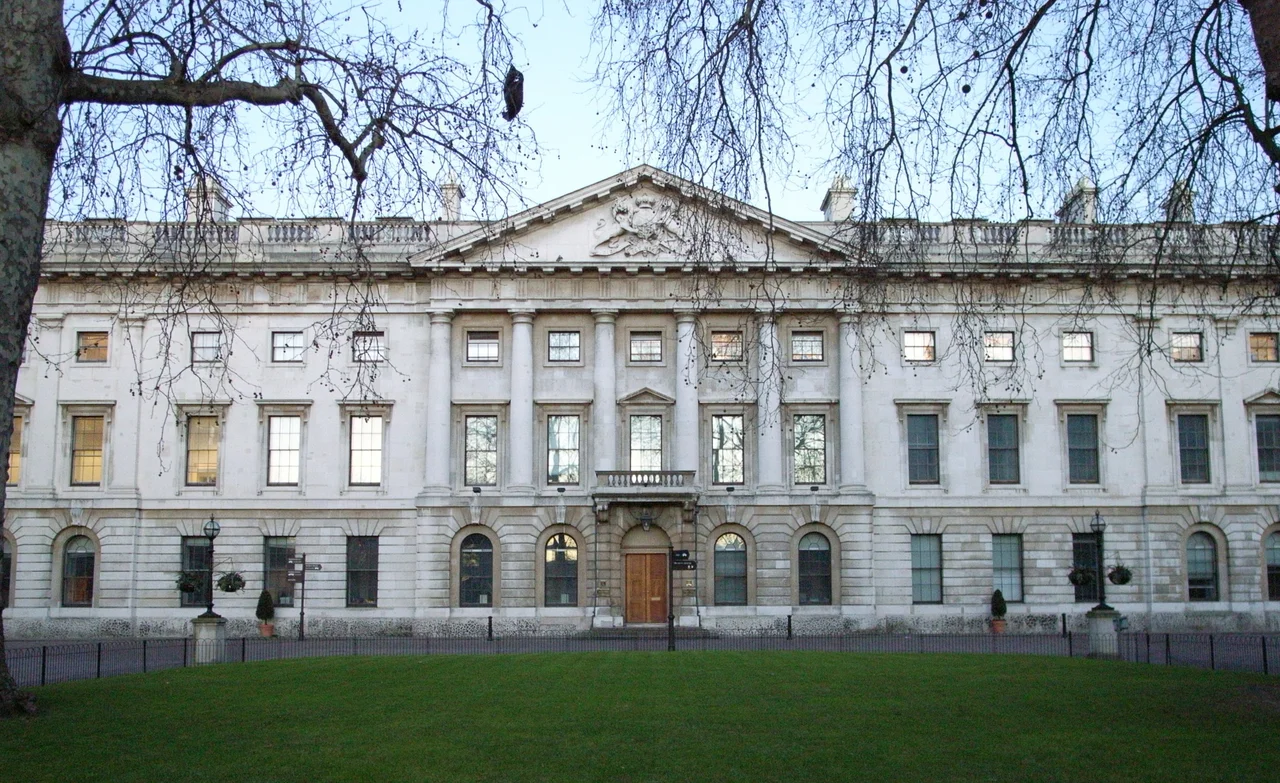
By the early nineteenth century the Mint had outgrown its medieval quarters. Construction began in 1805 on a purpose-built site at Tower Hill, just outside the Tower's western walls, designed by James Johnson and built by Robert Smirke. The keys of the old mint were ceremoniously handed to the Constable of the Tower in 1812. The Tower Hill mint coined for the British Empire at its greatest extent. Satellite mints opened in Sydney in 1855, Melbourne in 1872, Ottawa in 1908, Bombay briefly during the First World War, and Pretoria in 1923 - each producing local coinage to the same standards under licence from London. The Tower Hill site survived the Blitz, though three staff were killed in an air raid in December 1940. An auxiliary mint was set up at Pinewood Studios in Buckinghamshire, requisitioned from the film industry, which struck coins from 1941 until the war's end. The Mint at this period was producing roughly 700 million coins a year despite the bombs.
Why Wales
Decimal Day was set for 15 February 1971. The country needed billions of new coins to replace the pre-decimal coinage - shillings, sixpences, half-crowns - that had been struck for centuries. The cramped Tower Hill site could not do it. Over twenty alternative locations were considered, including sites in Scotland and Northern Ireland. The successful bid came from Llantrisant in Glamorgan, a small Welsh town on the road from Cardiff toward the western valleys. The reasons were partly political - the Welsh Office wanted heavy government investment in Wales to offset the decline of coal - and partly practical: the site was flat, well-served by road, close to the M4, and large enough to expand. Construction began in August 1967. The first phase, the blank treatment plant and striking floor, opened in December 1968 with Queen Elizabeth II and Prince Charles in attendance. Phase two, completed in 1973, added the melting and rolling facilities so the Mint could produce coins from raw metal. The final cost was eight million pounds. The last coin struck at Tower Hill, a gold sovereign, came off the press in November 1975. The Tower Hill buildings survive as office space; the Mint itself moved entirely to Wales.
Llantrisant Today
The new Mint sits on a 38-acre site about ten miles northwest of Cardiff, accessible from junction 34 of the M4. From the road it looks much like any industrial estate - low brick buildings, security fences, lorries coming and going. Inside, the work is unlike any other in Britain. The Mint strikes coins for the United Kingdom and for sixty-odd overseas customers. It produces precious metal investment bars, commemorative coins, military medals, and the dies for British passport stamps. Each year it produces hundreds of millions of pieces of legal tender. Since 2018, with the cash economy in steady decline, the Mint has reinvented its business. A jewellery line called 886 - named for Alfred's date - launched in 2022 using gold reclaimed from electronic waste at a new processing plant in South Wales. The Mint's 2020-21 operating profit was 12.7 million pounds. Most of that came not from making circulating coins, but from selling precious-metal products to collectors and investors.
The Coin in Your Pocket
Every coin in the United Kingdom - every penny, every fifty-pence piece, every pound - was struck in Llantrisant. The country's small change is made on the western edge of the South Wales coalfield, on a site that thirty years before the Mint arrived was farmland. The new Mint has a visitor centre. Tourists can watch a coin being struck and take it home. The Welsh language appears on signage alongside English. Llantrisant itself, the town that gave its name to the operation, is a small place with a Norman castle ruin on a hillside and a market square that the new Mint did not change. Decimalisation, when it finally came in 1971, swept away the old pounds, shillings and pence on which generations of Britons had done sums in their heads. The coins that replaced them came from Llantrisant. They still do.
From the Air
The Royal Mint sits at 51.555 degrees north, 3.387 degrees west, on a 38-acre site at Pontyclun in Rhondda Cynon Taf, immediately south of Llantrisant. From the air the complex appears as a cluster of large industrial buildings just north of the M4 motorway, easily visible between Cardiff and Bridgend. Cardiff Airport (EGFF) is about 5 nautical miles south-southeast; Bristol (EGGD) is about 35 nautical miles east. The Mint has a visitor centre open to the public, but the production areas remain closed and the site is secured. Pilots passing overhead in clear weather can pick out the green roofs of the main production halls from cruising altitude.
Nearby Stories
- Tidal Lagoon Swansea Bay 2.6 km away
- Skenfrith Castle 3 km away
- Caerwent 3.7 km away
- Brecon Beacons National Park 5.2 km away
- Cheddar Gorge 6 km away
- Battle of Cadfan 9.3 km away
- Minehead Lifeboat Station 16 km away
- Ilfracombe Lifeboat Station 22 km away