
Royal Tomb of Akhenaten
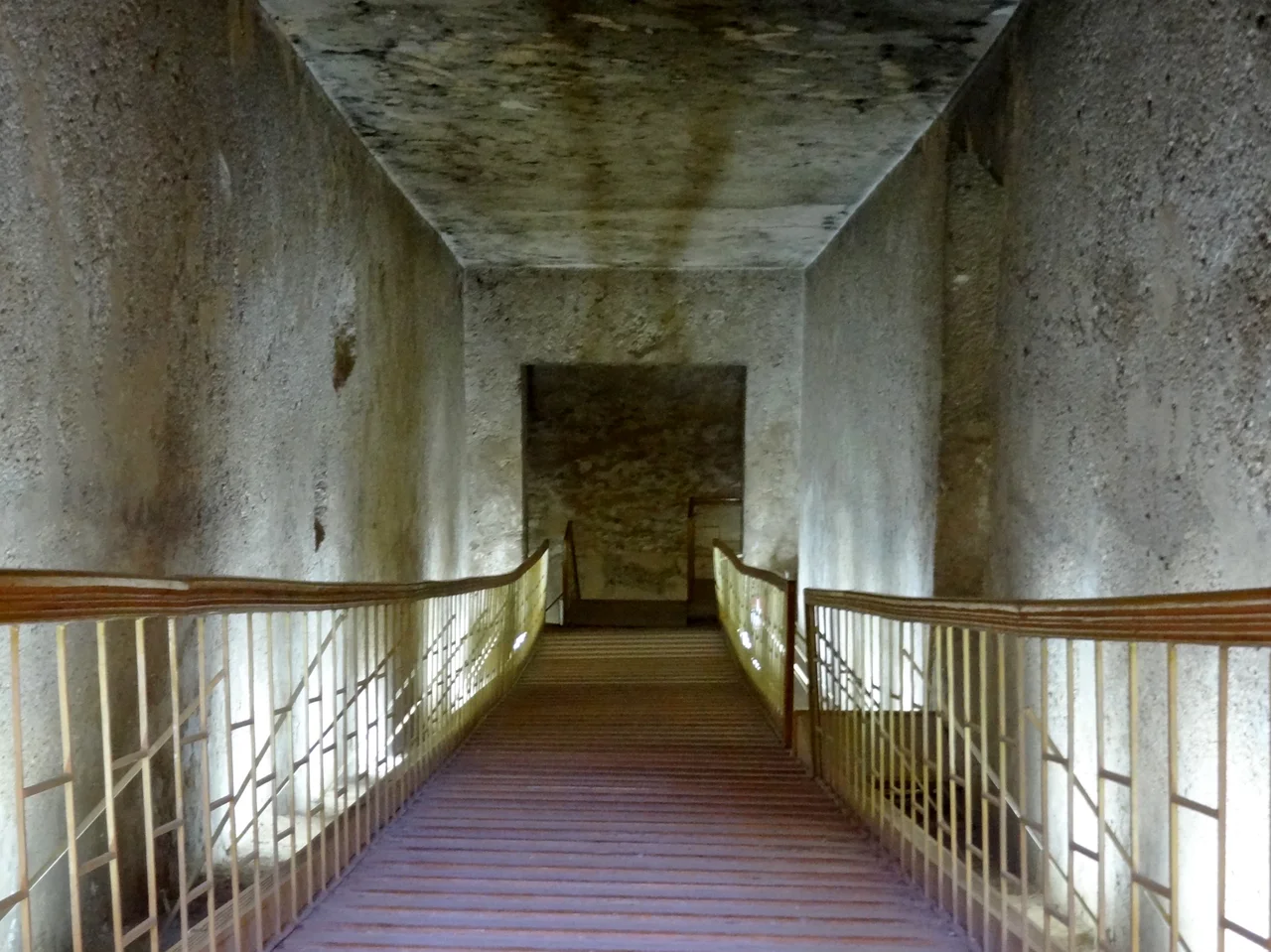
Most ancient Egyptian tombs were chosen for their reach toward eternity. Akhenaten chose this one to face the sun. He cut his royal tomb into a lonely side valley far up a desert wadi east of his new capital, on a line aimed at his god, hoping the dawn would shine straight down the corridor into his burial chamber. It never quite worked - the valley walls are too high - and almost nothing else about his grand design worked either. Within a generation his religion was abandoned, his name was chiseled off the monuments, his tomb was broken open and wrecked, and his body was gone. What survives in tomb TA26 is a ruin. But it is a ruin that preserves the most human moment in all of Egyptian royal art.
The Pharaoh Who Tried to Change Everything
Akhenaten came to the throne as Amenhotep IV, son of Amenhotep III, with Nefertiti as his great royal wife and a family of six daughters. Then he did something no Egyptian king had done. He swept away the crowded pantheon of traditional gods and declared a single divine power: the Aten, the visible disc of the sun, whose rays in the new art end in tiny human hands. He closed the old temples, attacked the name of the great god Amun, changed his own name to Akhenaten - "Beneficial for the Aten" - and in the fifth year of his reign founded a brand-new capital in empty desert. He called it Akhetaten, "the Horizon of the Sun's Disc." Today it is called Amarna. On the cliffs around the city he carved boundary proclamations, and in one he ordered a tomb made for himself in the eastern mountain, with chambers for Nefertiti and his eldest daughter beside him.
A Family's Grief, Carved in Stone
The tomb was never finished, and grief kept arriving before the masons could. Around year 14 of his reign, Akhenaten's second daughter, Meketaten - a girl thought to have been about ten - died. A side suite of rooms was hastily prepared to receive her. On the walls of her chamber, and on those of a neighboring room, are scenes unlike anything else from ancient Egypt. Inside a room, Akhenaten and Nefertiti bend over the body of a young woman laid on a bed, weeping, gripping each other's arms for support. Outside, a nurse carries an infant away beneath a fan that marks the child as royal. Egyptian art almost never showed the cause of death or raw emotion; here a king and queen are simply shattered parents. Scholars still debate exactly who died and whether the baby means a death in childbirth or symbolizes the princess's rebirth - but the grief needs no translation.
The Erasure
Akhenaten died in the seventeenth year of his reign and was laid in the one finished room, the pillared hall, his mother Queen Tiye resting near him. Then the experiment collapsed. His young successor - the boy who would become famous as Tutankhamun - abandoned Amarna and moved the court back to Thebes within a few years. The old gods were restored. Under the pharaohs who followed, Akhenaten's temples were pulled down and reused, his images defaced, his name struck from the official king lists; a later text calls him only "the enemy of Akhetaten." The royal burials were carried out of this wadi to the Valley of the Kings, and the tomb itself was smashed - its decoration battered, its sarcophagus broken to pieces. When Akhenaten's red granite coffin was reconstructed in modern times, it was found to have had the protective goddesses on its corners replaced by figures of Nefertiti. His body was not inside. It is thought to have been moved long ago to a cache tomb across the river, KV55.
Rediscovered and Read Again
The wadi kept its secret until the 1880s, when local villagers found the tomb and quietly removed what they could sell - jewelry reportedly from here reached a museum in Edinburgh by 1883. Their wariness of outsiders was understandable: just two years earlier, authorities had forced villagers to give up another great cache of royal mummies nearby. The tomb was officially recorded on 28 December 1891 by the Italian Egyptologist Alessandro Barsanti, and excavation and study have continued ever since, through Bouriant, Pendlebury, and Geoffrey Martin, and today under the long-running Amarna Project led by Barry Kemp. The reliefs suffered further: in 1934 a feud between guards damaged the very rooms with the mourning scenes. But copies made in 1891 let scholars reconstruct what was lost. Since 1983 a road and a wooden walkway have let visitors descend into the straight, sun-aimed corridor of a king who tried to rewrite eternity, and was very nearly erased from it instead.
From the Air
The Royal Tomb of Akhenaten lies at 27.626°N, 30.985°E, hidden in a side branch of the Royal Wadi several kilometers up a dry desert valley east of the ancient city of Amarna (Tell el-Amarna), in Middle Egypt on the Nile's east bank. From the air the approach reads as a deep, winding canyon cutting back into barren limestone cliffs, far from the green floodplain; the city ruins and the Small Aten Temple lie out on the desert plain to the west, on the same axis as the tomb. Best viewed at 2,500-5,000 feet AGL in clear morning light, when shadow defines the wadi walls. The nearest airports are Asyut (ICAO HEAT), roughly 60-70 km to the south, and Cairo International (HECA) well to the north; Minya lies closer along the river to the northwest.
Nearby Stories
- White Monastery 99 km away
- Red Monastery 109 km away
- Italian Invasion of Egypt 169 km away
- Abydos, Egypt 169 km away
- Valley of the Golden Mummies 178 km away
- 1992 Cairo Earthquake 203 km away
- Saint Catherine's Monastery 239 km away
- White Desert National Park 240 km away