
Sambava
Open a bottle of vanilla extract almost anywhere on the planet and there is a good chance its journey began here, on a strip of palm-lined coast in northeastern Madagascar. Sambava is the capital of the Sava region and the unofficial vanilla capital of the world. The region's name is itself an acronym of its four principal towns, Sambava, Antalaha, Vohemar, and Andapa, and together they cure the long black pods that flavor ice cream, perfume, and pastry across the globe. Roughly six in every ten vanilla beans traded worldwide trace back to this one corner of the island.
The Scent of an Economy
Vanilla is not an easy crop. Each orchid flower opens for a single day and, outside its native Mexico, must be pollinated by hand. The green pods are then blanched, sweated, sun-dried, and conditioned over months until they blacken and develop their famous aroma. In Sambava that labor is everywhere. Women sit grading beans by length and quality, sorting the export-grade pods from the rest with a practiced eye. The prized Bourbon variety, named for the old colonial name of nearby Réunion, is regarded by many as the finest in the world. When global prices spike, fortunes flow through this small town; when they crash, the whole region feels it. Vanilla is not just Sambava's industry. It is its weather, its anxiety, and its pride.
Where the Coast Meets the Mountains
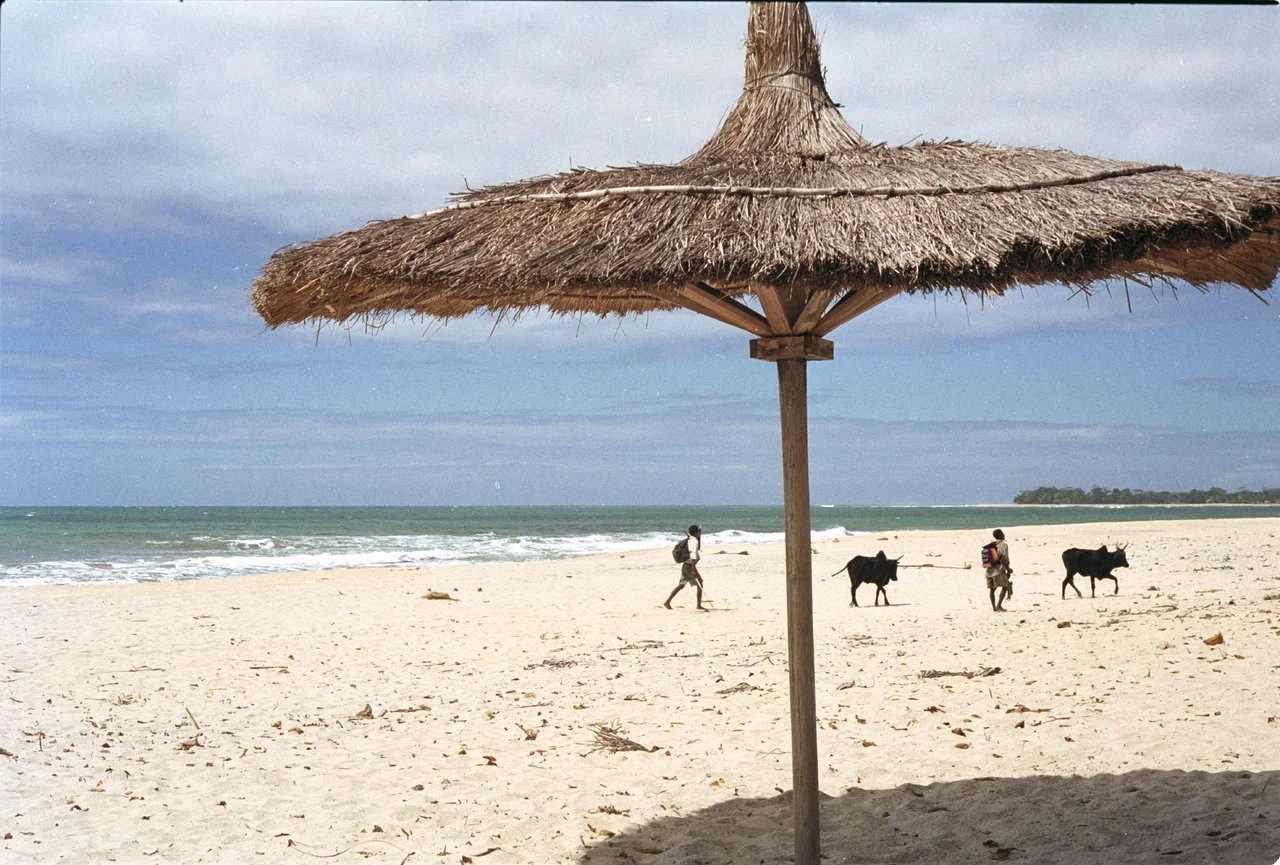
Sambava sits where the green wall of Madagascar's eastern rainforest meets the Indian Ocean. Long, white-sand beaches run along its front, lined with palms and a handful of hotels, fully exposed to the open sea. The setting is dramatic but demanding: this stretch of coast lies in the path of cyclones that sweep in off the ocean during the wet season, and the warmth and heavy rainfall that make the land so fertile also make it volatile. Inland, the road climbs toward Andapa and the towering Marojejy massif, whose cloud forests shelter the silky sifaka and some of the rarest wildlife on Earth. For most visitors, Sambava is the doorway to that wilderness, the last town with an airport before the mountains begin.
A Town of Sixteen Villages
For all its global reach, Sambava remains intimate. The commune gathers some sixteen fokontany, the small villages and neighborhoods that make up a Malagasy municipality, around a center of markets and municipal buildings. The 2018 census counted just over 84,000 people. Life moves to the rhythm of the harvest and the curing season, and to the bustle of a market road where the day's catch, produce, and goods change hands. There is even local football pride: FC Joel Sava carried the region's colors to repeated regional championships in the 2010s. It is a working town, shaped by a luxury most of its residents will only ever sell, never quite afford, and yet bound up entirely in the small black pod that the rest of the world cannot do without.
Living in the Storm Track
There is a hard edge to all this fragrance. Sambava sits squarely in one of the busiest cyclone corridors on Earth, and the storms that form over the warm Indian Ocean come ashore here with brutal regularity. In March 2004, Cyclone Gafilo, one of the strongest ever recorded in the region, tore across the Sava coast and destroyed an estimated 80 percent of Sambava's vanilla crop in a matter of hours. Cyclone Enawo did much the same in 2017, and the pattern repeats every few years. Because vanilla takes years to mature and is harvested by hand, a single bad storm can wipe out incomes across the whole region and send world prices lurching upward. The same warm, wet climate that makes this coast perfect for growing the orchid also makes it perilous to live on. Recovery here is not an event but a permanent condition, a town forever rebuilding, replanting, and waiting for the next season's flowers to open.
From the Air
Sambava lies at roughly 14.27 degrees south, 50.17 degrees east, on the northeast coast of Madagascar. From the air, look for the long straight ribbon of beach where the town meets the Indian Ocean, with cultivated coastal plain behind it and the green rise of the interior beyond. Sambava Airport (ICAO FMNS, IATA SVB) sits just south of the town with a single runway. Antalaha lies down the coast to the south, and Arrachart Airport at Antsiranana (ICAO FMNA) serves the region to the north. The wet season, roughly December through March, brings heavy rain and cyclone risk; clearer, calmer conditions favor the middle months of the year. A viewing altitude of 4,000 to 7,000 feet keeps the coastline, town grid, and the dark inland mountains all in view.
Nearby Stories
- Vohemar 77 km away
- Makira Natural Park 92 km away
- Nosy Mangabe 107 km away
- Ankarana Special Reserve: Madagascar's Limestone Labyrinth 131 km away
- Nosy Komba 163 km away
- Tromelin Island: The Forgotten Enslaved People of the Isle of Sand 443 km away
- Battle of Reunion 886 km away
- Erythraean Sea 2938 km away