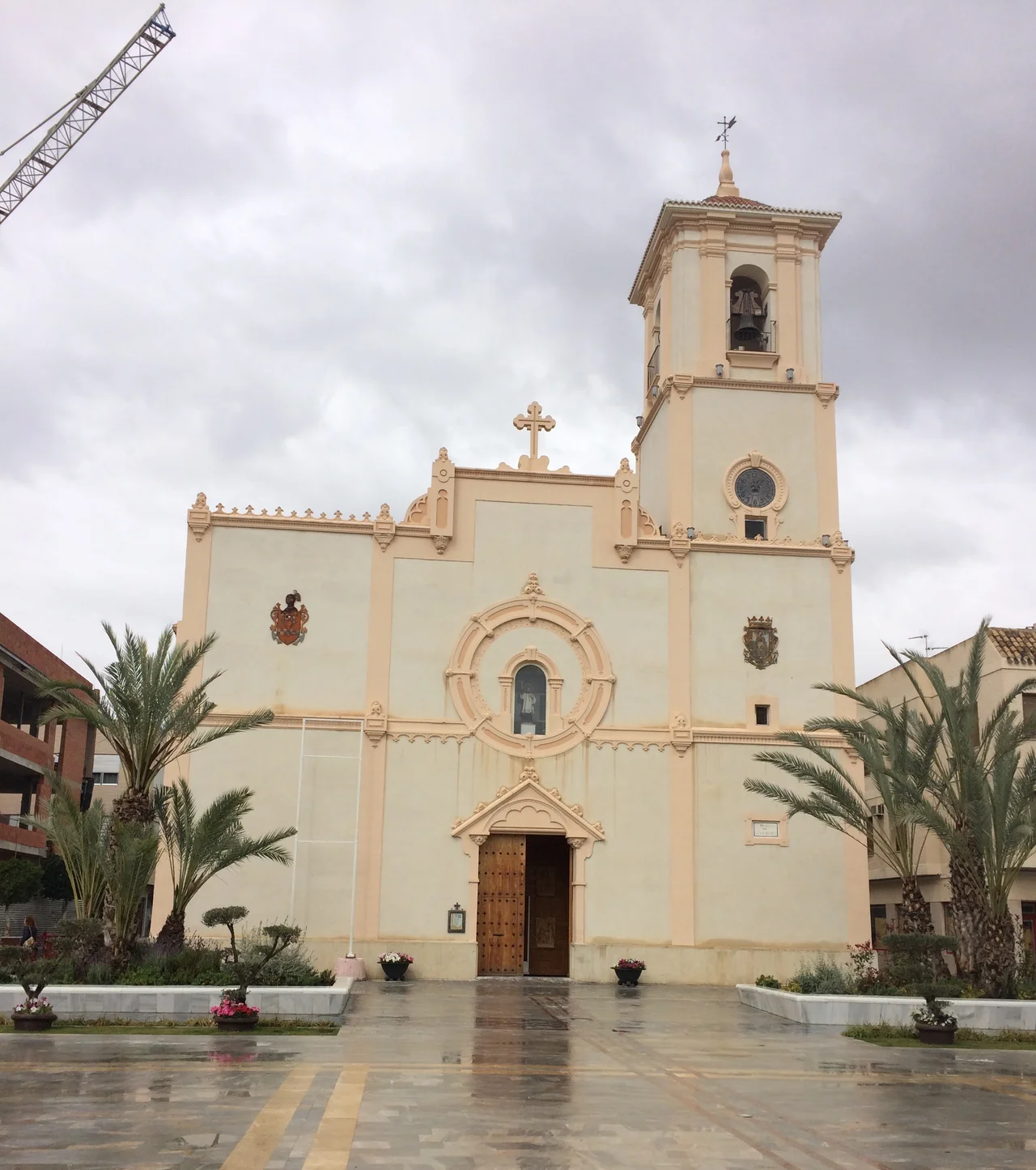

San Javier (Spain)
Two very different kinds of performance define this town on the edge of the Mar Menor. In summer, its stages fill with the sound of an international jazz festival that has drawn players here every year since 1998. Overhead, in a tradition nearly as old, the jets of the Patrulla Águila once climbed and rolled in tight formation, trailing red-and-yellow smoke - the display team of the officer academy that has trained Spain's air force officers at San Javier since 1943, until the squadron flew its farewell show and stood down in 2025. Few towns of thirty-odd thousand people have carried both a jazz pedigree and a squadron of aerobatic pilots, and fewer still staged them within earshot of the same lagoon.
A School in the Sky
San Javier's oldest claim on the world is aviation. The Academia General del Aire, the officer academy of the Spanish Air Force, has stood here since 1943, on a site with roots as a naval air base in the late 1920s, and generations of Spanish pilots have earned their wings over the flat, reliable skies of the Mar Menor. The academy was also home to the Patrulla Águila, the air force's aerobatic display team, whose formation flying carried the name of San Javier to airshows far beyond Spain until the squadron retired its jets and flew its farewell display in 2025. The presence of the academy gives the town a rhythm all its own: the drone of training aircraft by day, the crisp geometry of formation practice against a blue sky, and a steady community of cadets, instructors, and their families woven into local life.
The Lagoon at Its Door
San Javier sits on the western shore of the Mar Menor, a broad, shallow saltwater lagoon separated from the open Mediterranean by La Manga, a slender ribbon of sand and dunes. The lagoon's water is warmer, calmer, and saltier than the sea beyond it, which has made this coast a magnet for swimmers, sailors, and sun-seekers for generations. The town's seaside heart is Santiago de la Ribera, where a long promenade and a wooden pier reach out over the still water. Fishing and farming shaped San Javier long before tourism did, and the flat, fertile land around the lagoon still feeds the markets of the region.
When the Town Fills With Music
For all its military discipline, San Javier is best known to many Spaniards for letting loose in summer. The International Jazz Festival, running each year since 1998, has become one of the most respected on the calendar, drawing world-class musicians to open-air stages and earning recognition as an event of regional tourist interest. It runs alongside a companion festival of theater, music, and dance, so that for weeks each year the town trades the sound of engines for the sound of a stand-up bass and a saxophone drifting across warm evening air. The setting - a lagoon town under wide skies - suits the music as neatly as it suits the flying. Concerts spill from the plazas into the warm nights, and the festival has given San Javier a cultural profile out of all proportion to its size, a name known to jazz lovers across the country.
The Airfield That Went Quiet
For decades San Javier's airfield did double duty, serving both the air academy and civilian passengers bound for the Costa Cálida. That ended on 14 January 2019, when scheduled flights transferred to the new Región de Murcia International Airport at Corvera, inland to the west. The last civilian departure lifted off for Manchester, and the runways fell quiet of holiday traffic. The base itself did not close; it remains a working military airfield and the home of the academy, so the jets still fly. Today a visitor is more likely to arrive by road and find, at the town's namesake church of San Francisco Javier and along the Mar Menor shore, a place that has quietly balanced the martial and the musical for a century.
From the Air
San Javier sits at 37.804 N, 0.834 W on the western shore of the Mar Menor, and its own airfield - Murcia-San Javier (ICAO LELC), now a military base and home of the Academia General del Aire - is the landmark that defines it. From the air the lagoon, the sand ribbon of La Manga, and the runways along the water are unmistakable references from 2,000-4,000 ft. Civilian flights now use Región de Murcia International (Corvera, LEMI) inland to the west; Alicante-Elche (LEAL) lies to the north. Airspace here is active with military and display flying - check NOTAMs, especially around the spring air festival over Santiago de la Ribera.
Nearby Stories
- Sierra Minera de Cartagena-La Unión 1.7 km away
- El Fondo Natural Park 12 km away
- 2011 Lorca Earthquake 24 km away
- Villajoyosa 41 km away
- Benidorm Island 72 km away
- German submarine U-602 93 km away
- Cabo de Gata-Nijar Natural Park 111 km away
- Castle of Alarcon 167 km away