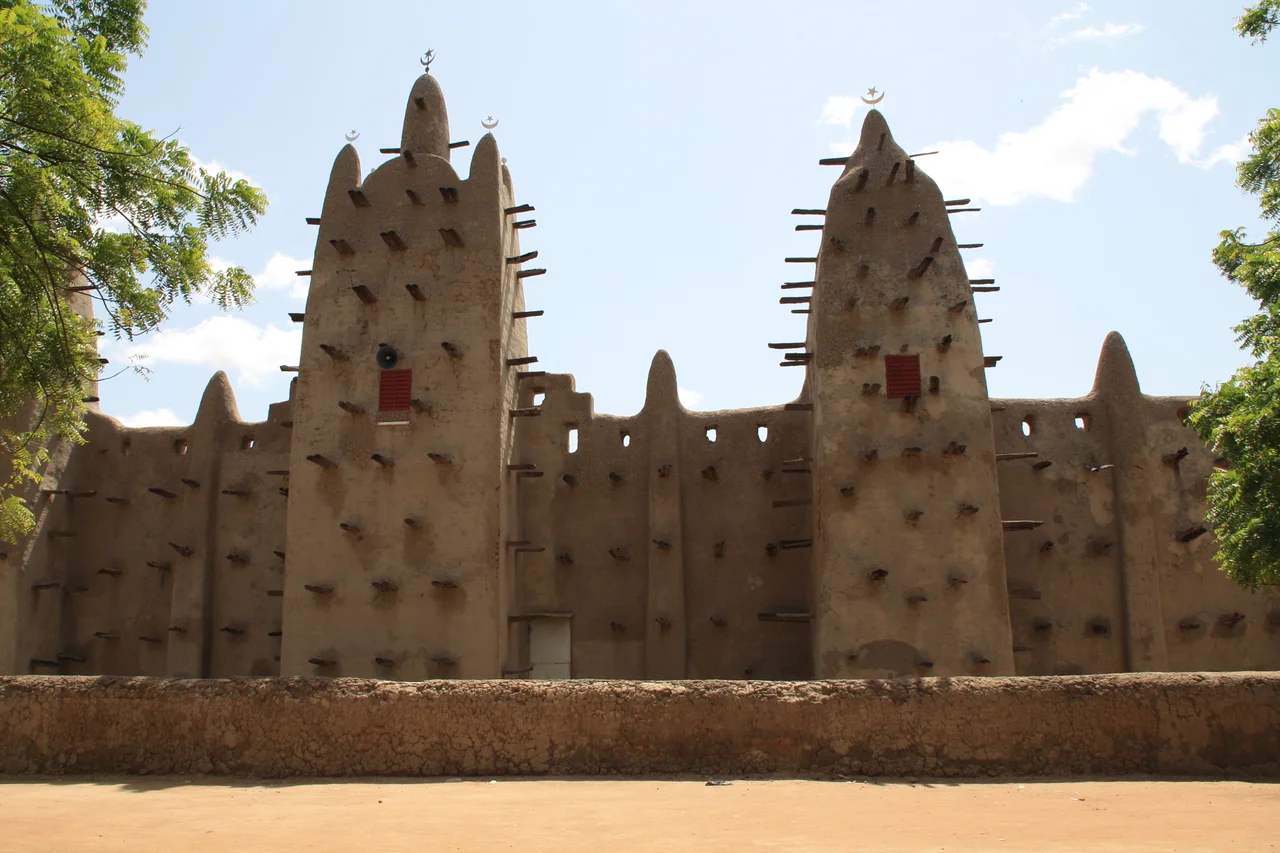

San, Mali
It began with a ford. Where the Bani River could be crossed, traders crossed it, and where traders cross, towns grow. Around 1400, on a fishing ground that the Bozo people had worked for generations, a market settlement took root at San, perched at the seam between two worlds: the watery inner delta of the Niger to the north, and the goldfields of the forest country to the south. Whoever controlled the crossing controlled the trade. San has been controlling it, more or less, ever since.
A Crossing Worth Fighting For
Prosperity at a chokepoint invites company, not all of it welcome. Oral traditions disagree on who founded the trading town, whether Marka merchants from Dia or Dyula traders from Djenné, but they agree it grew rich. Riches drew armies. In 1542 the Songhai ruler Askia Ishaq I attacked the place. In 1690 Biton Coulibaly seized it for the rising Bamana Empire. In 1739 Famaghan Ouattara of the Kong Empire, intervening in a Bamana civil war, destroyed the town entirely; it was rebuilt a little to the north, as towns at valuable crossings always are. Each conqueror wanted the same thing: the road, the river, and the taxes that flowed across both.
Spared by Faith
In the 1830s the preacher Cheikhou Amadou folded San into the Massina Empire, a strict theocratic state governed by Islamic law. That allegiance saved the city. When the warrior-scholar El-Hajj Omar Tall swept through and shattered Massina in the 1860s, leaving destruction across the region, he spared San. The town that had been sacked and rebuilt so many times survived this round not by its walls but by its prayers. There is a lesson in San's long history about which kind of strength endures: the fortifications fell, but the marketplace and the faith kept returning.
Mud Cloth and the River's Bounty
San still trades for a living. Highways cross here as the river once did, carrying goods through a town that has never forgotten how to sell. It is a center for bogolanfini, the mud cloth for which Mali is famous, woven in narrow strips and dyed with fermented river mud and plant tannins, each ochre and indigo pattern carrying meaning older than any of the empires that fought over the crossing. Horses are bred here, and rice grows green in the floodplain along the Bani. The dry season bakes the streets from October to May; then the rains come, the river rises, and the delta does what it has always done, which is feed the people who learned to live at its edge. San is also the birthplace of Bah Ndaw, born here in 1950, who would briefly serve as president of Mali.
From the Air
San sits at 13.30°N, 4.90°W in central Mali's Ségou Region, about 10 km south of the Bani River. From the air the town is a node where major highways converge, set against the flat semi-arid plain, with the green ribbon of the Bani floodplain and its rice fields to the north. Nearest airports: Mopti / Ambodédjo (GAMB) lies to the northeast toward the delta; Bamako-Sénou (GABS) is the major international gateway well to the southwest. Recommended viewing altitude 4,000-6,000 ft AGL. Best visibility in the dry season (November-February); afternoon convection and dust build through the hot months before the rains.
Nearby Stories
- Battle of Jenné 46 km away
- Bozo language 55 km away
- Koutiala 73 km away
- Hamdullahi 90 km away
- Sansanding 94 km away
- Dédougou 101 km away
- Volta-Bani War 122 km away
- Kirikongo 158 km away