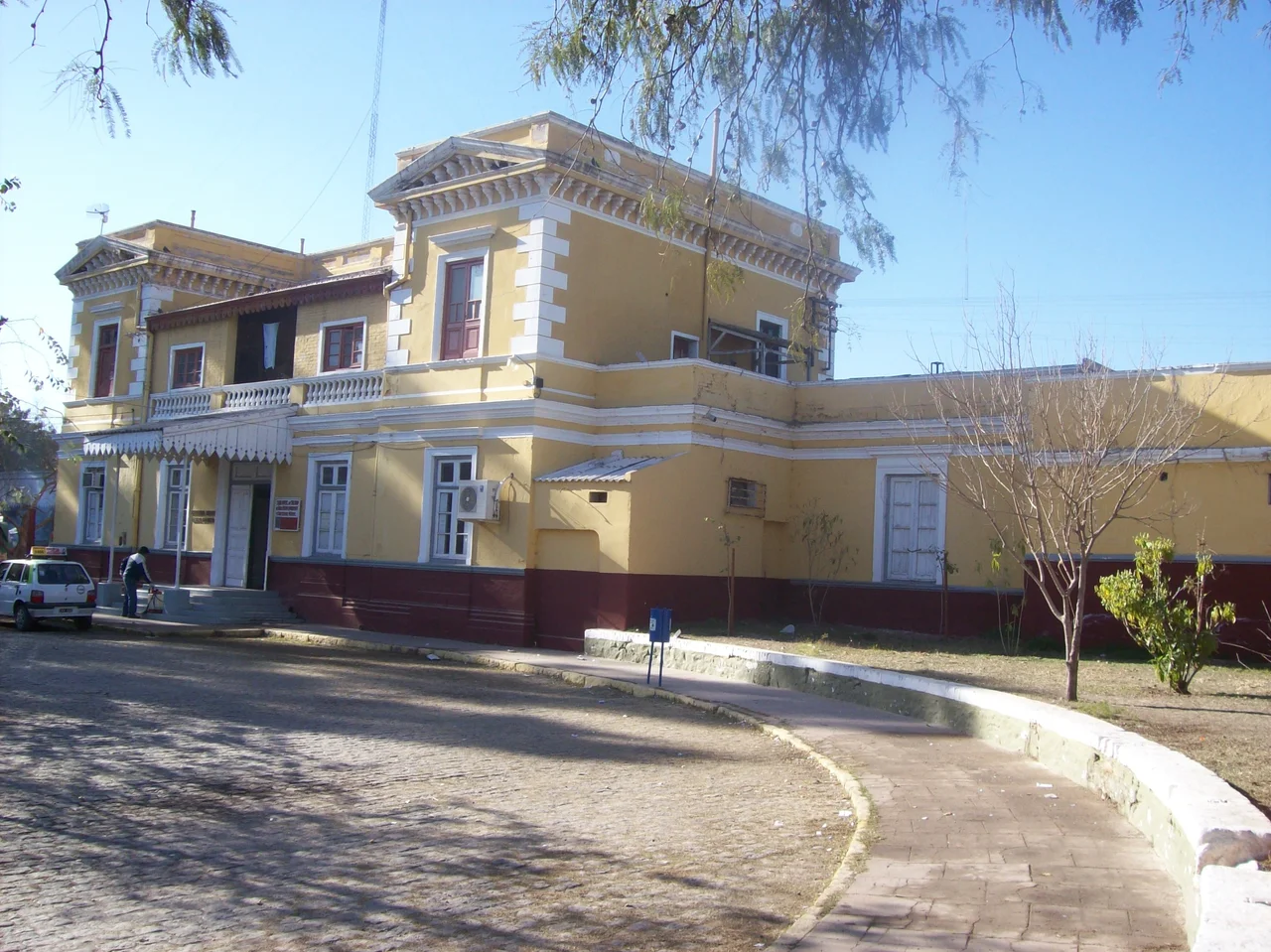

Santiago del Estero
Before there was a Córdoba, a Tucumán, a Mendoza - before almost anything that would become Argentina - there was a Spanish town on the banks of the Dulce River. Founded in 1553 by Francisco de Aguirre and his men coming down from Peru, and shifted three years later to its present site, Santiago del Estero is the oldest continuously inhabited city in the country. Argentines call it the Madre de Ciudades, the Mother of Cities, because from here the expeditions rode out to found the rest. It is a title earned by going first, and by never going away.
The Mother of Cities
The nickname is more than civic pride. Santiago was the staging ground for the Spanish settlement of central and northern Argentina; the parties that established other cities of the colonial northwest set out from its dusty plaza. For its first decades it was the administrative heart of the region, a frontier capital on the edge of the known map. The honorific that grew around it - Mother of Cities - acknowledges a simple fact of sequence. Everything came after. The city that holds the title has paid for it in obscurity ever since, overshadowed by the younger places it helped bring into being, but it keeps the distinction that none of them can claim: it was here first, and it has never been abandoned.
Cradle of the Chacarera
If Santiago's claim on history is the past, its claim on the present is music. This is the heartland of the chacarera and the zamba, the foot-stamping, guitar-and-drum folk forms that are as close to a national soundtrack as Argentina has. The city has produced a lineage of beloved performers - the Manseros Santiagueños, the Ábalos Brothers, the Dúo Coplanacu - whose recordings carried the sound of the dry interior to the rest of the continent. Many Santiagueños still speak Quichua, a southern dialect of the Andean Quechua, woven through their Spanish; the folklore carries that inheritance too. To hear a chacarera struck up in a Santiago courtyard is to hear something that began here and spread outward, like the city itself.
Borges and the Heroína del Bracho
The city's history runs through some remarkable lives. Colonel Juan Francisco Borges led the local battalion of the Army of the North in the wars of independence - and was an ancestor of the writer Jorge Luis Borges, who would make Argentine letters famous worldwide. Ramón Carrillo, born here in 1906, became a pioneering neurosurgeon and the country's first Minister of Health. And there is Agustina Palacio de Libarona, remembered as La Heroína del Bracho, who in the brutal politics of the nineteenth century followed her imprisoned husband into the wilds of El Bracho to care for him - a story of devotion that the province has never let fade.
The Madre de Ciudades Rises Again
In 2021 the city gave its old title a new and literal form: the Estadio Único Madre de Ciudades, a gleaming modern stadium that brought top-flight football and international matches, including fixtures of the 2023 FIFA U-20 World Cup, to a place more often associated with folklore than spectacle. The arena's name is a deliberate echo of the city's identity, a wager that the Mother of Cities still has reach. For a place that has spent centuries being quietly senior to the rest of the country, it was a way of stepping back into the light - the oldest city in Argentina, insisting it is far from finished.
From the Air
Santiago del Estero lies on the Río Dulce at roughly 27.78°S, 64.27°W in the Argentine interior, on a low, hot plain at about 200 meters elevation - well east of the Andes, where the Chaco lowlands begin. From altitude, look for the river and the regular colonial street grid of a mid-sized provincial capital sitting amid flat, semi-arid scrubland. The city is served by its own field, Vicecomodoro Ángel de la Paz Aragonés Airport (ICAO: SANE), about 6 km northwest of downtown; the larger regional hub is Salta's Martín Miguel de Güemes International (ICAO: SASA) to the northwest. The climate is dry and notably hot, with generally clear skies and long visibility over the surrounding plain.
Nearby Stories
- Mailín 54 km away
- Battle of Famaillá 95 km away
- San Fernando del Valle de Catamarca 114 km away
- Argentine Declaration of Independence 125 km away
- Casa de Tucuman 134 km away
- Campo del Cielo 192 km away
- San José Charterhouse 259 km away
- Napalpí Massacre 356 km away