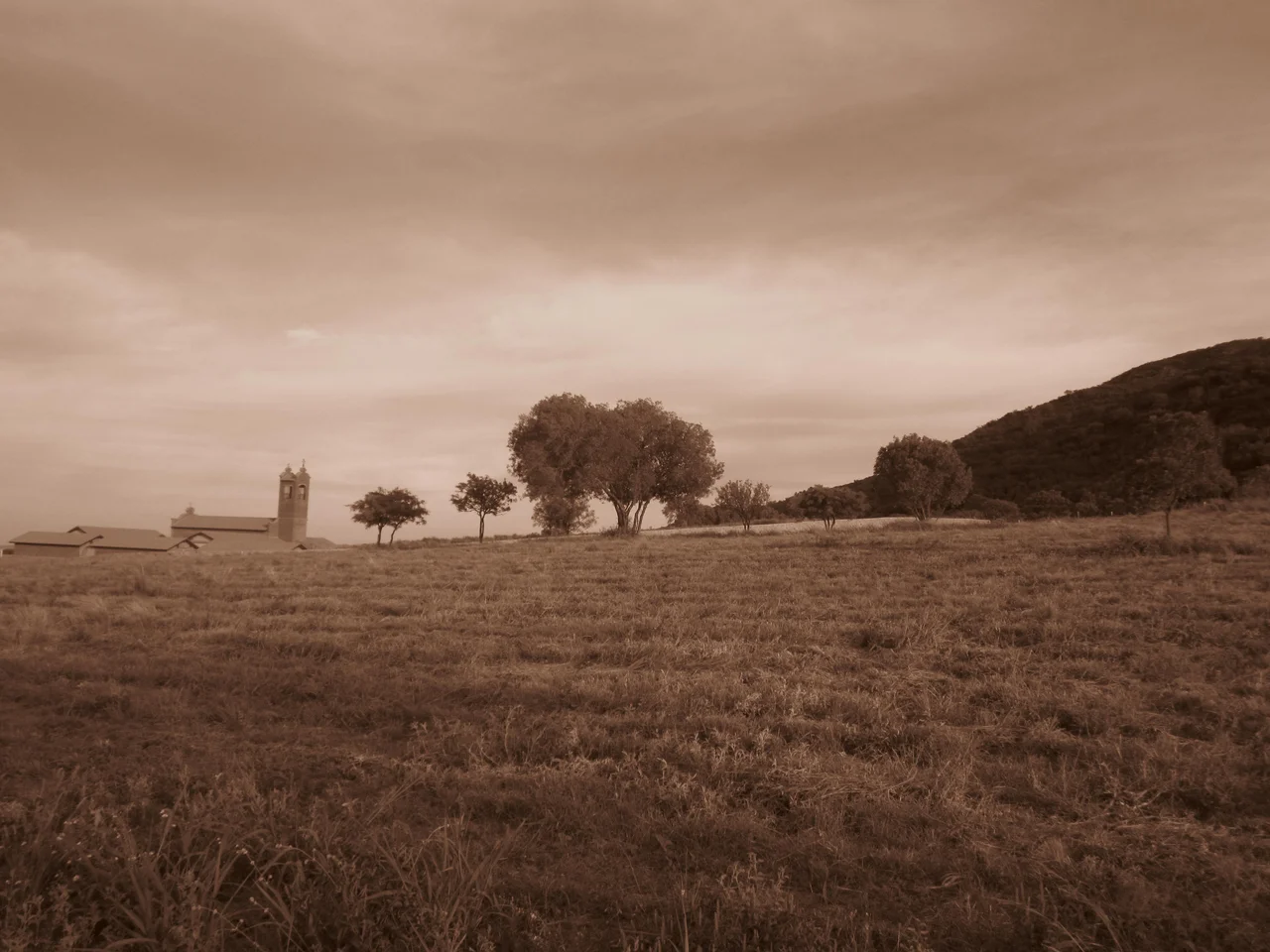

San José Charterhouse
Somewhere in the dry hills near Deán Funes, a bell rings a little before midnight, and a dozen men rise from four hours of sleep to chant in near-total darkness. They will not speak to one another for most of the day. Each lives alone in a small house, eats most meals through a hatch in the wall so he need not even meet the person who brings his food, and tends a tiny private garden. This is the San José Charterhouse - the only Carthusian monastery in Argentina, and the only Spanish-speaking Carthusian foundation in the Americas.
A Vocation With No Home
For most of Argentina's history, a man who felt called to the most demanding contemplative life in the Catholic Church had to leave the country to live it. The Carthusian Order, founded in the French Alps in 1084, kept no house anywhere in the Spanish-speaking Americas. Argentine vocations had to emigrate. In 1997 that changed: the order's General Chapter and the Argentine Conference of Catholic Bishops backed a plan to found a charterhouse at last. Four monks were dispatched from the Grande Chartreuse - the order's mother house in the Alps - to find the right ground. They chose a secluded place called the Campo de la Trinidad, far enough from everything that silence could settle over it.
Stone for Solitude
The Argentine architect Federico Shanahan designed the monastery for a single purpose: to make solitude possible. A Carthusian charterhouse is not one building but many - a ring of individual hermitages, or cells, each really a small house with its own garden, arranged around a great cloister. San José holds twenty-two such cells, along with chapels, a refectory where the monks eat together only on Sundays and feast days, a chapter house, and a guesthouse. A first fragment of the hermitage opened on 15 October 1998. The whole complex was completed and its church consecrated on 19 March 2004 - Saint Joseph's Day, the feast of the carpenter saint to whom the monastery is dedicated.
The Shape of a Day
Carthusian life is built around three exits from the cell each day, and almost nothing else. The monks gather in the dark for the long night office, again for morning Mass, and once more for afternoon vespers; the rest of their hours pass alone in prayer, study, and manual work. Much of the chanting happens by the light of a few shaded oil lamps, the choir books pooled in small circles of glow. The order's own motto for this life is plain: union with God. As the Carthusians like to say of themselves, they have never been reformed because they were never deformed - the rhythm has barely changed in nearly a thousand years.
Glimpses of a Hidden Place
Almost no one sees inside. The Carthusians take no tourists and grant few interviews, which is exactly why the rare openings have drawn attention far beyond the order. The Buenos Aires newspaper Clarín titled its 2006 report A Solas con Dios - Alone with God. The photographer Eduardo Longoni was allowed to document the monks for an exhibition he called Luz y misterio: el secreto de los monjes, light and mystery, the secret of the monks. Both titles point at the same thing: a community that has chosen to disappear into prayer, in plain sight, in the hills of Córdoba.
The Quiet in the Hills
From the outside the charterhouse reads almost as landscape - low walls and red roofs folded into the scrub and stone of the Sierras, deliberately hard to find and easy to miss. There is no spectacle to it, no soaring cathedral on a peak. The point of the place is precisely that there is nothing to see, only something happening: more than a dozen men keeping a vigil of silence that began before any nation existed here, and that they intend to keep for the rest of their lives.
From the Air
The San José Charterhouse sits in the hills near Deán Funes in northern Córdoba Province, at approximately 30.45°S, 64.29°W, in the Ischilín department. The nearest major airport is Córdoba's Ingeniero Aeronáutico Ambrosio Taravella International (ICAO: SACO), roughly 100 km to the south; Santiago del Estero's Mal Paso (ICAO: SANE) lies to the northeast. From the air the monastery is small and intentionally unobtrusive - look instead for the town of Deán Funes and the dry, wrinkled terrain of the Sierras Chicas and the surrounding Espinal scrubland. The Córdoba interior offers reliably clear, dry skies; the low sun of morning or evening best reveals the texture of the hill country sheltering the cloister.
Nearby Stories
- Barranca Yaco 13 km away
- Battle of San Cala 60 km away
- Mar Chiquita Lake 104 km away
- Pampa de Achala 125 km away
- Battle of Quebracho Herrado 160 km away
- Mailín 198 km away
- San Fernando del Valle de Catamarca 223 km away
- Santiago del Estero 273 km away