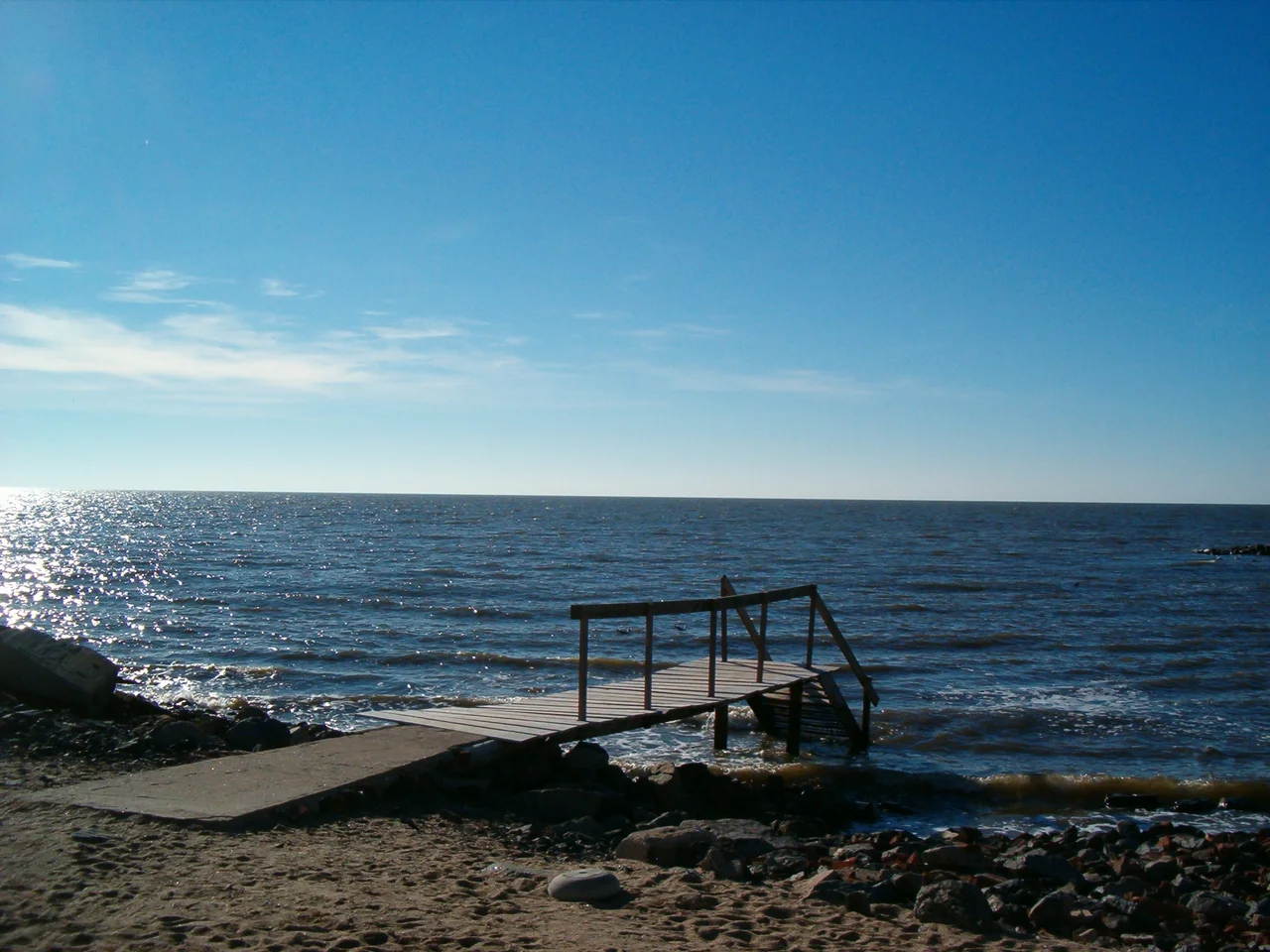

Mar Chiquita Lake
The locals call it the Little Sea, which is a joke at the lake's own expense. Mar Chiquita is no pond. It is the largest salt lake in South America and one of the five largest on Earth, a shallow inland sea sprawled across the flat northeast of Córdoba Province where, on the right day, the water seems to catch fire with pink - hundreds of thousands of flamingos standing wing to wing in water saltier than the ocean.
A Sea With No Way Out
Mar Chiquita is endorheic: water flows in, but none flows out. Rivers feed it - chiefly the Dulce, arriving salty from the north out of Santiago del Estero, joined from the southwest by the Suquía and the Xanaes - and then the desert sun takes over. Everything that evaporates leaves its salt behind. The lake fills the floor of a vast depression some 80 kilometers long and 45 across, yet it is barely 10 meters deep at most, so its size breathes with the rains. In wet years it swells; in dry ones it shrinks and grows saltier still, the salinity swinging from around 40 grams per liter to a brutal 250 - more than seven times the saltiness of seawater. Slowly, over geological time, it is destined to dry into a salt flat.
The Color of Three Species
What the salt makes is life - strange, abundant, specialized life. The brine teems with tiny crustaceans and algae, and the birds that can stomach this water arrive in staggering numbers. Mar Chiquita hosts three flamingo species at once: the Andean, the Chilean, and the rare James's flamingo, their massed populations at times numbering in the hundreds of thousands. From the north come Wilson's phalaropes, small migratory shorebirds that cross hemispheres to winter here. At peak, the lake and its wetlands can hold a significant share of the entire planet's population of some of these species. The pink is not decoration; it is the pigment of the brine shrimp, passed up the food chain into the feathers of the birds that eat them.
The Largest Park in Argentina
For decades conservationists pushed to protect this place, and on 30 June 2022 they succeeded: the lake and its surrounding marshes were formally established as Ansenuza National Park, the largest national park in the country. Mar de Ansenuza, the older name, comes from the region's indigenous heritage. The park guards more than 19,000 square kilometers of lagoons, wetlands, and dry Espinal forest - one of the most important wetland systems in South America and a critical stopover on a flyway that links breeding and wintering grounds across two continents. It is, in effect, an international airport for birds, written into the map of Argentina.
The Grand Hotel That Drowned
On the shore at Miramar stands one of Argentina's most haunting ruins. The Gran Hotel Viena was built in stages and largely finished by 1945 for a German businessman, Máximo Pahlke, drawn by the supposed healing properties of the salt water. It was lavish - and short-lived. The Pahlkes sold it and left for Germany within a couple of years, and rumors of Nazi connections have clung to the place ever since, the kind of legend that grows in an empty building. Its true undoing was the lake itself. When record rains swelled Mar Chiquita beginning in 1977, the rising, salt-laden water crept into the lower floors and finally drowned the basement. Today the abandoned hotel survives as a museum and a magnet for ghost-story tourism, a monument to the fact that here, the sea always wins.
Standing at the Edge
Walk out toward the water and the scale plays tricks on you. The far shore vanishes; the horizon is just a thin bright line where pale water meets pale sky. The air smells of salt and mud. Clouds of birds lift and settle in the shallows, and on a windy day the lake can throw dust storms big enough to be photographed from space. It is an austere, otherworldly place - not pretty in the postcard sense, but vast and alive in a way that stays with you.
From the Air
Mar Chiquita Lake lies in the flat northeast of Córdoba Province, centered roughly at 30.63°S, 62.56°W, with its northeastern arm reaching into Santiago del Estero. The nearest major airport is Córdoba's Ingeniero Aeronáutico Ambrosio Taravella International (ICAO: SACO), about 180 km to the southwest; Santiago del Estero's Mal Paso (ICAO: SANE) lies to the northwest. The lake is one of the most unmistakable landmarks in central Argentina from the air - a huge, pale, irregular sheet of water on an otherwise flat agricultural plain, fed from the north by the looping channel of the Dulce River. Look for the town and ruined Gran Hotel Viena on the southern shore at Miramar. Salt haze and seasonal dust can reduce visibility; clear, dry days reveal the full sweep of the inland sea and, at the right season, the pink wash of flamingo flocks in the shallows.
Nearby Stories
- Moisés Ville 38 km away
- Rafaela 52 km away
- Battle of Quebracho Herrado 70 km away
- Jesús María, Argentina 111 km away
- Barranca Yaco 114 km away
- Mailín 217 km away
- Campo del Cielo 309 km away
- Santiago del Estero 344 km away