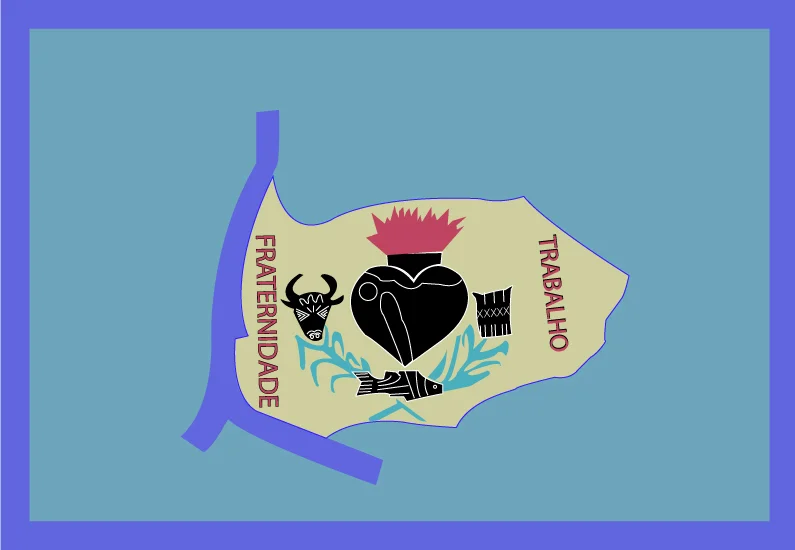

São Miguel do Araguaia
The town was founded by a faith healer. In 1952, José Pereira do Nascimento, a Spiritualist who drew the ill and the hopeful to this distant corner of Goiás, arrived with two partners and bought enormous tracts of land. He raised cattle and prayed over the sick, and a settlement took shape on the banks of a small river that he named São Miguel after the archangel. Nearly seventy-five years later, the faith-healer founder is a historical footnote, but his town has grown into one of Goiás's largest municipalities and the gateway to a stretch of the Araguaia River that transforms every year into Brazil's most improbable beach.
The Healer and the Herd
By 1958 the government had surveyed the land, cut it into parcels, and offered it free to anyone willing to come. Families from southern Minas Gerais loaded their belongings and made the long trip north, and in the 1960s the trickle became a flood. Thousands took the free-land offer. The cerrado gave way to pasture, the pasture to cattle, and the cattle to an economy that still defines the place: by 2006 the municipal herd had reached 483,000 head, spread across more than 524,000 hectares of agricultural land. Goiânia, the state capital, sits 486 kilometers to the south. From São Miguel do Araguaia the rest of Brazil feels a long way off, and the countryside is almost entirely pasture, with some rice, corn, and soybeans filling in the margins.
When the River Reveals the Sand
Forty-five kilometers west of town, where the Araguaia River forms the border with Tocantins, sits the tiny district of Luiz Alves. For most of the year it is a fishing village of around 800 residents. Then July comes. The Araguaia drops. As the water level falls, kilometers of white sand appear along the banks - long, pale beaches that were submerged a month earlier. The village becomes a city. Thirty thousand people flood in, setting up tents, opening temporary restaurants, launching boats, and staying until the rains return. For those few weeks Luiz Alves is one of the strangest resort towns in Brazil: a river beach in the middle of the continent, as far from the Atlantic as you can get.
Carnaraguaia and the Festival That Died with Its Founder
The beach season has its own off-season carnival. Carnaraguaia happens on the river sand every July during the holidays, pulling in bands from across the country - Companhia do Pagode, Banda Nechevile, Léo Santana - and turning the Luiz Alves beach into a dance floor. Back in town, the history of local music is a more bittersweet story. The Festival de Música de São Miguel do Araguaia was the creation of one man, a radio broadcaster and city councillor named Sinomar Moreira Da Silva, known to everyone as Maradona. For years he ran the festival every November 10-14, coinciding with the town's anniversary, and the region's working musicians came up through its stages - gospel singers, sertanejo artists, forro bandleaders, rock guitarists. When Maradona died, the festival died with him. A newer alternative rock festival, Araguaia Rock, launched in 2017 to take up the space.
Mayors and the Federal Police
Small Brazilian municipalities sometimes produce outsized political drama, and São Miguel do Araguaia has produced its share. In 2016 a local doctor named Nélio Cunha won the mayoralty with 42 percent of the vote. In 2019 he resigned, and his deputy Azaíde Borges took over - then the former mayor was arrested by the Federal Police on suspicion of involvement in an international drug trafficking ring. Azaíde Borges won election outright in 2020 with nearly 59 percent of the vote. The story is not unique to this town, but it says something about frontier Goiás: the distance from the capital, the cattle-ranch fortunes, the traffic routes north toward the Amazon. What looks from cruising altitude like a quiet checkerboard of pastures has its own complications on the ground.
From the Air
Located at 13.28°S, 50.16°W in far northern Goiás state, Brazil. At cruising altitude the surrounding landscape reads as fenced cattle country giving way to the broad, pale ribbon of the Araguaia River to the west. In July the dry-season sandbars at Luiz Alves appear as brilliant white scars along the riverbank. Nearest airport: Goiânia/Santa Genoveva (SBGO, 486 km south); closer general-aviation fields serve the cattle trade.
Nearby Stories
- Mundo Novo, Goiás 33 km away
- Mutunópolis 39 km away
- Porangatu 49 km away
- Aruanã 162 km away
- Querência 199 km away
- Araguaia National Park 279 km away
- 2021 Palmas FR Plane Crash 333 km away