.jpg)
Aruanã
The name Aruanã means two things at once. It is the name of a large silver river fish prized by anglers across the Amazon basin. It is also the name of a ceremonial dance of the Karajá people, who have lived along the banks of the Araguaia River for longer than any colonial record can document. In 1850, Portuguese settlers founded a river port here, on the right bank of the Araguaia where it runs clear between sandbanks that emerge as beaches during the dry season. They called the port Leopoldina. When it later took on the name of the fish the Karajá had been dancing about for centuries, something about the place seemed to settle into place.
The Old State Capital's Port
Before Goiânia existed, before Brasília existed, the capital of Goiás state was a small colonial city called Vila Boa - now simply Goiás City, or Goiás Velho. And the port that supplied Vila Boa was here, 170 kilometers away on the Araguaia. From 1850 until 1958, Aruanã functioned as the main river port for the old capital. Goods came upstream from the Amazon basin, offloaded at Aruanã, then hauled overland to the colonial seat. Without this river connection, central Goiás would have been even more isolated than it already was. The shift happened fast when it came: the capital moved to the planned city of Goiânia in 1933, and by 1958 Aruanã's function as a supply port had faded. The town that remained had to find a new reason to exist. It found one in the river that had built it.
The Karajá Neighbors
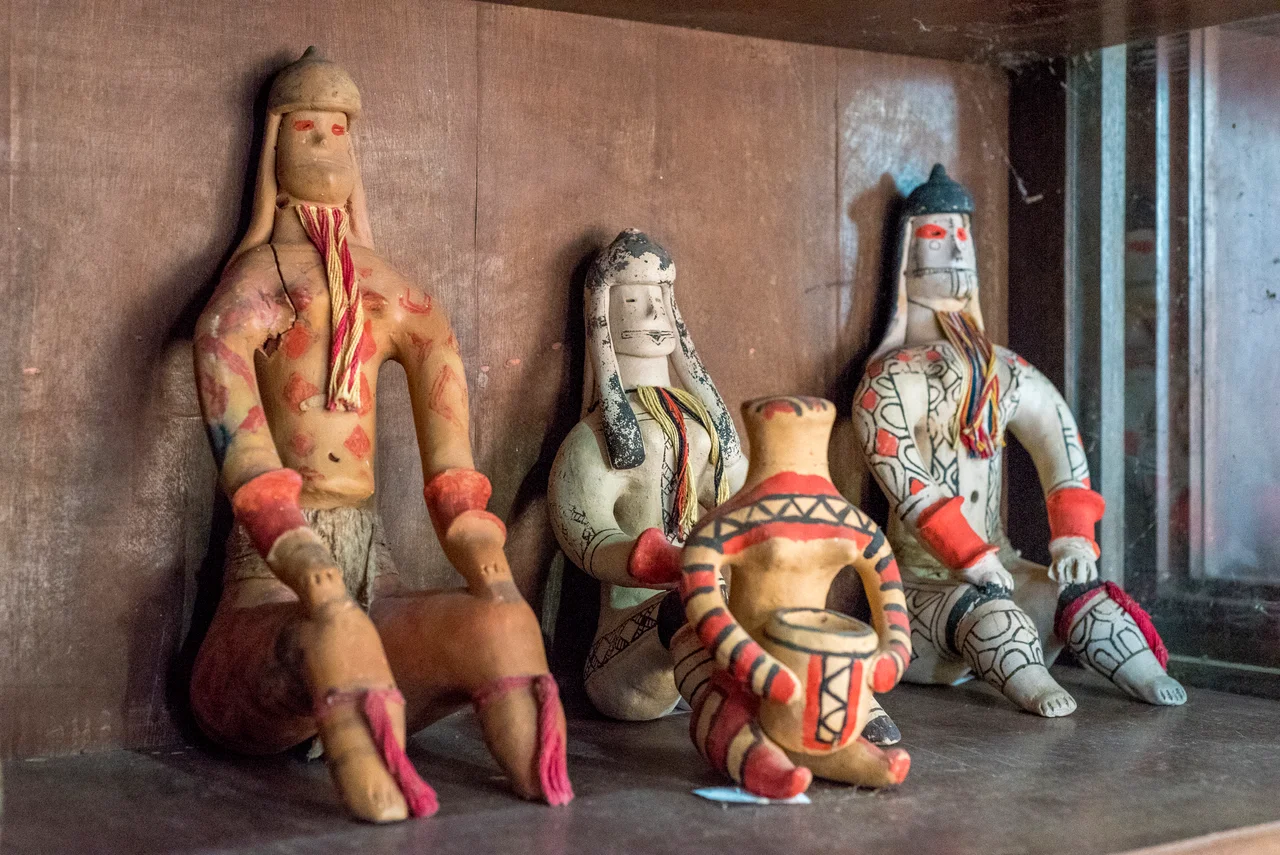
A very old Karajá village sits just beside the Araguaia near Aruanã. The Karajá - or Iny, as they call themselves - have lived along this river and its islands for centuries, structured around fishing, river travel, and ceremonial practices tied intimately to the water. Their material culture includes famous clay dolls, the ritxòkò, shaped into figures of women with distinctive facial markings. Their ceremonial dances, including the aruanã dance that gives the town its current name, are performances that communicate relationships with the river and its fish. Local crafts sold in Aruanã - weaving, flower arrangements, objects made from wood, coconut, straw, and clay - carry substantial Karajá influence, representing a contemporary economy that tries, imperfectly, to honor indigenous knowledge. The Karajá are Iny people with their own sovereign traditions, and the town's identity rests partly on that relationship.
The Beaches in the Middle of a Continent
From July through September, the Araguaia drops enough to expose long stretches of white sand along its banks and islands. These are river beaches in the middle of the Brazilian interior - not ocean, not lake, but freshwater beach that hundreds of tourists visit during the dry season. The water runs clearer than most Brazilian rivers. Camping along the banks is common, with strict environmental rules: no native wood for fires, no hunting, no unlicensed fishing, no fireworks, toilets dug at least thirty meters from the water, all trash carried back out. The beaches are the town's high season. Hotels fill. The pousadas along the center and the expansion sector - at least two dozen of them, from Hotel Araguaia downtown to Pousada Yanomani and Pousada Toca da Onça out in the newer developments - run near capacity through the dry months.
The Fish of the Araguaia
The diversity of the Araguaia's fish fauna reads like an angler's wish list. Among the scaly species are pacu caranha, matrinxã, pirarucu, piau, pacu, sardinha, corvina, and traíra. Among the leathery fish - catfish and their relatives - are filhote, cachara, barbado, pirarara, jaú, mandubé, surubim chicote, bico de pato, and mandi. The pirarucu alone is one of the world's largest freshwater fish, capable of exceeding two meters and weighing over 100 kilograms. The jaú is a giant catfish that can reach 150 kilograms. These are not casual fish. The Araguaia's ecosystem produces them in numbers that keep commercial and sport fishing operations profitable, though concerns about overfishing have produced increasingly strict licensing regimes. The river is part of the Tocantins-Araguaia basin, which drains into the Amazon system, so what happens here connects to the wider ecological health of the continent.
The Calendar of the River
Aruanã runs on a seasonal rhythm tied to rainfall and river level. January brings the Holy Kings Feast. February brings Carnival. The June festivals called festas juninas fill the streets with bonfires, dancing, and corn-based foods. July arrives with a rafting competition, one of the signature events of the dry season. August brings religious feasts - Holy Spirit, St. Sebastian, Our Lady of the Rosary. September brings the Cowboy Festival of Aruanã and the Feast of Our Lady of the Rosary. December brings the city anniversary. The town's airport handles small aircraft, but most visitors drive - 310 kilometers from Goiânia, 435 from Brasília, through cerrado country that gradually gives way to the gallery forests lining the Araguaia. The closest neighbor with any size is Aragarças, 252 kilometers away on the Mato Grosso border.
From the Air
Coordinates 14.92°S, 51.08°W, on the right bank of the Araguaia River. Elevation approximately 220 m - much lower than the central Goiás plateau. Recommended viewing altitude 3,000-5,000 ft AGL to follow the Araguaia corridor and spot the seasonal river beaches during dry months (July-September). Local airport handles small aircraft only; nearest airports with commercial service are Goiânia (SBGO) 310 km southeast and Brasília (SBBR) 435 km east. The terrain transitions from cerrado uplands to gallery forest along the river. Expect significant seasonal variation in river width - up to several hundred meters wide during the rainy season, much narrower with exposed sandbars in the dry.
Nearby Stories
- Mozarlândia 13 km away
- Nova Crixás 63 km away
- Itapuranga 88 km away
- Jussara 89 km away
- Serra Azul State Park 97 km away
- Mundo Novo, Goiás 131 km away