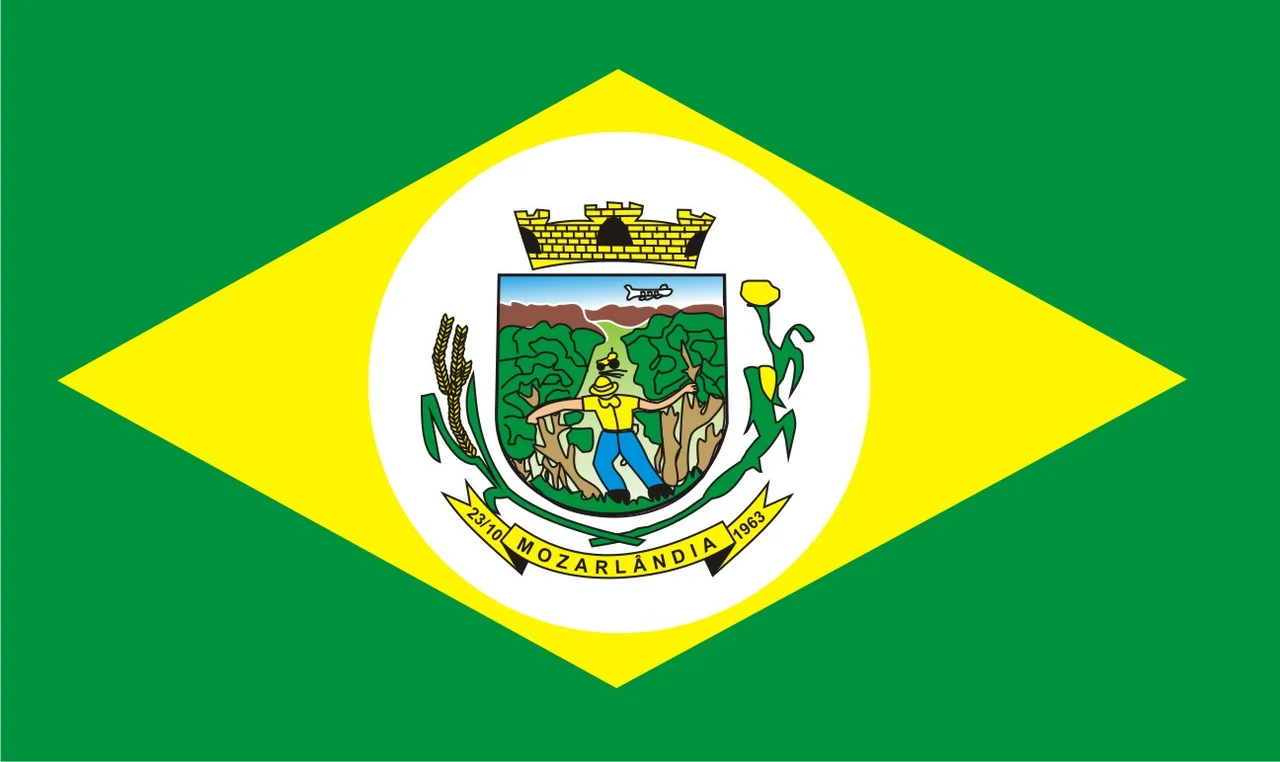

Mozarlândia
Mozart de Andrade Mota was a land surveyor when he arrived in 1952 at the confluence of two small rivers in the Araguaia valley of western Goias. He was there to map an agricultural colony called Barreirinho e Sao Joao. He bought land, cut it into lots, invited settlers. In 1954 someone put up the first hut. In 1958 the place became a district, and they renamed it Mozarlandia - Mozart's Land - in his honor. He served two terms as mayor, built the city hall and the jail and two plazas, donated land for schools and churches and the cemetery and the aerodrome, brought in electricity, and died in 1993. The town still carries his name. In a country where most place names come from saints or governors or indigenous words, having a town named after you because you built it is a rarer kind of memorial.
Surveyor's Country
Mota and his fellow surveyors - Pedro Leite da Silva and Edgar de Alencar Mota - worked for the state government, mapping out the colonias that Getulio Vargas and his successors had pushed to populate the interior. The confluence of the Barreirinho and Fogueira rivers was unremarkable country on the map: cerrado, small hills, a few Indian names on the landforms. But it had water, and water was enough. The first settlers came up from Minas Gerais, which had been the last big population source for Goias since the eighteenth century. In 1956 the settlers collectively opened a road to Nova America so they could get their crops to market - the kind of communal bootstrapping that frontier settlement often required. By 1958 the district had enough people and enough standing for the state to recognize it, though full municipal status would not come until later.
Lakes and Little Rivers
The geography around Mozarlandia is soft. The terrain is flat enough that rivers braid and slow and pool, forming the lakes - Landi, Lolito, Pedra, Correia, da Onca, da Mae, Redondo, Cabaca - that scatter across the municipality. The main rivers are the Rio Tesouras and Rio do Peixe, and a web of smaller creeks feed into them: Alagadinho, Alagado, Sao Joao, Fogueira, Barreirinho, do Gato. All of this water eventually drains west into the Araguaia, the great river that separates Goias from Mato Grosso and Tocantins. The mountains that rise up from this flat country - Constantino, Pimenta, Pouso Alto, Jiripoca, Tombador, Bananal - are modest by cordilleran standards but conspicuous in a landscape this flat, little landmarks by which a cattleman finds his pasture.
The Slaughterhouse
In the early 2000s a Frigorifico Bertin slaughterhouse opened in Mozarlandia. Bertin was at the time Brazil's largest beef exporter and Latin America's second-largest, and its Mozarlandia plant had the capacity to process 1,500 head of cattle per day. The beef went to Egypt, the United States, Chile, and Iran. Flour, meat, bone, and blood were processed on-site; only the leather left in raw state, sent to a tanner in Sao Luis de Montes Belos. The plant transformed the town's economy. Suddenly Mozarlandia had 1,222 industrial workers - a larger workforce than commerce, than public employment, than agriculture. The municipality's herd of 176,580 cattle was no longer just a local resource but a feed stock for a globalized meat industry. In August every year the Agro-cattle Exposition draws 15,000 visitors for four days - a town-sized version of the agricultural fairs that mark the ranching calendar across the interior.
The Numbers That Work
Unlike many municipalities in north-central Goias, Mozarlandia is growing. Its population rose more than 3,000 people from 1980 to the mid-2000s. Between 1996 and 2007 the geometric growth rate was 2.33 percent - slow but positive, which is not what the demographic charts of neighboring towns show. In 2007 the urban population was 10,832 and the rural population 2,291. There are three banks, ten industrial units, 152 retail units, 952 registered automobiles. The MHDI score of 0.768 places Mozarlandia 41st out of 242 Goias municipalities - considerably better than most of the north-central cerrado. There are two hospitals with 33 beds, two walk-in clinics, nine schools serving 3,787 students. It is a town that works, which is worth noting in a region where so many do not.
A Name That Held
Place-naming in the Brazilian interior is an unsentimental business. Towns change names when political winds shift, when the old name becomes inconvenient, when a governor wants to honor a predecessor or a patron. Mozarlandia's name has held for nearly seventy years because the memory of its founder has not faded - and because no one has had a compelling reason to replace him. Mozart Mota's name sits on the maps and in the address books and on the welcome signs. His house is gone; his plazas remain. His descendants live in the state he helped open. Most Brazilian towns are named for the people who claimed them; Mozarlandia is named for the person who gave them away. In a frontier history dominated by conquest and acquisition, that is the rarer inscription.
From the Air
Located at 14.75 S, 50.57 W in north-central Goias, Brazil, 313 km from state capital Goiania in the Araguaia River valley. The Araguaia River marks the western edge of the municipality. From cruising altitude the extensive pasturelands and scattered lakes of the valley are visible. Nearest major airport is Goiania (SBGO). Best viewed in dry-season clear conditions (May-September). The Frigorifico Bertin processing plant is a major landmark on the outskirts of town.
Nearby Stories
- Aruanã 29 km away
- Nova Crixás 37 km away
- Pilar de Goiás 38 km away
- Ceres, Goiás 54 km away
- Itapuranga 87 km away
- Mara Rosa 92 km away
- Montes Claros de Goiás 127 km away