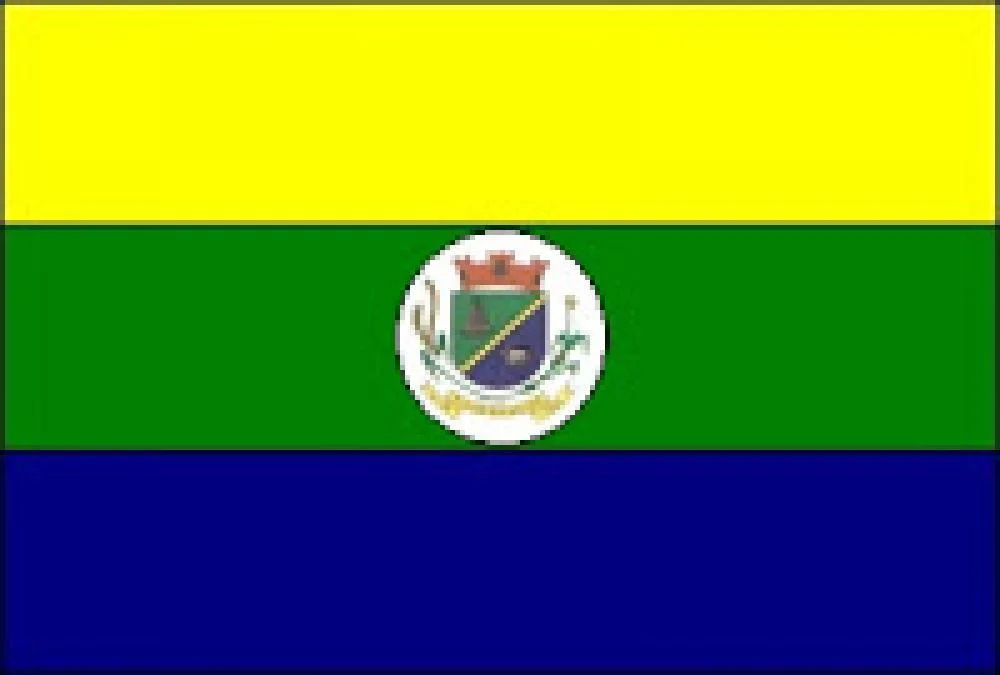

Pilar de Goiás
A garimpeiro - one of the freelance gold prospectors who swarmed the Brazilian interior in the eighteenth century - made a promise to a saint. He needed water to work a rich deposit that had no water nearby, and water would save him enormous labor. If Saint Lady of Pilar would cause water to flow in that barren place, he pledged he would donate a golden bell to the church that would be built there. Water appeared. A church was built. The garimpeiro kept his promise. And the bell that hangs in the Mother Church of Pilar de Goiás today weighs 900 kilograms, and its alloy, according to local tradition, contains an arroba of gold - roughly fifteen kilograms. Three hundred years later the bell still rings.
Founded By The Escaped
The conventional story of Brazilian frontier settlement involves bandeirantes - slave hunters and gold seekers pushing north and west from São Paulo. Pilar de Goiás inverts that story. The town began in 1736 as a quilombo, a community of escaped enslaved people who had found refuge at the bottom of a narrow valley and, almost by accident, found gold as well. The quilombo named itself Papuã, after a marmalade grass that grew abundantly in the valley. When the bandeirante João de Godoy Pinto Silveira was dispatched to hunt down the escaped slaves and return them to their owners, the story goes that he arrived to find them already panning significant quantities of gold. The escaped people reportedly offered the gold in exchange for their freedom. Whether that exchange actually happened, or whether it is a softened legend covering harsher outcomes, is not fully documented. What is documented is that gold exploration took off immediately, and the quilombo of Papuã became the town of Pilar de Goiás.
Gold Makes A Town
For a short window in the eighteenth century, Pilar mattered. Gold brought people from every direction in Brazil, and the narrow valley at the bottom of which the town sits filled up with garimpeiros, traders, and the kind of infrastructure - churches, pharmacies, merchant houses - that gold rushes produce. The town lies in the São Patrício Valley, crossed by three rivers (Vermelho, Peixe, and Taquaraçu) whose beds yielded the ore. The terrain is rugged. Getting in and out of Pilar was hard then and is not easy now - reaching it today requires driving 252 kilometers north from Goiânia through a chain of towns and highway numbers. The cathedral that received the golden bell, built by the grateful garimpeiro, became the anchor of a town that would eventually outlast its economic reason for existing.
The Saint Of Pilar
Nossa Senhora do Pilar - Our Lady of Pilar - is a Marian devotion that traces to a stone pillar in Zaragoza, Spain, where tradition holds the Virgin Mary appeared to the apostle James. Spanish and Portuguese Catholics brought the devotion to the Americas, where it attached to mining towns in particular. The pillar connotes solidity, endurance, the ground on which things are built. For a town named for the saint whose image had granted water to a gold-seeker's prayer, the devotion made immediate sense. The Feast of Saint Lady of Pilar is still one of the town's primary events, alongside the Cavalhadas - the competitive horseback drama that Portuguese colonists imported across Brazil, a tournament retelling medieval battles between Christians and Moors. The Cavalhadas in Pilar is smaller than in nearby Pirenópolis, but it survives.
Emptying Out
The gold played out. What was left was a rugged valley in central Goiás with limited agricultural potential and no practical reason for anyone to stay. The population in 2007 was 2,852 - split between an urban zone of 1,121 people and a rural zone of 1,731. The total has decreased by roughly 7,000 people since 1980, with most of that departure coming from the rural zone. In 2007 there were 13 commercial units, no bank agencies, and 128 automobiles. The economy is a mix of mining (still, on a small scale), agriculture, cattle raising with 62,000 head across 30,606 hectares of pasture, services, and public administration. There are 14 primary schools serving 727 students. The Municipal Human Development Index of 0.700 ranks 209 out of 242 Goiás municipalities, putting Pilar near the bottom of the state's development rankings. The gold that built the town has not stayed to maintain it.
A Bell That Still Rings
The golden bell is still there. It is not pure gold, of course - pure gold is too soft to hold the shape of a bell that has to ring reliably - but its bronze alloy reportedly contains the arroba of gold the garimpeiro promised. Tour guides in Pilar will tell you the story. The townspeople will tell you the story. It is the kind of local legend that doubles as a historical record, because enough of it can be verified through the church's archives and the pattern of promises made across Brazilian mining towns in the eighteenth century. At 900 kilograms the bell is physically massive - one of the heaviest church bells in Goiás. When it rings over the narrow valley where Pilar sits, the sound carries up the sides of the hills toward the cerrado above, the same way it has for nearly three hundred years.
From the Air
Coordinates: 14.76 S, 49.58 W. Best viewing altitude: 3,000-5,000 feet AGL. Nearest airport: Goiânia Santa Genoveva (SBGO), approximately 120 nautical miles south. The town sits at the bottom of a narrow valley in the São Patrício region of central Goiás, surrounded by rugged terrain. Three rivers - the Vermelho, Peixe, and Taquaraçu - are visible from altitude threading the valley.
Nearby Stories
- Uruaçu 19 km away
- Mozarlândia 33 km away
- Nova Crixás 36 km away
- Ceres, Goiás 44 km away
- Mara Rosa 44 km away
- Mutunópolis 91 km away
- Pireneus State Park 103 km away
- Jussara 121 km away