
Senedd
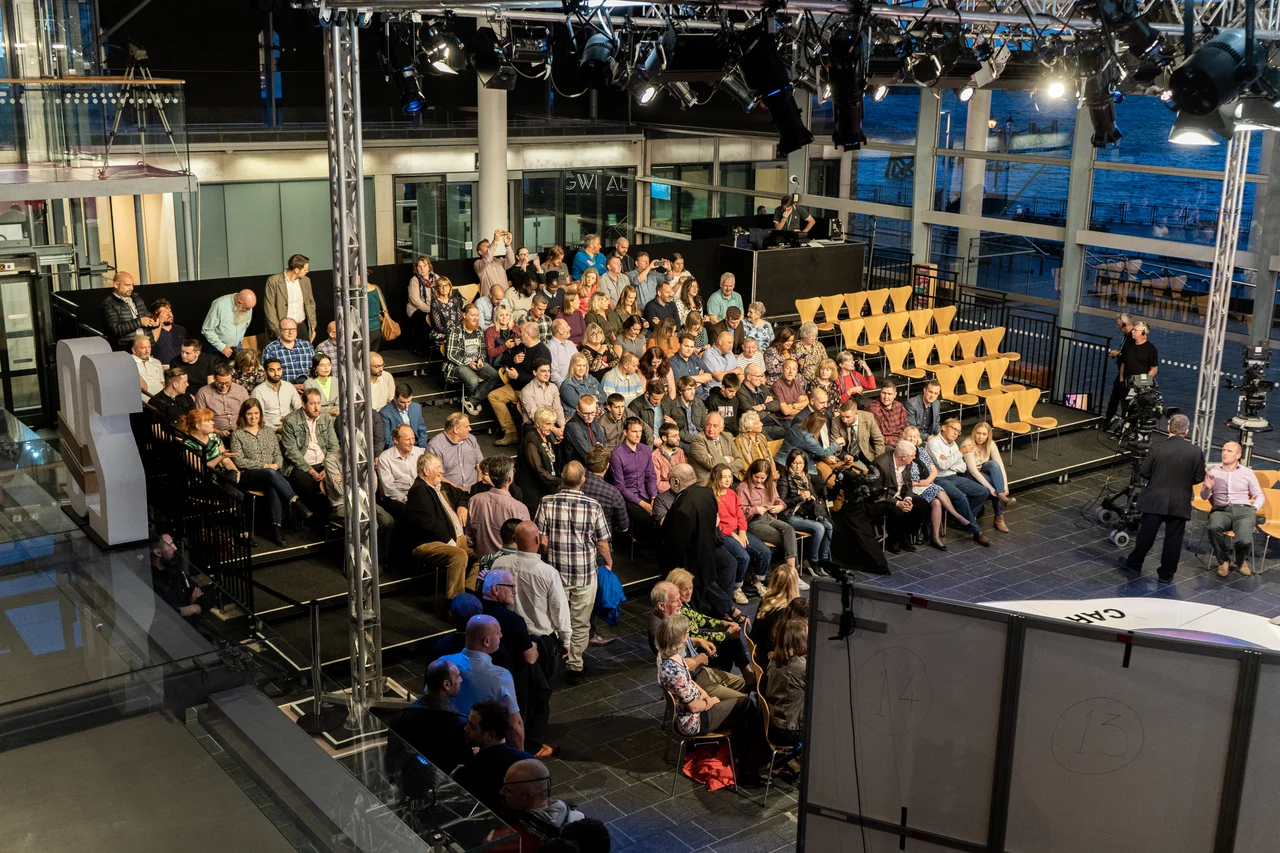
On Saint David's Day, 1 March 2006, Queen Elizabeth II walked through a building whose ceiling looked like the inside of an upturned wooden bowl. Richard Rogers had designed it - the same architect behind the Pompidou Centre and the Lloyd's Building - but where those landmarks turned their guts to the street, the Senedd hides nothing in particular. Its central feature is a wind cowl shaped like a funnel, drawing daylight and air down into the debating chamber below. Welsh oak. Welsh slate. Canadian Western Red Cedar in the timber ceiling. Above it all, glass. The architecture is an argument: this is what openness looks like when a nation decides it should govern its own affairs.
The Long Road Back
Wales and England share a legal system that goes back to 1536, when the Laws in Wales Acts merged the two countries under one Parliament at Westminster. For 461 years, laws affecting Wales were made elsewhere. The 1997 referendum changed that, narrowly - 559,419 votes in favour, 50.3 percent of those who turned out. The National Assembly for Wales opened in May 1999. Its powers, at first, were thin: secondary legislation in devolved areas, no real ability to make primary law, no tax-varying authority. Every meaningful change had to be approved by Westminster. A second referendum in March 2011 gave the Assembly direct law-making powers. Then in May 2020 the institution was formally renamed Senedd Cymru - the Welsh Parliament. By the time the building opened in 2006, Welsh devolution had become a moving thing, gathering more authority with each Act of Parliament: the Government of Wales Act 2006, the Wales Act 2014, the Wales Act 2017.
Building From the Welsh Ground
The Senedd cost around 67 million pounds and was built by Taylor Woodrow on the edge of Cardiff Bay. Rogers's design centres on the Siambr - the debating chamber - which sits beneath an enormous timber funnel that controls heating, cooling, and natural light. Beneath the floor, an Earth Heat Exchange system warms the building. Rainwater collected from the roof flushes the toilets and washes the windows. Slate from Welsh quarries lines the floors. The oak that frames the windows came from Wales too. The wider site is bilingual to its core, English and Welsh both official languages of every committee meeting and every vote. The 60 Members of the Senedd - or Aelodau o'r Senedd, MS in either tongue - sit in a chamber engineered so visitors above can see them at work through the floor of the glazed gallery.
Sixty Members, Soon Ninety-Six
Since 2011, the 60 members are elected for five-year terms using the Additional Member System: 40 representing single-seat constituencies elected first-past-the-post, 20 from five regional lists using the D'Hondt method. Welsh Labour has formed the government in every term since 1999, sometimes alone, sometimes in coalition with Plaid Cymru or the Liberal Democrats. The current First Minister, Eluned Morgan, took office in August 2024. In June 2022, the Senedd voted to expand itself - to 96 members at the next election, due 7 May 2026 - on the grounds that report after report had concluded the existing membership was simply too small to scrutinise government properly. The chamber itself goes under refurbishment from April 2025 to March 2026 to fit the larger membership. During that time, plenary sessions move next door to Tý Hywel, the temporary chamber the Assembly used from 1999 to 2006.
What They Make Laws About
Health and the NHS in Wales. Education. The Welsh language. Agriculture, fisheries, forestry. Local government. The environment. Highways and transport. Culture and tourism. These are the areas in which the Senedd makes law for Wales, while Westminster retains foreign affairs, defence, currency, policing, justice, and most taxes. Some of the differences this devolution has produced are stark. NHS prescriptions in Wales are free, abolished after devolution. University tuition fees are structured differently for Welsh residents at Welsh universities. Residential care charging works on a flat-rate model rather than the heavily means-tested English system, with the result that more people qualify for state support. The Senedd controls Welsh Rates of Income Tax, Land Transaction Tax, and Landfill Disposals Tax. The UK Internal Market Act of 2020, passed in the wake of Brexit, has constrained how far some of these powers can practically be exercised - one of the live tensions in current Welsh politics.
The Pierhead and the Senedd Together
Walk along Cardiff Bay's waterfront and three buildings sit in conversation. The Pierhead Building, a Victorian red-brick clock tower from 1897, originally built for the Bute Dock Company, now houses the Senedd's visitor centre and exhibition. The Wales Millennium Centre, opened in 2004, with its inscription "Creu Gwir fel Gwydr o Ffwrnais Awen" - Creating Truth like Glass from the Furnace of Inspiration - rises in copper-coloured slate. And the Senedd, low and glass-fronted, looks out over the water that was once an industrial dock. From the air the three line up like points on a deliberate composition. From inside the Senedd, you can stand above the public viewing area and look down through the floor at MSs working in the chamber - which is the closest thing to a metaphor for what the building is supposed to be.
From the Air
The Senedd is at roughly 51.4639°N, 3.1626°W on the Cardiff Bay waterfront, a short walk south of Cardiff city centre. The building sits at the heart of the redeveloped bay, with the Pierhead Building immediately to its east and the Wales Millennium Centre to the north. Nearest airport is Cardiff (EGFF), about 6 miles west. Bristol (EGGD) lies across the Severn Estuary 25 miles east. From cruising altitude in clear weather, Cardiff Bay's distinctive horseshoe shape stands out, with the Cardiff Bay Barrage closing off the bay to the south. The Senedd's glass-and-slate roof is most visible from low to medium altitudes. The wider bay is a natural visual landmark for any approach to Cardiff Airport from the east.
Nearby Stories
- Berkeley Castle 1 km away
- Tower Colliery 5.9 km away
- Battle of Sedgemoor 5.9 km away
- Royal Victoria Park 7.1 km away
- Ewenny Priory 8.9 km away
- Crumlin Viaduct 10 km away
- Stourhead 11 km away
- Exmoor 16 km away