
Siege of Chillán
The siege began in the worst possible season. On July 27, 1813, in the depth of the southern winter, the patriot army of José Miguel Carrera surrounded the royalist stronghold of Chillán and settled in to break it. Carrera was young, brilliant, and impatient, the de facto leader of Chile's infant revolution. Inside the walls, a determined garrison under Juan Francisco Sánchez had no intention of surrendering. For two freezing weeks the two sides ground against each other in the mud, and when it was over, Carrera limped away with his army gutted and his reputation cracked, never to fully recover.
A City Built to Resist
Old Chillán was a natural fortress. It sat on a defensible rise hemmed by three rivers, the Paso Hondo, the Maipón, and the Chillán, a place that punished any attacker who came at it carelessly. Its peacetime population of about 4,000 had swelled to some 9,000 with the arrival of Sánchez's royalist troops and their Valdivian reinforcements under Juan Nepomuceno Carvallo. The Spanish crown still commanded real loyalty in Chile's deep south, and Chillán was its anchor. When Carrera moved against the city, the governing junta in Santiago urged him to take it quickly, before fresh royalist columns under Antonio Pareja could arrive. Speed, in other words, was everything. Winter had other plans.
Mud, Cold, and Desertion
Carrera brought some of the patriots' best soldiers, and he did not lack for expertise. Before he even took command, the Irish-Chilean officer Juan Mackenna and the American adventurer Joel Roberts Poinsett, later famous for the flower that bears his name, had already mapped the enemy fortifications and plotted where the artillery should go. But maps do not stop the rain. The patriots had waterproof ponchos and little else; supplies ran thin, the weather turned vicious, and Carrera grew anxious about the whole campaign's timing. Worst of all, his army began to dissolve from within. As the siege dragged through late July and into August, soldiers slipped away into the countryside in growing numbers, and a besieging army that bleeds men cannot besiege for long.
The Assault and the Massacre
Carrera saw his force disintegrating and gambled on a direct attack before it vanished entirely. The first assault, the battle of Maipón, fell on August 3; a second followed two days later. They failed. The royalists held their ground with grim discipline, and the patriots could not break in. But the assaults carried a darker stain than mere defeat. Many of Chillán's civilian inhabitants, ordinary townspeople caught between two armies, were killed in the fighting, and the chronicles record numerous atrocities. This was the Guerra a Muerte, the "War to the Death," a phase of Chile's revolution defined by exactly this kind of cruelty. The people of Chillán were not combatants in anyone's grand design. They were the ones who paid when the design failed.
The Retreat That Doomed a Leader
By August 10 there was nothing left to do but quit. Carrera had lost more than five hundred men killed or captured. His militia cavalry and much of his infantry had simply fled, and with no food and no ammunition the patriot perimeter could not hold. He raised the siege and fell back toward Quirihue and Concepción, leaving Chillán unbroken behind him. The military failure was bad enough. The political failure was worse. The leadership in Santiago had watched their bold young commander squander an army against a provincial town, and their confidence in him drained away. The siege of Chillán began the unraveling of Carrera's authority, clearing the path for a rival named Bernardo O'Higgins, Chillán's own native son, to take command of the revolution.
From the Air
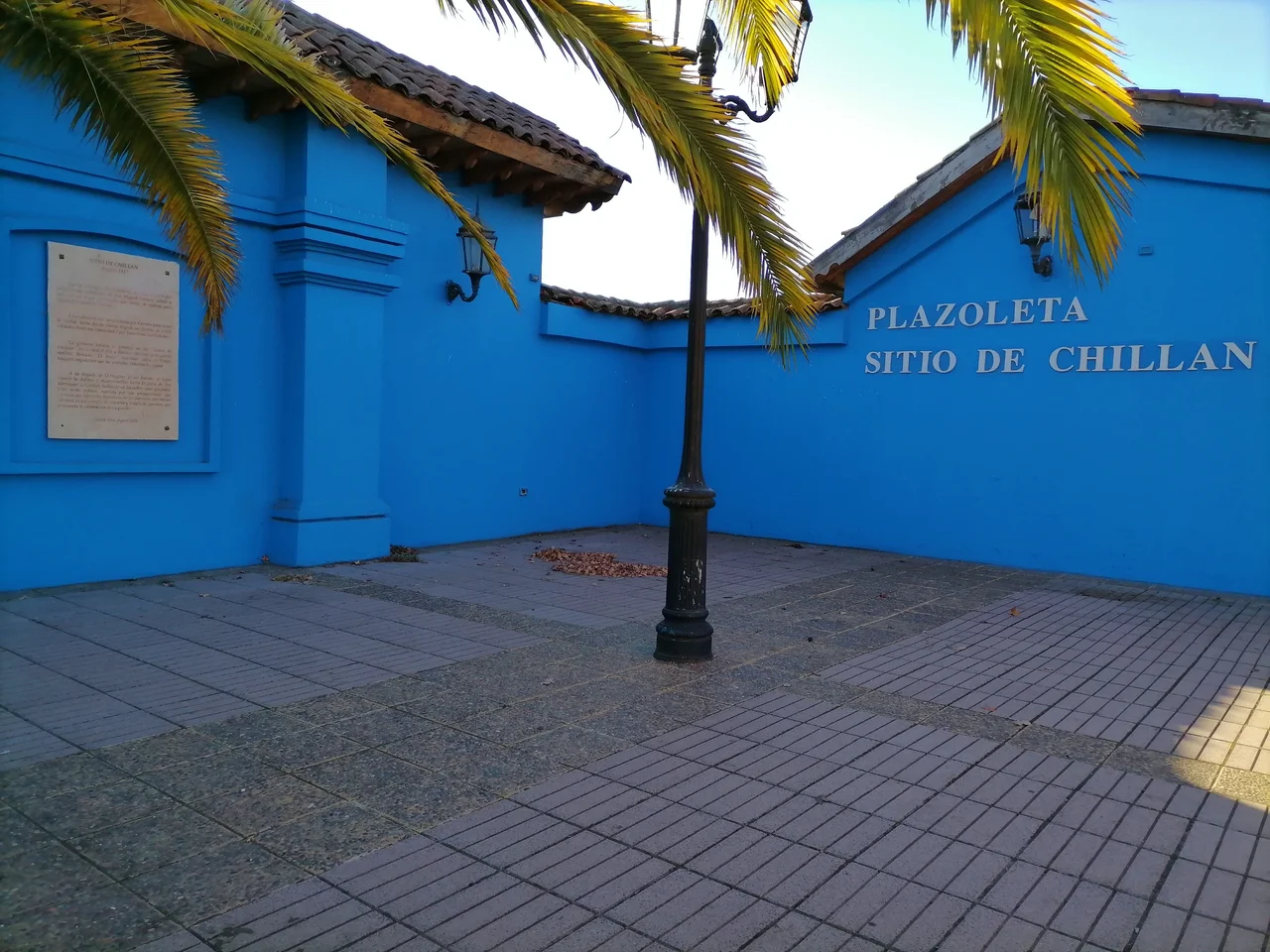
The siege was fought at the site of old Chillán, near 36.62°S, 72.14°W, in Chile's Central Valley at roughly 120 meters elevation. The defensible ground lay between the Paso Hondo, Maipón, and Chillán rivers; a plaque on the corner of Luis Arellanos and Velásquez streets in the modern city marks the deaths at the battle of Maipón. From the air, the valley reads as a flat agricultural quilt between the coastal range and the Andean foothills, with the Nevados de Chillán volcanoes on the eastern horizon. General Bernardo O'Higgins Airport (ICAO SCCH) serves Chillán directly; Carriel Sur International (ICAO SCIE) at Concepción, about 100 km west toward the coast where Carrera retreated, handles commercial flights. Winters here are wet and grey, with low cloud that would have shrouded the besiegers much as it shrouds the valley today.
Nearby Stories
- Tomé Tragedy 16 km away
- Cobquecura 28 km away
- Cueva de los Pincheira 31 km away
- El Chiflón del Diablo 39 km away
- Parral, Chile 45 km away
- Tucapel 49 km away
- Tragedy of Antuco 62 km away
- LAN-Chile Flight 621 69 km away