
Siege of Naxos (499 BC)
It was meant to be easy. In the spring of 499 BC, a fleet of two hundred warships sailed for Naxos, expecting to catch the island unprepared and add the richest of the Cyclades to the Persian Empire. Instead the expedition fell apart before it even landed, the Naxians were warned in time, and after four months of fruitless siege the invaders ran out of money and sailed home in disgrace. The man behind the failure, fearing for his own life, then made a desperate gamble that would set Greece and Persia at war for half a century.
A Scheme Born of Ambition
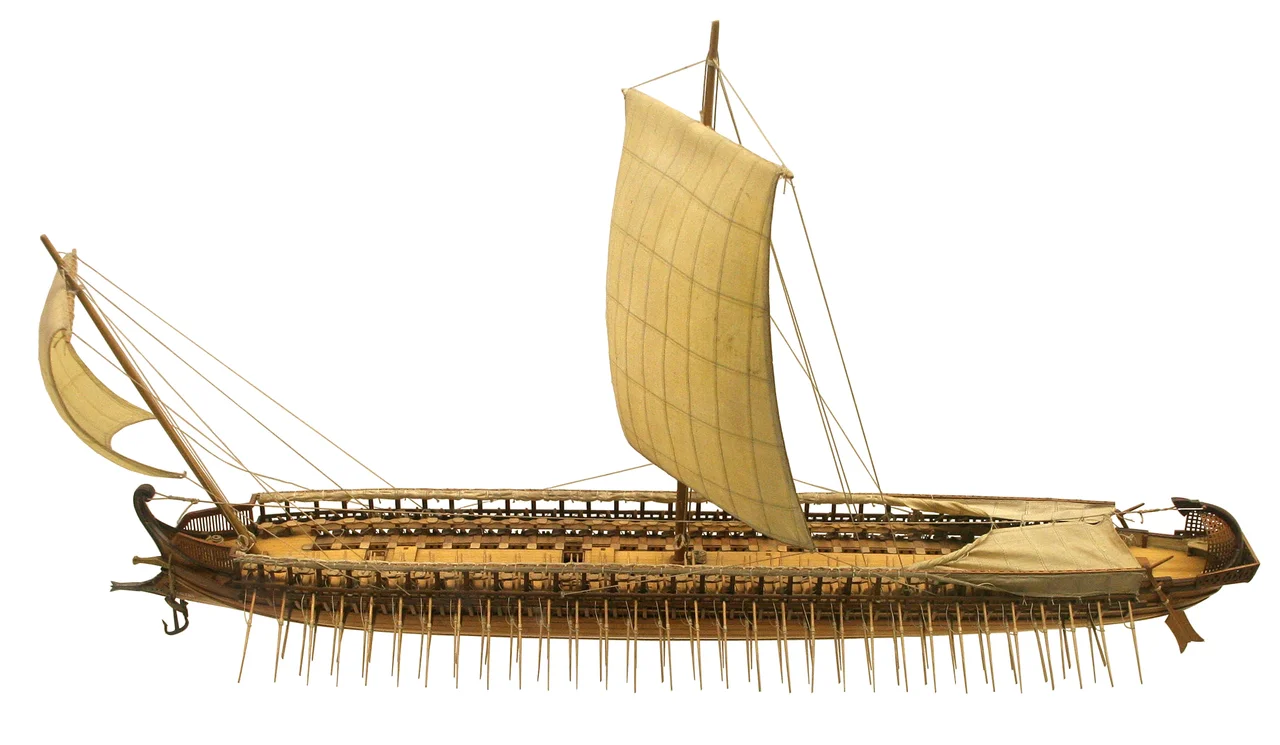
The plot began with exiles. A group of aristocrats had been thrown out of Naxos when its people seized power and established a democracy, and they came looking for help to get home. They found Aristagoras, the tyrant of Miletus on the coast of Asia Minor, who saw a chance to strengthen his own shaky position. Miletus was a Greek city under Persian rule, and Aristagoras went to his overlords with a proposal: give him an army, and he would conquer Naxos in the name of Darius the Great, then hand the empire the rest of the Cyclades besides. The satrap Artaphernes agreed, the Persians assembled two hundred triremes, and command was handed to Megabates, a cousin of both Darius and Artaphernes.
The Quarrel That Lost a War
Almost at once, the venture soured. Sailing toward Naxos, Aristagoras and Megabates fell into a bitter quarrel. According to Herodotus, our main source, Megabates discovered a ship from Myndus that had posted no sentries and punished its captain harshly; Aristagoras intervened, and the two commanders came to hate each other. Then someone - possibly the furious Megabates himself - sent word ahead to warn the Naxians. The islanders had suspected nothing. Now, with days to spare, they hauled their crops and livestock in from the fields, stockpiled food enough to outlast a siege, and reinforced their walls. Herodotus says Naxos could call on eight thousand men able to arm themselves as hoplites - a formidable backbone of defenders behind strong fortifications.
Four Months and Nothing
The Persians and Ionians arrived to find exactly what an invader dreads: a well-supplied, well-defended city that knew they were coming. There was no swift conquest to be had. The expeditionary force settled in for a siege, but a siege is a contest of patience and money, and the attackers had badly miscalculated both. Four months passed. The walls held. The supplies the Naxians had gathered held too. At last the besiegers' funds simply ran out, and the great fleet that had set off so confidently was forced to turn around and sail back to Asia Minor, having achieved nothing. For Aristagoras, who had staked his credibility and Persian treasure on this, it was a catastrophe.
The Spark That Lit Fifty Years
Aristagoras now expected to be removed as tyrant, perhaps to be killed. So he made a reckless choice: rather than face Persian punishment, he would turn the whole of Ionia against the empire. The Greek cities of Asia Minor were already resentful of the tyrants Persia had installed over them, and the revolt spread fast - to Caria, to Cyprus. Athens and Eretria sent ships to help. The fighting dragged on for years until the Persians regrouped and crushed the Ionian fleet at the Battle of Lade in 494 BC, ending the rebellion. But Darius did not forget who had aided his rebels. His vow to punish Athens and Eretria led, in 490 BC, to the first Persian invasion of Greece - and to Marathon, Thermopylae, and Salamis beyond it. A failed four-month siege of one island had, in the end, helped ignite the Greco-Persian Wars.
From the Air
The siege centered on the ancient city of Naxos, on the northwest coast of the island at roughly 37.08 N, 25.47 E - the same shore where Chora stands today. From altitude, Naxos is the largest island of the Cyclades, its harbour town marked by the white sprawl of Chora and the lone marble gate of the Portara on the islet at the port mouth. Nearest airport is Naxos Island National (LGNX), about 3 km from the old town. Recommended viewing altitude 3,000-6,000 ft to take in the island and the surrounding Cyclades; clear Aegean summer skies give long visibility, with the meltemi wind the main hazard on approach.
Nearby Stories
- The Big Blue 15 km away
- Italian submarine Jantina (1932) 17 km away
- Archaeological Museum of Sifnos 19 km away
- Miaouli Square 20 km away
- Astypalaia 37 km away
- Ikaria 38 km away
- Milos 49 km away
- Monastery of Saint John the Theologian 58 km away