
Sierra Leone
Ask a Sierra Leonean what their country's greatest asset is, and they will not point to the diamonds, the rainforest, or even the ten or so world-class beaches that line the Freetown peninsula, often deserted on an ordinary afternoon. They will point to the people. Tourism here remains vast in potential and barely realized, which is precisely its appeal: arrive with patience and an open mind, and you'll find pristine tropical islands, a creole culture you can hear in the streets, and a populace whose friendliness has survived more than most nations endure.
Crossing the Water to Freetown
Your first decision arrives before you've left the airport. Lungi International sits on the wrong side of a wide estuary from Freetown, so almost no one drives in, the road route via Port Loko takes five hours or more over poor roads. Instead, most travelers take a water taxi: Sea Coach Express to Aberdeen Bridge or Sea Bird Express to Murray Town, each around US$45, the larger boats now offering air conditioning and WiFi. Budget travelers can brave the overloaded car ferries or the cheap local speedboats and slow "pampa" boats. The crossing is part of the arrival ritual, a first glimpse of the mountainous peninsula rising from the Atlantic where Freetown sprawls across the hills.
The Beaches and the Bush
The Freetown peninsula's beaches are the country's open secret, spectacular stretches of sand that on most days you'll have largely to yourself. From Sea Coach's boathouse between Aberdeen and Murray Town you can charter a speedboat for a day trip down the coast to the Banana Islands, the Turtle Islands, or Bonthe on Sherbro Island, a former colonial town of stone churches and gentle decay. Inland, Sierra Leone keeps vast swathes of rainforest. Tiwai Island, set in a river in the southeast, teems with rare wildlife and ranks among the world's densest concentrations of primates. Outamba-Kilimi National Park mixes savanna and jungle, and Mount Bintumani rewards a hard climb with views from the highest summit in the country.
Getting Around, Sierra Leone Style
Travel here is an education in improvisation. The poda-poda, Sierra Leone's version of the West African bush taxi, is a minibus seemingly stitched together with thread, six people crammed into each row of three, hip-hop blaring on and off with the accelerator, and it costs almost nothing. Shared taxis are marginally roomier for about the same fare. Moto-taxis are fast, nimble on broken roads, and frankly dangerous, the law requires a helmet for passengers, which is observed mostly in the breach. Main roads to Bo, Kenema, and Makeni have been rebuilt to excellent standard since the war, though side streets in Freetown can dissolve into dirt, gravel, and open gutters. When walking the capital, watch the sidewalks: missing slabs make "death traps" that send many residents into the street instead.
Tastes, Talk, and Custom
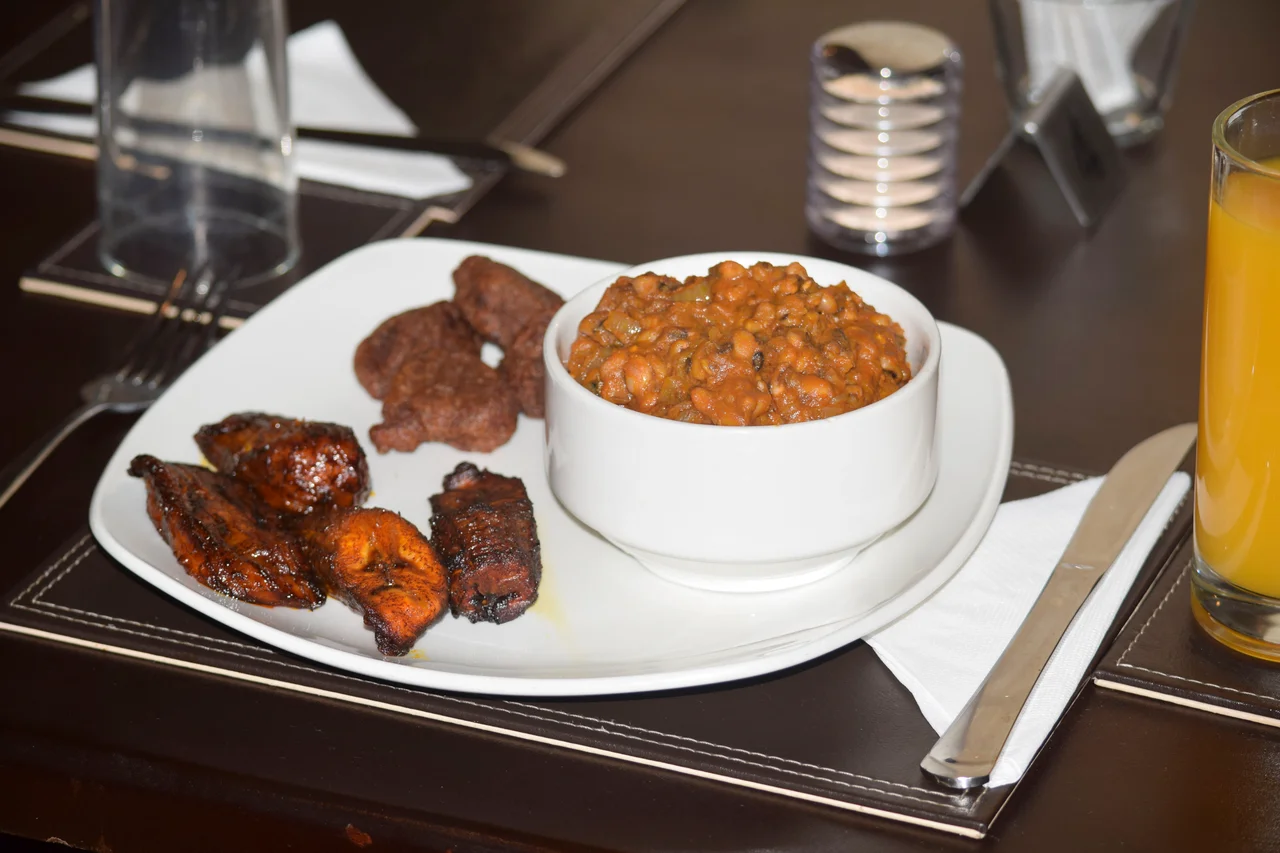
English is official, but Krio is the lingua franca, a creole drawn from English, Yoruba, Igbo, and traces of Portuguese and French, spoken nearly everywhere though largely unintelligible to an English speaker's ear. The staple is rice, served with rich, often fiery stews of fish, meat, and greens like cassava and potato leaf, and on the Atlantic coast at Lumley Beach you can watch fishermen haul in nets of snapper, crab, and lobster. Wash it down with the local palm wine, poyo, beloved across the country, or a cold Star beer from the national brewery. In rural villages, the oldest custom still holds: ask for the chief, request a guest house, and in the morning "pay your respects" with a small gift, a quiet exchange of hospitality that no hotel can replicate.
From the Air
Sierra Leone lies on the West African coast, the capital Freetown set on a mountainous peninsula at roughly 8.48°N, 13.23°W. The international gateway is Freetown-Lungi International Airport (ICAO GFLL), positioned across the Sierra Leone River estuary north of the city, most arrivals continue by water taxi. The country spans 7° to 10°N and 10° to 14°W, bordered by Guinea and Liberia. Look for the deeply indented coastline, the peninsula's beaches and forested ridges, and the vast natural harbor at Freetown, the third-largest in the world. The dry season (November to April) brings the clearest conditions; the July-August peak of the rains delivers heavy cloud and frequent storms.
Nearby Stories
- Makeni 14 km away
- Operation Barras 16 km away
- Tombo, Sierra Leone 49 km away
- Lake Sonfon 52 km away
- Tiwai Island 85 km away
- The Loma Mountains: Sierra Leone's Rooftop and Last Refuge 89 km away
- Operation Green Sea 140 km away