
Operation Green Sea
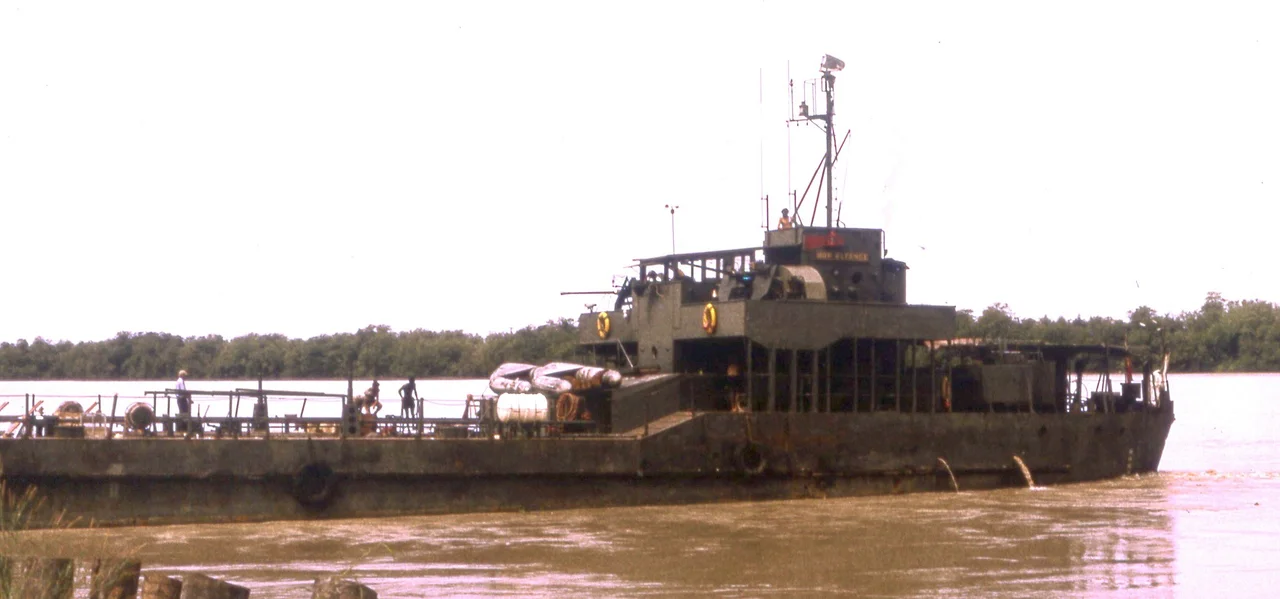
In the dark before dawn on 22 November 1970, six unmarked ships slipped toward the harbor of Conakry. The men aboard wore uniforms cut to resemble those of the Guinean army, but their officers spoke Portuguese. What followed was one of the Cold War's stranger episodes in West Africa: a seaborne invasion of one country's capital, launched to settle a war being fought in another. By morning Guinea's president was still in power, the rebels' chief target had escaped, and the raid had set in motion a wave of executions that would dwarf the fighting itself.
A War Next Door
To understand the raid, look across the border. After Guinea voted for independence in 1958, President Ahmed Sékou Touré opened his country to liberation movements still fighting colonial rule. Chief among them was the PAIGC, the African Party for the Independence of Guinea and Cape Verde, led by the brilliant agronomist-turned-revolutionary Amílcar Cabral. From bases in and around Conakry, the PAIGC waged a guerrilla war against Portuguese rule in neighboring Portuguese Guinea, today's Guinea-Bissau. For Lisbon, Conakry was the sanctuary that kept the insurgency alive. Eliminate Cabral, the thinking went, and the rebellion might collapse. The operation was placed under a young marine officer, Commander Alpoim Calvão, and given the codename Mar Verde, Green Sea.
The Night of the Raid
Roughly 220 Portuguese soldiers, both African and European, came ashore alongside some 200 Guinean exiles who hoped to overthrow Touré. They moved with several aims at once. One group destroyed PAIGC supply vessels in the harbor. Another landed near the president's summer house and burned it. Others struck at the PAIGC headquarters, hunting for Cabral, who, as it happened, was in Europe. A separate party broke into the prison camps and freed a number of captives, including 26 Portuguese prisoners of war held at Camp Boiro, some confined for as long as seven years. But the operation stumbled on a small, decisive error: the raiders attacked a radio station that had been abandoned, never silencing the one still broadcasting under government control.
The Plan Unravels
With the prisoners freed, half the invading force withdrew to the waiting ships, leaving fewer than 150 men to accomplish the hardest task of all, toppling a government. They appear to have gambled on a popular uprising. None came. The functioning radio station rallied the city, most senior officials evaded capture, and with neither Cabral nor Touré in their hands, the raiders had run out of objectives. They retreated to the sea, having suffered only minor casualties. As a military exercise the raid was swift and partly successful. As a coup it failed completely, and the failure mattered most for the Guineans who had stayed behind, and for the thousands who had never left.
The Reckoning
What followed was harsher than the battle. Within a week Touré created a ten-member High Command that ruled by decree, ordering arrests, detentions without trial, and executions. After a five-day trial in January 1971, a Supreme Revolutionary Tribunal handed down 29 death sentences carried out three days later, dozens more in absentia, and scores of life sentences at hard labor. Among the dead was the country's finance minister. Many of the accused vanished into the camps. The world condemned the raid: on 8 December 1970 the UN Security Council passed Resolution 290 censuring Portugal, and the Organization of African Unity followed with a unanimous resolution of its own. Yet the invasion's deepest mark was internal. It gave a fearful regime its pretext, and Guinea paid in the years of repression that came after.
From the Air
Operation Green Sea unfolded around Conakry, Guinea, centered near 9.548°N, 13.671°W on the Kaloum peninsula. The raiders came from the Atlantic to the west; the harbor, the old presidential grounds, and Camp Boiro were all targets within a few kilometers of the city center. Conakry International Airport (ICAO GUCY) lies about 12 km northwest and was reached but ignored during the raid. The terrain is low and coastal, the peninsula fringed by mangroves and open ocean. Visibility is best in the dry season (December to March); harmattan haze and wet-season storms can obscure the coast otherwise.
Nearby Stories
- Pongo River (Guinea) 23 km away
- Kindia 28 km away
- Maritime Guinea 79 km away
- Operation Barras 88 km away
- King's Yard 98 km away
- Outamba-Kilimi National Park 110 km away
- Boké 152 km away
- Rocas Atoll 2633 km away