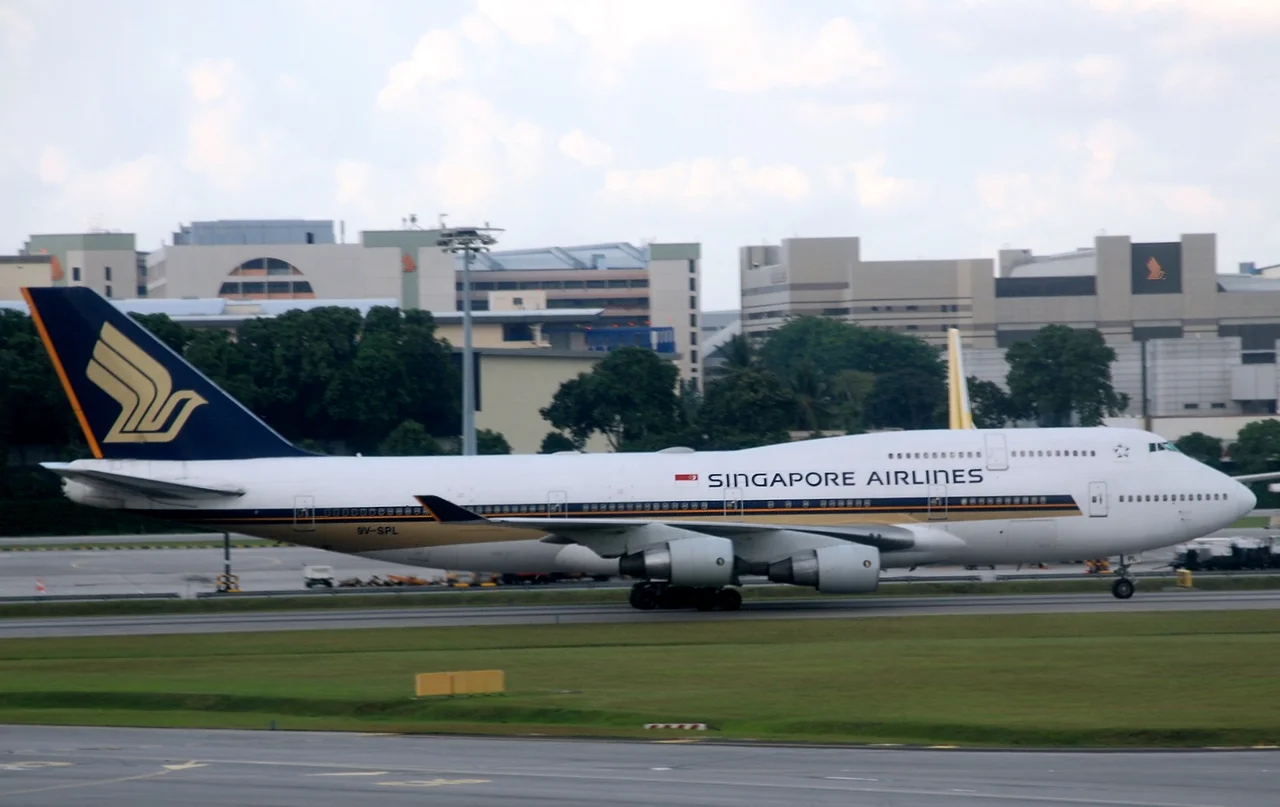

Singapore Airlines Flight 006
It was Halloween night, 2000, and Typhoon Xangsane was lashing northern Taiwan with sheets of rain so heavy that the pilots of Singapore Airlines Flight 006 could barely see the taxiway markings beneath them. What happened next would become a case study in how small navigational errors cascade into catastrophe. The Boeing 747-400, registration 9V-SPK, carried 159 passengers and 20 crew members bound for Los Angeles via a stopover at Chiang Kai-shek International Airport. None of them knew the aircraft was rolling toward construction equipment on a runway that should never have been in use.
The Wrong Turn
At 23:05 on October 31, ground control cleared Flight 006 to taxi to runway 05L via taxiways SS, WC, and NP. The airport lacked Airport Surface Detection Equipment, the ground radar that lets controllers track aircraft movements in poor visibility. In the driving rain of Typhoon Xangsane, the flight crew turned onto runway 05R instead of 05L. The two runways ran parallel, separated by enough distance that in clear weather the mistake would have been immediately obvious. But this was not clear weather. Runway 05R was partially closed for construction, its surface cluttered with excavators, vibrating rollers, a bulldozer, and an air compressor. The pilots advanced the throttles, began their takeoff roll, and at approximately 23:18 local time, the nose of the 747 struck a scoop loader at high speed.
Three Minutes of Fire
The impact ignited a massive fire that consumed the forward fuselage and wings. The aircraft broke apart on the closed runway, scattering wreckage across the construction zone. Within minutes, 41 firefighting vehicles, 58 ambulances, and 436 emergency personnel converged on the scene. Chemical extinguishing agents reached the wreckage approximately three minutes after impact, but for many aboard, those minutes were an eternity. Of the 179 people on the aircraft, including three children and three infants, 83 died. Thirty-nine suffered serious injuries, 32 sustained minor injuries, and 25 walked away physically unharmed. Two more passengers would later die in hospital, bringing the final death toll to 83. It was the first fatal crash of a Boeing 747-400 anywhere in the world, and the first fatal accident in Singapore Airlines' 28-year history.
An Experienced Crew, a Lethal Gap
Captain Foong Chee Kong, 41, was a Malaysian pilot with 11,235 flight hours, more than 2,000 of them on the 747-400. First Officer Cyrano Latiff had logged 2,442 hours. Relief pilot Ng Kheng Leng brought 5,508 hours of experience, including over 4,500 on the type. This was not an inexperienced crew fumbling through unfamiliar territory. The investigation that followed pointed to a chain of contributing factors rather than a single blunder: the absence of ground radar, poor runway signage, typhoon-degraded visibility, and the crew's failure to confirm they were on the correct runway before commencing takeoff. The accident report highlighted systemic failures in airport infrastructure as much as cockpit decision-making.
Aftermath and Legacy
The crash prompted sweeping changes at what is now Taoyuan International Airport. Ground radar systems were installed. Runway signage and lighting were upgraded. Procedures for operations during typhoon conditions were overhauled. Singapore Airlines, which had built its reputation partly on an impeccable safety record, faced its most painful reckoning. The airline cooperated fully with Taiwanese investigators, though Singapore's Ministry of Transport later disputed some of the final report's conclusions about crew responsibility. For the families of the dead, the debate over blame offered little comfort. The passengers came from more than a dozen countries. Among them were an MIT alumnus and his wife, a UC Davis professor, and dozens of ordinary travelers whose only mistake was booking a flight through Taipei on the night a typhoon decided to visit.
A Runway Remembered
Today, Taoyuan International Airport handles tens of millions of passengers annually. Its runways have been renovated, its safety systems modernized. Few travelers taxiing past the spot where 9V-SPK broke apart know they are rolling over ground that changed aviation safety procedures across Asia. The crash of Flight 006 belongs to a grim category of disasters that forced systemic improvements: better ground radar became standard at major airports, runway incursion protocols were tightened worldwide, and the aviation industry gained another painful reminder that even experienced crews can lose situational awareness when the weather turns hostile enough. The 83 people who died on runway 05R that October night are memorialized not by a monument but by the safety reforms their deaths made necessary.
From the Air
Coordinates: 25.08N, 121.23E at Taoyuan International Airport (ICAO: RCTP). The airport sits approximately 40 km west of downtown Taipei at near sea level. Two parallel runways (05L/23R and 05R/23L) are clearly visible on approach. Nearby airports include Taipei Songshan (RCSS) to the east. The Taiwan Strait lies just to the west.
Nearby Stories
- Jingtong Mining Industry Museum 8.9 km away
- Kavalan Distillery 9.5 km away
- Hsinchu Science Park 10 km away
- 2022 Chinese Military Exercises Around Taiwan 25 km away
- Gaomei Lighthouse 53 km away
- North Jiangsu Main Irrigation Canal 978 km away
- General Cliff Rock Paintings 1043 km away
- Sinking of MV Sewol 1073 km away