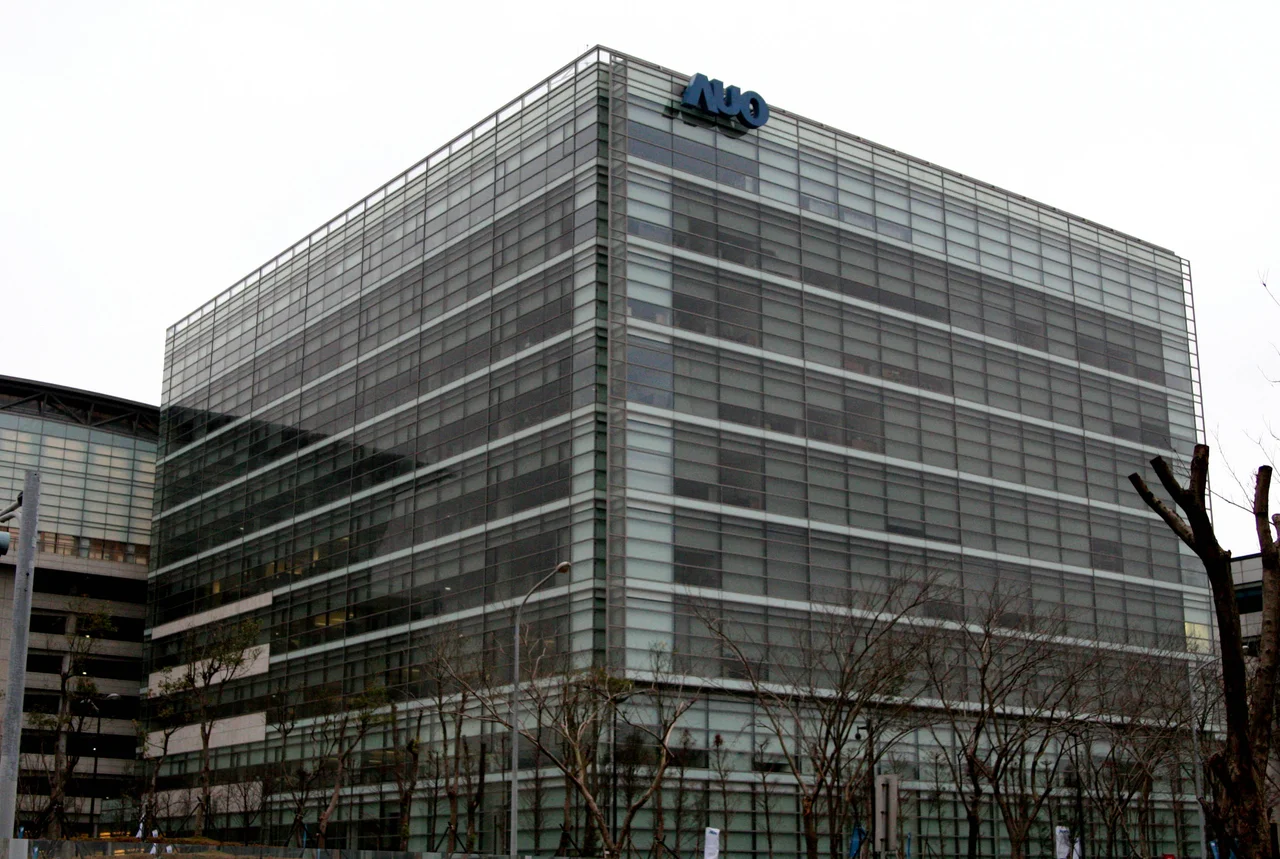
.jpg)
Hsinchu Science Park
In 1976, a Taiwanese government minister named Shu Shien-Siu returned from a tour of technology hubs in the United States, Europe, and Japan with an idea that would reshape the global economy. Shu, who was also the former president of National Tsing Hua University, wanted to build Taiwan's own Silicon Valley. Not a metaphorical one - a literal recreation, placed strategically next to two of the island's best engineering universities, designed to lure back the Taiwanese scientists and engineers who had left for American labs and never returned.
Four years later, on December 15, 1980, the Hsinchu Science Park opened on the eastern edge of Hsinchu City. Within a generation, this industrial park would become the single most important piece of real estate in the semiconductor industry, home to the foundries that manufacture the chips powering nearly every electronic device on Earth.
A Minister's Blank Check
The park's origin story reads like a heist film cast with bureaucrats. Shu Shien-Siu conceived the idea. President Chiang Ching-kuo assigned the construction. Li Kwoh-ting, representing the Executive Yuan, recruited Morris Chang from Texas Instruments to lead the Industrial Technology Research Institute and eventually found TSMC. Irving Tze Ho helped shape the park's administrative structure. And crucially, Li consulted Frederick Terman - the Stanford provost widely credited as the godfather of Silicon Valley - on how Taiwan could replicate the model.
The formula was deliberate: place the park adjacent to National Tsing Hua University and National Chiao Tung University to create a pipeline of engineering talent. Offer tax incentives and venture capital to attract returnees. Build the infrastructure first and let the companies fill it. Li introduced the concept of venture capital to Taiwan specifically to finance the startups that would populate the park. The strategy worked. Among those who returned was Morris Chang, who founded TSMC in 1987 and transformed the park from a government project into the center of the chip universe.
The Foundry That Changed Everything
Hsinchu Science Park houses more than 500 high-tech companies across six campuses spanning 1,471 hectares, but two companies define its global significance: Taiwan Semiconductor Manufacturing Company and United Microelectronics Corporation. Both were born at the nearby Industrial Technology Research Institute, and both pioneered the foundry model - manufacturing chips designed by other companies rather than designing their own.
By 2007, the park's roughly 400 technology companies accounted for 10 percent of Taiwan's gross domestic product. Taiwan became the only country with a complete professional division-of-labor system in the semiconductor industry, and Hsinchu achieved the highest density of 12-inch wafer fabrication plants in the world. The park's output is not just economically significant; it is strategically critical. The chips manufactured here power smartphones, data centers, military systems, and artificial intelligence platforms worldwide. When geopolitical analysts discuss Taiwan's importance, they are often really discussing what happens inside Hsinchu Science Park.
Six Campuses and a Space Agency
The original Hsinchu campus straddling East District and Baoshan has expanded into a constellation of six sites: Zhunan and Tongluo in Miaoli County, Longtan in Taoyuan, Yilan in Yilan County, and a Biomedical Science Park in Zhubei, Hsinchu County. Each campus serves a different function within the broader technology ecosystem, from semiconductor fabrication to biomedical research to optoelectronics.
The park's neighbors are as significant as its tenants. National Yang Ming Chiao Tung University and National Tsing Hua University sit next door, feeding graduates directly into the workforce. The National Space Organization, Taiwan's space agency, operates from within the park. The roster of resident companies reads like a directory of the global electronics industry: Apple, Qualcomm, MediaTek, TSMC, Realtek, Lam Research, Kingston Technology, Tokyo Electron. Walking through the park is less like visiting an industrial zone and more like reading the fine print on the back of every device you own.
The Price of Progress
Growth at Hsinchu was not without friction. Local residents protested water and air pollution from the manufacturing processes - semiconductor fabrication uses large quantities of chemicals and ultrapure water, and the waste streams are difficult to manage. The park activated its first dedicated industrial wastewater treatment plant in 1986, and Taiwan's National Environmental Protection Department monitors air quality in and around the complex.
The environmental tension mirrors a broader question facing Hsinchu and Taiwan: how to sustain an industry that the world depends on without degrading the island that hosts it. TSMC alone consumes roughly five percent of Taiwan's total electricity. The fabrication plants require enormous volumes of water, a resource that Taiwan's variable rainfall and limited reservoir capacity do not always guarantee. The park that began as one minister's vision of a technology utopia must now reconcile its indispensability to the global economy with the finite resources of the island that makes it all possible.
From the Air
Located at 24.78°N, 121.01°E on the eastern edge of Hsinchu City in northwestern Taiwan. The park is visible from the air as a large, organized complex of low-rise industrial and office buildings adjacent to the Hsinchu urban area. National Tsing Hua University and National Yang Ming Chiao Tung University campuses are visible immediately to the west. Hsinchu Air Base (RCPO) is approximately 5km to the west. Taiwan Taoyuan International Airport (RCTP/TPE) is about 50km to the north. The terrain is relatively flat compared to central Taiwan, situated on the coastal plain west of the Central Mountain Range. Weather is generally good for visibility, though haze from industrial activity can reduce clarity at lower altitudes.
Nearby Stories
- Kavalan Distillery 5.5 km away
- Shei-Pa National Park 5.8 km away
- Taoyuan Guanxin Algal Reefs Ecosystem Wildlife Refuge 11 km away
- Jingtong Mining Industry Museum 11 km away
- Gaomei Lighthouse 14 km away
- Qingshui Cliff 25 km away
- 2022 Chinese Military Exercises Around Taiwan 34 km away
- Gaomei Wetlands 43 km away