
2022 Chinese Military Exercises Around Taiwan
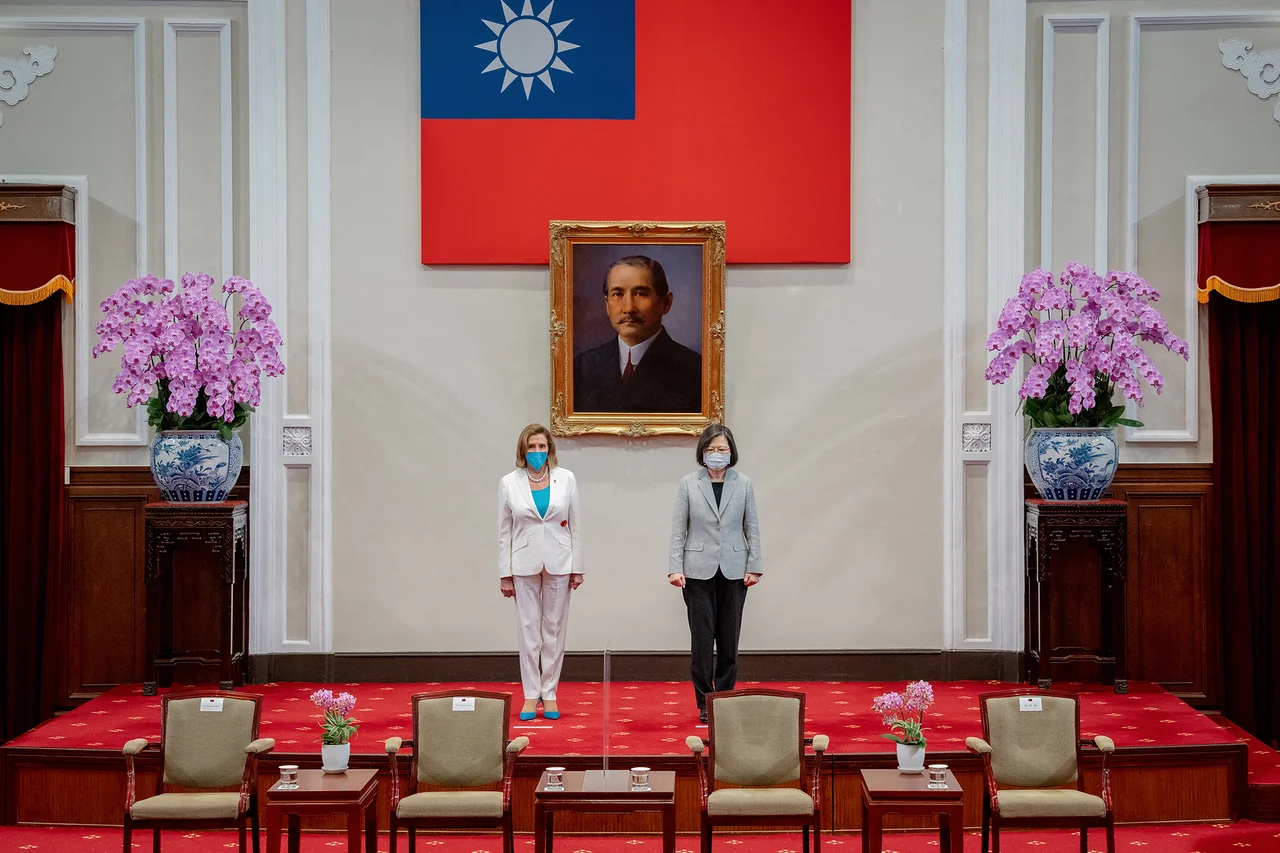
Eleven missiles. That was China's answer to a congressional visit. On 2 August 2022, United States House Speaker Nancy Pelosi landed in Taipei, becoming the highest-ranking American official to visit Taiwan in twenty-five years. Within hours, the People's Republic of China announced four days of live-fire military exercises in seven zones encircling the island. What followed was the most intense military confrontation in the Taiwan Strait since the Third Crisis of 1995-96 - an event that analysts would come to call the beginning of the Fourth Taiwan Strait Crisis. The exercises lasted from 4 to 11 August, involving naval deployments, air sorties, and ballistic missile launches that sent shockwaves through the waters around one of the world's most critical shipping corridors.
The Gathering Storm
The visit did not happen in a vacuum. Since 2020, PLA aircraft had been entering Taiwan's Air Defense Identification Zone on a near-daily basis - 250 days in a twelve-month span between September 2020 and 2021. During China's 2021 National Day celebrations, a record 148 aircraft penetrated the zone over four days, some of them nuclear-capable bombers. In November 2021, Taiwan's Ministry of Defense warned that China had obtained the capacity to surround and blockade the island's harbors, airports, and outbound flight routes. On 10 June 2022, PRC Defense Minister Wei Fenghe issued the starkest warning yet: 'If anyone dares to split Taiwan from China, the Chinese army will definitely not hesitate to start a war.' The week before Pelosi's arrival, Xi Jinping told President Biden by phone that 'those who play with fire will perish by it.'
Seven Zones of Fire
The PRC designated seven exercise zones that effectively encircled Taiwan, cutting across the island's busiest international shipping lanes and aviation routes. Taiwan's government called it a blockade. China fired eleven missiles into the surrounding waters, at least several of them Dongfeng ballistic missiles - double the number launched during the 1995 crisis. Several missiles reportedly flew over Taiwan itself. The PRC deployed a carrier strike group and at least one nuclear submarine to the Taiwan Strait, both participating in the live-fire drills. Additional restricted areas were declared in the Yellow Sea and the Bohai Sea, extending the military footprint far beyond the strait. On 4 August, Taiwanese troops on the Kinmen Islands fired flares to drive away drones flying overhead.
Responses Measured and Otherwise
The United States walked a careful line. A US carrier strike group operated in the Philippine Sea southeast of Taiwan while the PLA exercises raged, maintaining presence without direct confrontation. Washington cancelled a planned Minuteman III missile test to avoid further escalation. On 5 August, Secretary of State Antony Blinken called the exercises 'a significant escalation,' noting that Beijing had doubled the number of aircraft crossing the strait's centerline in just two years. Together with Australia and Japan, the US signed a joint statement condemning the firing of missiles into Japanese exclusive economic zones. Taiwan responded with its own live-fire artillery exercises in Pingtung County on 7 August, testing combat readiness while signaling resolve.
A New Normal
China's Eastern Theater Command announced the exercises' conclusion on 10 August, declaring it had 'successfully completed various tasks.' But it also announced regular future patrols 'in the direction of the Taiwan Strait' - signaling that the exercises had established a new baseline for Chinese military activity around the island. Analyst Rebecca Wilkins argued that China used the Pelosi visit as justification to permanently expand its military presence in the area, creating a new status quo. The CSIS poll of 64 leading US experts on cross-strait relations found broad consensus that while China was determined to unify with Taiwan, it remained willing to wait - but that the potential for a military crisis was very real. A second round of exercises followed in 2023, then Joint Sword operations in 2024 and Strait Thunder in 2025, each iteration pushing further.
The Strait Under Pressure
Japanese Foreign Minister Yoshimasa Hayashi called for the exercises to stop, warning of their 'serious impact on the peace and stability of the region.' North Korea backed China's 'righteous stand.' Russia declared that Pelosi's visit had provoked the tensions. The G7 issued a collective condemnation. In one week of military exercises, the alignment of global powers around the Taiwan question became sharply visible. The Taiwan Strait, 180 kilometers of shallow water connecting the South China Sea to the East China Sea, had once again demonstrated its capacity to concentrate the world's attention. For the people of Taiwan, the message was difficult to miss: some of those missiles had reportedly flown over the island itself.
From the Air
The exercises occurred in seven zones encircling Taiwan, centered approximately at 25.26N, 120.49E. The Taiwan Strait is approximately 180km wide, with the narrowest point at 126km. Key airports affected: Taiwan Taoyuan International (RCTP), Taipei Songshan (RCSS), Kaohsiung International (RCKH), Taichung (RCMQ). Several exercise zones overlapped major international air routes and shipping lanes. The Kinmen Islands (RCBS) lie just kilometers off mainland China's coast. Expect NOTAMs for military activity areas; the strait remains one of the most heavily monitored waterways on Earth. Commercial aviation was disrupted during the exercises, with flights rerouted away from the designated zones.
Nearby Stories
- Zhenxibao 8 km away
- Taoyuan Guanxin Algal Reefs Ecosystem Wildlife Refuge 25 km away
- Guogang Shell Fossils 51 km away
- China Airlines Flight 611 110 km away
- Mudouyu Lighthouse 163 km away
- North Jiangsu Main Irrigation Canal 959 km away
- Battle of Xiapi 1001 km away
- Yellow Sea 1076 km away