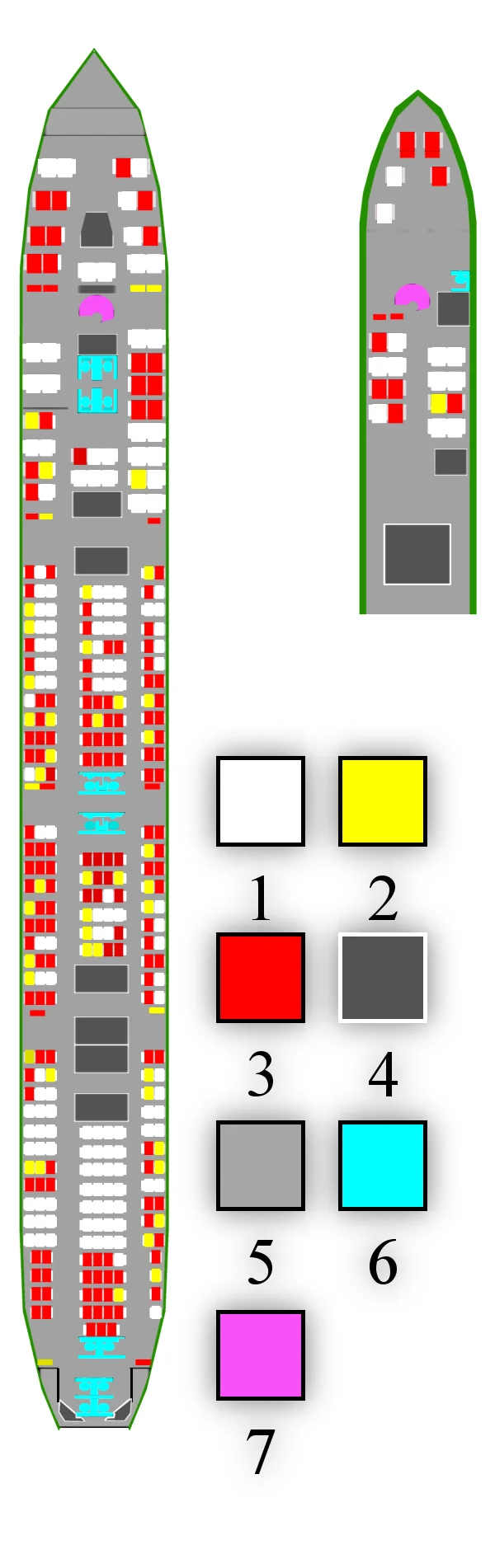

China Airlines Flight 611
The crack had been growing for twenty-two years. On 7 February 1980, a Boeing 747-209B operating for China Airlines struck its tail on the runway during landing at Hong Kong's Kai Tak Airport. The damage was repaired, but not according to Boeing's specifications. A doubler plate was improperly installed, and scratches on the fuselage skin were left exposed. For the next two decades, as the aircraft pressurized and depressurized through thousands of flight cycles, invisible cracks propagated outward from those scratches. On 25 May 2002, the cracks won.
Twenty Minutes to Disaster
China Airlines Flight 611 departed Chiang Kai-shek International Airport at 3:08 p.m. local time, bound for Hong Kong with 206 passengers and 19 crew members. The flight crew was experienced: Captain Yi Ching-Fong had over 10,100 hours of flight time, as did First Officer Shieh Yea-Shyong, while Flight Engineer Chao Sen-Kuo had logged more than 19,100 hours. At 3:16 p.m., the aircraft was cleared to climb to flight level 350. Seventeen minutes later, as the 747 approached its cruising altitude of 35,000 feet over the Taiwan Strait, approximately 23 nautical miles northeast of the Penghu Islands, contact was lost. Two Cathay Pacific aircraft nearby received the plane's emergency locator signals. There were no survivors.
A Plane on Its Final Journey
The aircraft itself, registration B-18255, was a 23-year-old Boeing 747-200 delivered new to China Airlines on 2 August 1979. By 2002, it was the last 747-200 passenger aircraft in the airline's fleet, having accumulated over 64,800 flight hours. The airline had already sold it to Orient Thai Airlines for US$1.45 million. The accident flight was to be its penultimate flight for China Airlines; after one more round trip to Hong Kong, the aircraft would have been delivered to its new owner. Instead, it broke apart over open water. Radar data showed the fuselage separating into four major sections at altitude. Debris rained across the strait and beyond. Lighter items -- magazines, photographs, luggage, safety cards, a blood-stained pillow case embossed with the China Airlines logo -- were found up to 130 kilometers away in villages in central Taiwan, including the city of Changhua.
The Repair That Wasn't
The Aviation Safety Council's investigation traced the breakup to the 1980 tail strike at Kai Tak Airport. During the repair, a doubler plate was not installed to Boeing's standards. The exposed scratches on the fuselage skin became nucleation points for metal fatigue. Over 22 years and thousands of pressurization cycles, cracks grew until the fuselage failed catastrophically at section 46, aft of the main wing box. Rapid decompression followed. The forward fuselage entered an abrupt descent, and all four engines separated from the wings as their fuse pins failed at approximately 29,000 feet. One piece of overlooked evidence might have prevented everything: photographs from maintenance records showed discoloration on the damaged tail section, which investigators later determined were tar stains from decades of onboard cigarette smoke, permitted on China Airlines flights until 1995. Had anyone investigated those stains, the cracks would have been discovered.
Echoes of Flight 123
Flight 611 was not the first Boeing 747 destroyed by a botched tail strike repair. On 12 August 1985, Japan Air Lines Flight 123 crashed after its vertical stabilizer was torn off by explosive decompression caused by an improperly repaired rear pressure bulkhead, damaged in a 1978 tail strike. That accident killed 520 of 524 people on board. In both cases, a repair was not performed according to Boeing standards. The parallel is haunting: two different airlines, two different decades, the same fundamental failure. The lessons of Flight 123, which occurred five years after the China Airlines tail strike repair and seventeen years before Flight 611 disintegrated, did not prevent the catastrophe over the Taiwan Strait.
The Human Cost
Of the 225 people on board, remains of 175 were recovered and identified. The first 82 bodies were found floating on the surface of the Taiwan Strait and recovered by fishing boats and military vessels. The governments of Taiwan and the People's Republic of China cooperated in the recovery, with Beijing allowing Taiwanese personnel to search waters under PRC control. Relatives submitted blood samples for DNA testing. The passengers had included Taiwanese politician You Jih-cheng and two reporters from the United Daily News. Many had been en route to mainland China but were forced to connect through Hong Kong because no direct flights existed between Taiwan and the mainland. Grieving families pointed to this fact, arguing the flight should never have been necessary. Flight 611 remains the deadliest aviation disaster in Taiwan's history.
From the Air
The crash site is located at approximately 23.99°N, 119.68°E in the Taiwan Strait, roughly 23 nautical miles northeast of the Penghu Islands (Makung Airport, RCQC). The aircraft departed from what is now Taoyuan International Airport (RCTP) and was climbing through FL350 when it disintegrated. The Taiwan Strait at this location is open water with depths of 50-100 meters. Penghu Islands are visible to the southwest. This is a busy air corridor between Taiwan and Hong Kong.
Nearby Stories
- Fangyuan Lighthouse 9.5 km away
- Penghu Refugee Camp 16 km away
- 1904 Douliu Earthquake 17 km away
- Gaomei Wetlands 33 km away
- Taiwan Strait 66 km away
- Nanxiong Formation 437 km away
- Heyuan 457 km away
- Battle of Xiapi 1127 km away