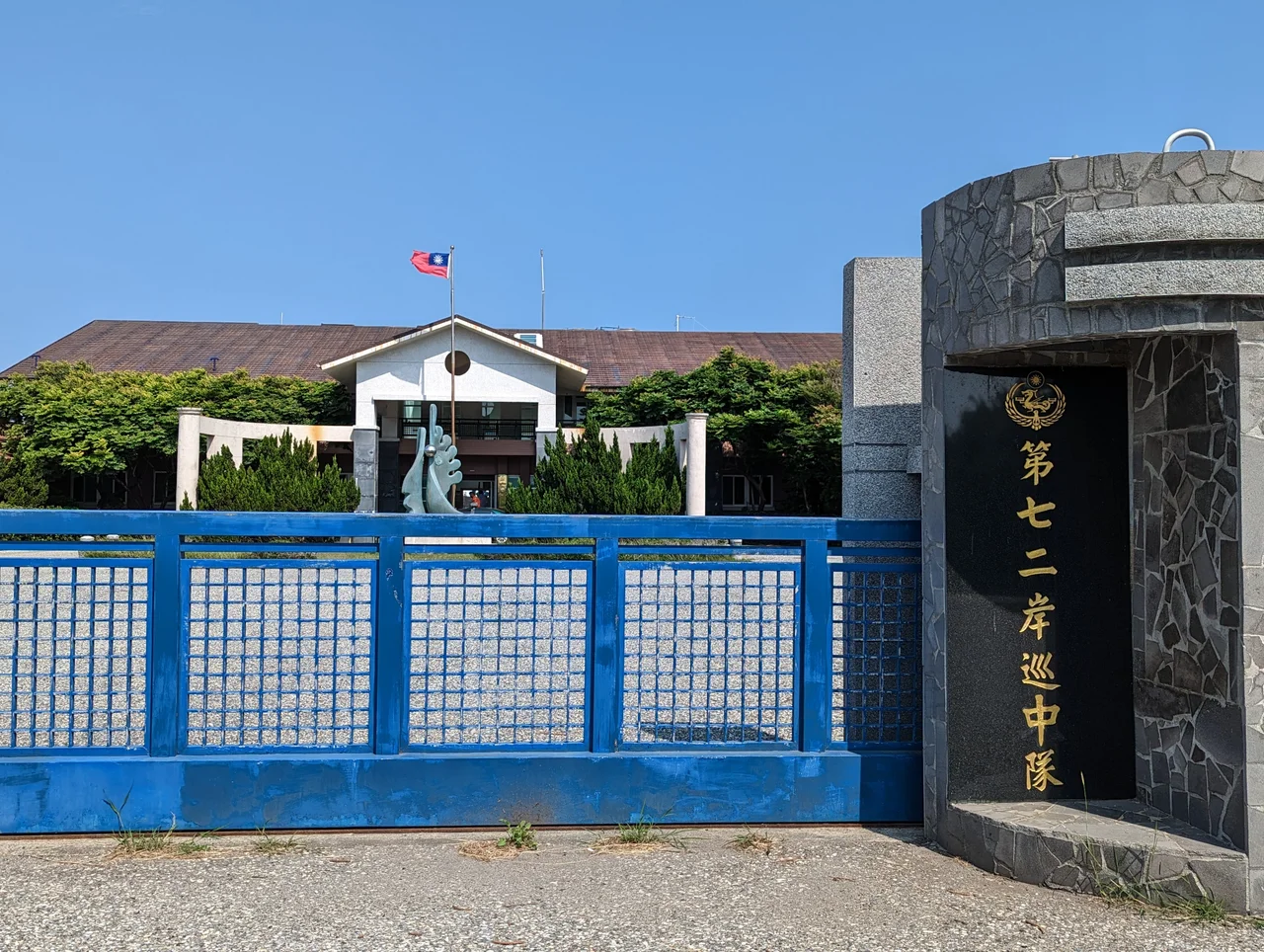

Penghu Refugee Camp
Huynh Can Du spent 56 days adrift on the South China Sea before a rescue vessel found his boat off the coast of Orchid Island, Taiwan. It was May 1975, just weeks after the fall of Saigon. There were 84 refugees aboard. All were granted entry into Taiwan -- a country that, despite its own precarious diplomatic position, chose not to turn them away. Huynh, a former serviceman fluent in Vietnamese, would go on to spend eleven years working at the Penghu Refugee Camp, the remote island facility that became Taiwan's primary processing center for Vietnamese boat people from 1978 to 1988.
Flight Across the Water
The refugee crisis began in 1975, when North Vietnam's victory and the reunification of the country under communist rule triggered a mass exodus. Ethnic Chinese living in the south were among the first to flee, and the flow intensified after 1977 as relations between China and Vietnam deteriorated. When China invaded Vietnam in 1979, triggering the Sino-Vietnamese War, the trickle became a flood. Taiwan's first reception facility, the Kaohsiung Reception Center, took in approximately 3,939 refugees from the initial wave -- people who had fled South Vietnam before the fall of Saigon to the Viet Cong in April 1975. Many of these early arrivals eventually settled permanently in Taiwan, establishing communities that persist today.
A Military Base Becomes a Refuge
The first Penghu camp opened in 1977 at Chuwan village in Siyu Township, using a borrowed ROC Army base as a temporary reception center. It closed around 1979 after a short, largely unnoticed operation. The more significant camp opened on December 1, 1978, in Chiangmei village (also known as Jiangmei) in Baisha Township. This facility, also a converted military site, would operate for eleven years before closing on November 28, 1988. The choice of Penghu was practical rather than humanitarian in spirit: the remote archipelago in the Taiwan Strait offered isolation from Taiwan's main island population, and the existing military infrastructure could be repurposed quickly. For the refugees who arrived there after days or weeks at sea, it was terra firma -- however windswept and sparse.
Between Nations
Taiwan's willingness to accept Vietnamese refugees was shaped by Cold War politics as much as compassion. The Republic of China had lost its United Nations seat in 1971 and was diplomatically isolated, yet it continued to cooperate with the United States on refugee resettlement through the Catholic Relief Services. This arrangement served both countries: it allowed humanitarian work to continue while maintaining the unofficial people-to-people ties that linked Taiwan and America in the absence of formal diplomatic relations. For the refugees themselves, Penghu was a waystation. Some were eventually resettled in third countries; others remained in Taiwan. The camp's daily operations were managed in part by people like Huynh Can Du, whose own experience as a refugee gave him an understanding of the people in his care that no bureaucratic training could replicate.
Remembering What Was Forgotten
For decades after the camp's closure in 1988, the Penghu refugee chapter faded from public memory. The military sites reverted to their former quiet, and few in Taiwan discussed the boat people who had passed through. That began to change in the 2020s. In 2023, director Awei Liu released the documentary A Camp Unknown, which returned to Chiangmei village to explore the camp's history and the lives it shaped. The 55-minute film was screened in the village itself, bringing together former residents, locals, and a new generation encountering the story for the first time. The Taipei Times covered the camp's history in features published in 2023 and 2025, describing Penghu's refugee past as a forgotten chapter in Taiwan's humanitarian record -- one that complicates the island's self-image in ways that deserve honest reckoning rather than continued silence.
From the Air
Coordinates: 23.63N, 119.60E. The former Chiangmei camp site is located in Baisha Township on the northern part of the Penghu archipelago, across the bridge from the main island. From the air, the Penghu archipelago's flat, wind-scoured islands are distinctive in the Taiwan Strait. Nearest airport: Penghu Airport (RCQC), approximately 8 km to the south. Recommended viewing altitude: 3,000-5,000 ft for island detail. The Chuwan camp site in Siyu Township lies to the west across the inter-island bridge network.
Nearby Stories
- 1904 Douliu Earthquake 7.1 km away
- Yanshuei District 8.2 km away
- China Airlines Flight 611 9.7 km away
- Fangyuan Lighthouse 12 km away
- Dongji Island 15 km away
- Nanxiong Formation 436 km away
- Daya Bay 483 km away
- Battle of Xiapi 1166 km away