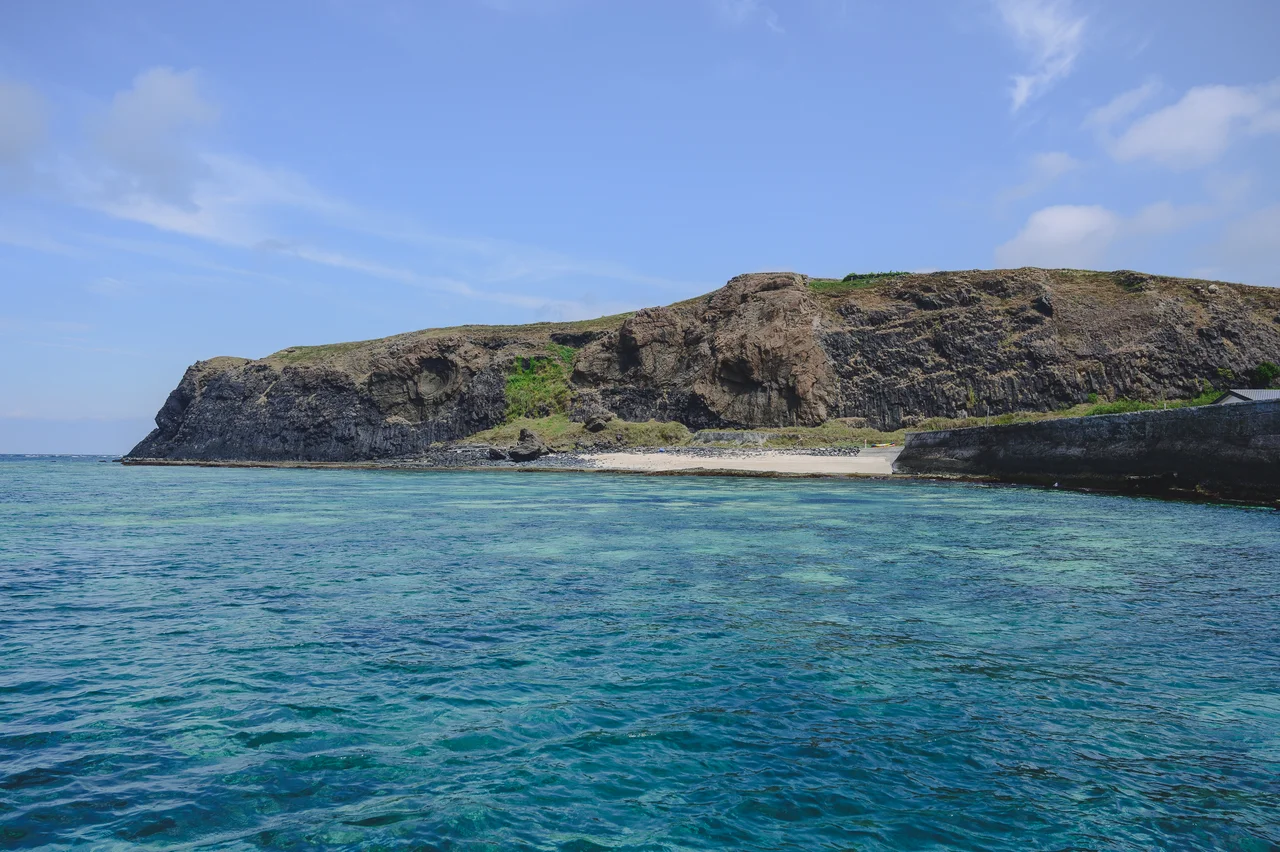

Dongji Island
In June 2012, a fisherman named Wang Chiu-tang hauled up something unexpected from a trench near Dongji Island: a fossilized ivory tusk, dredged from 200 meters below the surface of the Taiwan Strait. The find was a reminder that this patch of ocean was once dry land, part of a coastal plain that connected Taiwan to mainland Asia during the last ice age. Dongji Island itself -- a small volcanic landmass in the southern Penghu archipelago -- sits in water that was once walked across by elephants. Today it is walked across by the handful of visitors who make the two-and-a-half-hour ferry ride from Tainan to reach one of Taiwan's most isolated inhabited islands.
Lighthouse at the Edge
The most prominent structure on Dongji Island is its lighthouse, built in 1911 during the period of Japanese colonial rule over Taiwan. The Dongji Island Lighthouse has stood for over a century at the island's highest point, marking the southern approach to the Penghu archipelago for ships navigating the Taiwan Strait. The lighthouse predates the island's inclusion in any national park, its construction reflecting the strategic importance of these waters to Japanese maritime interests. The Strait is shallow here, and the Penghu Islands have always posed navigational hazards. The lighthouse's beacon has guided fishing boats, cargo ships, and ferries through waters that remain commercially active. In January 2018, the cargo ship Chia Ming Lun ran aground near Dongji and sank. The ship and its cargo were never salvaged, a reminder that the strait can still claim vessels despite a century of improved navigation.
Gods and Coral
Before the lighthouse, there was the temple. A shrine dedicated to Wang Ye worship was built on Dongji Island during the Jiaqing era of the Qing dynasty -- the early nineteenth century -- and restored in 1872. Wang Ye worship, a folk religious tradition focused on plague-averting deities, is widespread across Taiwan's coastal and island communities, and its presence on Dongji speaks to the island's long connection to the broader Fujianese cultural sphere from which most Penghu settlers came. The temple remains the spiritual center of the island's small community. The waters surrounding Dongji tell their own story of vulnerability and conservation. In October 2019, over 800 kilograms of abandoned fishing nets -- ghost nets -- were removed from the coral reef near the island. These discarded nets, left by fishing operations, entangle marine life and damage coral. The cleanup effort reflected growing attention to the ecological fragility of the reefs that Dongji's national park status was meant to protect.
A National Park in the Sea
In June 2014, Dongji Island was incorporated into the newly established South Penghu Marine National Park, a designation that recognized the ecological significance of the southern Penghu Islands and their surrounding waters. The park protects coral reefs, marine habitats, and the basalt geological formations characteristic of the Penghu archipelago. Dongji's village sits near the center of the island, in an area that was once underwater -- a geological detail that underscores how much these islands have been shaped by sea-level changes over millennia. The smaller Chutou Islet, once inhabited, lies just to the northwest. The marine area of Taijiang National Park extends 54 kilometers from the Yanshui River to Dongji Island, covering 344 square kilometers. In May 2016, a ferry service between Tainan and Dongji began operation, connecting the island to Taiwan's main island for the first time by regular scheduled transport.
Island Weather, Island Time
Dongji Island's climate sits at the boundary between tropical and humid subtropical. Being a small island in the shallow Taiwan Strait, it experiences less dramatic temperature swings than either mainland Taiwan or the Asian continent to the west. Winters are dry and mild, with comfortable conditions for outdoor activity despite persistent cloud cover. Summers bring rain as the East Asian monsoon pushes through the high-pressure systems that otherwise dominate the region. The island is sunnier and drier than the Taiwanese mainland -- a quality that, combined with its remoteness and the absence of commercial development, gives Dongji a quality of arrested time. The fishing harbor, the lighthouse, the Wang Ye temple, and the stone houses of the village compose a landscape that has changed little in decades. For the fishermen who still work these waters, the island is a working port. For the trickle of visitors who arrive by ferry, it is something closer to a revelation: Taiwan stripped to basalt, coral, and wind.
From the Air
Dongji Island is located at 23.252N, 119.673E in the southern Penghu archipelago, in the Taiwan Strait between Taiwan and mainland China. The island is small and low-lying, visible from the air as a rocky outcrop with a visible lighthouse on its highest point. The Dongji Fishing Harbor and village are on the island's sheltered side. Nearest airports include Penghu Airport (RCQC) on the main Penghu island of Magong, approximately 40 km to the north, and Tainan Airport (RCNN) on the Taiwan mainland. The shallow strait waters surrounding the island appear turquoise in good visibility. Best viewed at 2,000-5,000 feet.
Nearby Stories
- Yanshuei District 1.8 km away
- 1904 Douliu Earthquake 3.2 km away
- TransAsia Airways Flight 222 7.4 km away
- Siraya Language 9.5 km away
- Anping Small Fort 46 km away
- Nanxiong Formation 437 km away
- Heyuan 458 km away
- Daya Bay 478 km away