
Siraya Language
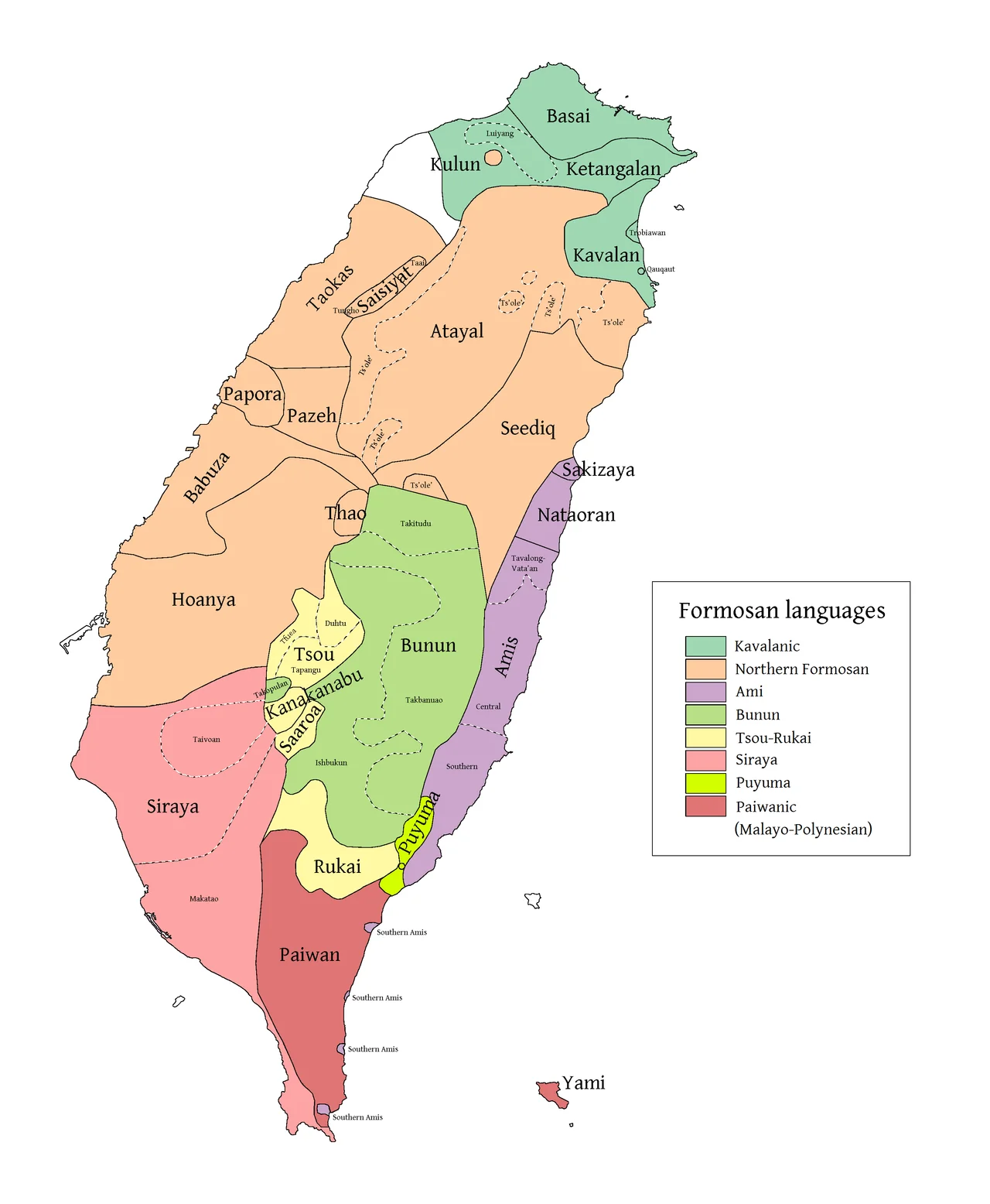
When the Dutch colonizers needed to communicate with the chieftain of the Kanakanavu people in the mountains of seventeenth-century Taiwan, they could not do it directly. The message had to pass through four languages: Dutch to Siraya, Siraya to Tarroequan, Tarroequan to Taivoan, and Taivoan to Kanakanavu. That chain of translation, recorded in the colonial registers of Fort Zeelandia between 1629 and 1662, tells you two things. First, the linguistic diversity of pre-colonial Taiwan was extraordinary. Second, Siraya was the language the Dutch knew -- the one closest to the colonial center, the one they learned first. It was also the one they left the most records of. And it is the one that, centuries after it fell silent, a community in Tainan is determined to bring back.
The Language the Dutch Wrote Down
Siraya is a Formosan language -- one of the indigenous language family of Taiwan that predates the Austronesian expansion across the Pacific. It was spoken by the Siraya people along the coastal plain of present-day Tainan. During the Dutch colonial period (1624-1662), missionaries produced remarkable documents in Siraya: a translation of the Gospels of Matthew and John, published in 1661, and a 288-page catechism in both Siraya and Dutch by the missionary Daniel Gravius in 1662. These texts survive, making Siraya one of the best-documented Formosan languages from the colonial era. A translation of the Gospel of St. John, only recently identified by a researcher in the Royal Danish Library, has added to this archive. The Dutch colony was driven out in 1661 by Ming dynasty loyalists under Koxinga, and Taiwan was eventually absorbed into the Qing Empire.
Slow Silencing
Under Qing rule, the use of Siraya receded. The colonial infrastructure that had supported written Siraya disappeared, and the language retreated into oral use within shrinking communities. Some traces survived in the form of the Sinckan Manuscripts -- land contracts written in Siraya with Chinese translations, practical documents that preserved the language in the mundane context of property transfer. The last word lists were compiled in the early nineteenth century. By the end of that century, Siraya was no longer spoken as a living language. Related languages suffered similar fates. Taivoan, spoken inland on the Tainan Plain, and Makatao, spoken further south in Kaohsiung and Pingtung, were long considered dialects of Siraya but are now classified as separate languages based on linguistic analysis of their numeral systems, sound changes, and phonological innovations.
Awakening a Dormant Tongue
The Siraya did not accept extinction. For more than a decade, Siraya communities have pursued a cultural and language revitalization movement, treating the language not as dead but as dormant -- asleep rather than gone. Linguists have reconstructed the phonological system from the Dutch-era texts: 18 to 20 consonants, 7 vowels, 6 diphthongs, and a rich set of verbal classifier prefixes that Siraya shares with other Formosan languages like Bunun. In 2008, the Tainan Pe-po Siraya Culture Association published a modern Siraya glossary authored by Edgar Macapili. The most remarkable result of this effort is not academic. Today, a group of Siraya children in Sinhua District of Tainan -- particularly in the Kou-pei and Chiou Chen Lin areas -- can speak and sing in Siraya. A language whose last fluent speakers died over a century ago now lives in the voices of schoolchildren.
Words That Carry Worlds
The grammar of Siraya reveals a way of thinking embedded in language. Its verbal system uses prefixes that classify actions by their physical character: 'smaki-' for throwing or casting, 'sa-' for movement through a narrow space, 'taw-' for downward movement within a confined area. The language distinguishes between high-intensity physical involvement (the 'mey-/pey-' prefix) and movement toward something (the 'mu-/pu-' prefix). Its personal pronouns and function words survive in scholarly reconstruction, preserving a system where 'ti' marks persons, 'tu' marks places, and 'ka' links verbal clauses. Each revived word carries more than meaning -- it carries the cognitive architecture of a people who lived on the Tainan Plain before the Dutch, before the Qing, before the Japanese, before the modern Taiwanese state. When Siraya children in Sinhua District sing in their ancestral language, they are not merely performing a cultural exercise. They are reassembling a way of understanding the world.
From the Air
The Siraya language is associated with the Tainan Plain in southwestern Taiwan, centered around 22.97N, 120.30E. The Sinhua District where revitalization efforts are concentrated lies in the hilly interior east of Tainan city. The broader Tainan Plain stretches from the coast to the western foothills of Taiwan's Central Mountain Range. Nearest airports include Tainan Airport (RCNN) and Kaohsiung International Airport (RCKH). The flat agricultural landscape of the Tainan Plain is clearly visible from 5,000-10,000 feet.
Nearby Stories
- Sanhe Tile Kiln 2.2 km away
- Yakou Mountain Pass 7.2 km away
- Taimali 9.2 km away
- 2025 Tainan–Chiayi Earthquake 17 km away
- Kunci Temple 19 km away
- Dongji Island 22 km away
- South Penghu Marine National Park 41 km away
- Daya Bay 548 km away