).jpg)
Taoyuan Guanxin Algal Reefs Ecosystem Wildlife Refuge
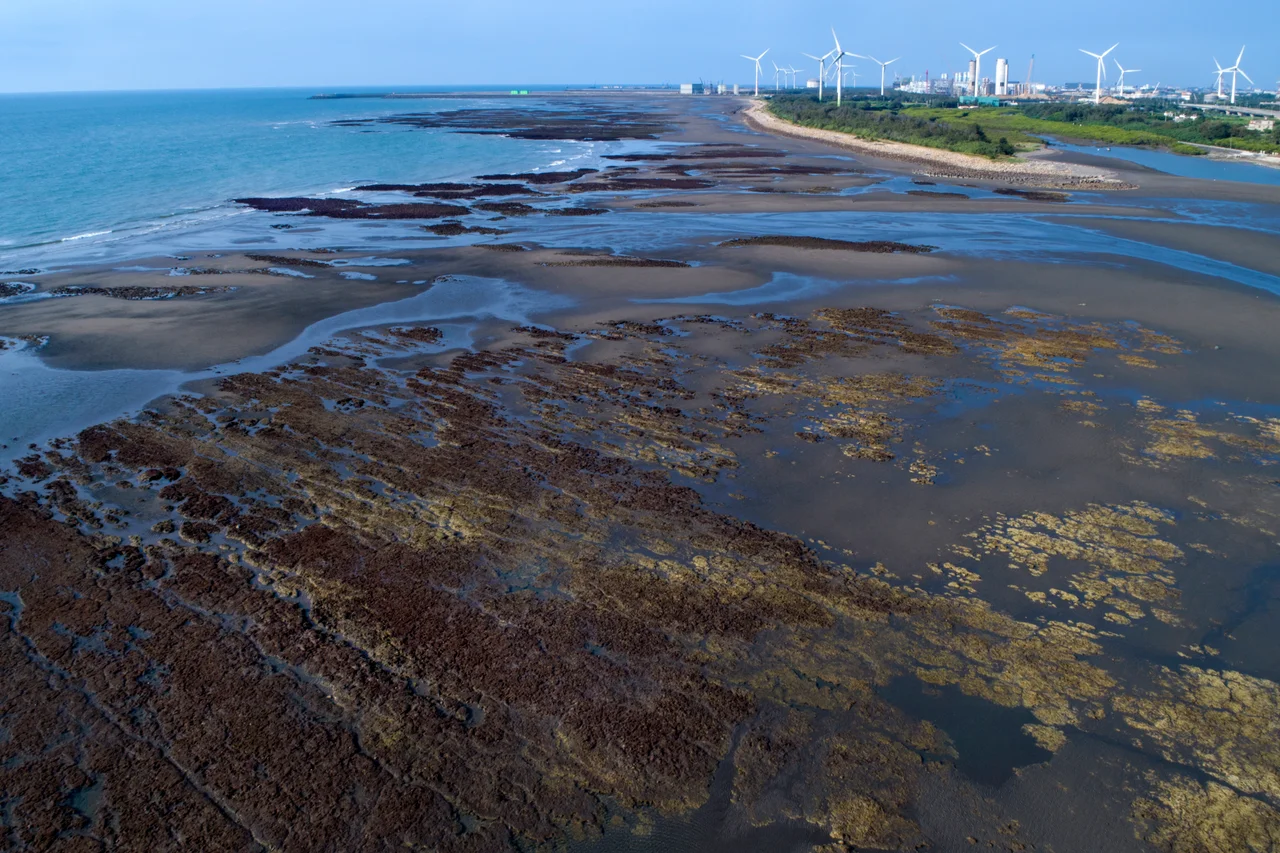
Most reefs are built by coral. The reefs along the Taoyuan coast are built by algae, and they have been at it for roughly 7,500 years. The Taoyuan Guanxin Algal Reefs are among the rarest reef formations on Earth: biological structures constructed primarily by coralline algae depositing calcium carbonate, layer upon patient layer, at a pace that makes coral look hurried. Where a coral reef might grow several centimeters per year, these algal reefs measure their progress in fractions of millimeters. The result is a living geological archive stretching along the shoreline of Guanyin District in Taoyuan, Taiwan, and one of the most fiercely debated conservation battlegrounds on the island.
Older Than the Pyramids
The biological reefs in this area began forming around 7,500 years ago, initially dominated by stony corals. Approximately 4,400 years ago, the reef-building community shifted. Coralline algae took over as the primary architects, likely because environmental conditions became unsuitable for coral growth. The transition produced something genuinely unusual: a reef system built predominantly by unsegmented, shell-like coralline algae rather than the familiar branching corals that dominate tropical waters. This makes the Taoyuan algal reefs not just locally significant but globally rare. They represent the largest living algal reef ecosystem dominated by shell-like coralline algae in Taiwan, and one of the few such formations found anywhere.
A Coastline Under Siege
Taoyuan once possessed a continuous stretch of algal reef coastline. Industrial pollution and land reclamation have destroyed much of it. Only the southern portions remain in relatively healthy condition, divided into three sections running north to south: White Jade Algae Reef, Tai Tam Algae Reef, and Guanxin Algae Reef. The damage to the northern reefs was not gradual; it was industrial, systematic, and for decades largely ignored. By the time conservationists raised the alarm, much of what had taken millennia to build had been smothered or scraped away. The surviving reefs became the focus of an urgent campaign to protect what remained before development consumed the rest.
A Refuge With Limits
On July 7, 2014, the Taoyuan City Government designated approximately four kilometers of the Guanxin algae reefs as a wildlife refuge under the Wildlife Conservation Act. The decision did not satisfy everyone. Local civil society groups argued for a higher level of protection under the Cultural Assets Preservation Act, which would have designated the reefs as a natural reserve with stricter safeguards. Instead, the city government spent NT$9.2 million commissioning the Taiwan Wetland Society to study the area. The recommendation was for zoning management and what officials termed "wise use." The core area now prohibits any alteration of the natural state. Entry requires permission, and the buffer zone limits daily visitors to 200 people. It is a compromise that conservation advocates accept grudgingly, knowing that any protection is better than the alternative.
Listening to the Reef
Like coral reefs, algal reefs serve as habitats for a rich variety of marine organisms. Researchers from the Center for Biological Diversity at Academia Sinica have used underwater soundscape recordings to study the reefs, discovering a surprising abundance of crustacean sounds beneath the waves. In 2017, surveys of the Tai Tam Algae Reef revealed suspected new species of shell-like coralline algae and the first recorded sighting of the Chai Shan Polyporus, a protected species, suggesting the reef's biodiversity has been significantly underestimated. The overall ecological functions and biodiversity of the surviving algal reef areas remain a subject of active research, with scientists cautioning that what has been documented so far likely represents only a fraction of what lives within these ancient structures.
From the Air
Coordinates: 25.013N, 121.026E along the western coast of Taoyuan, Taiwan. The algal reefs stretch along the shoreline of Guanyin District, visible from low altitude as dark formations along the coast contrasting with lighter sand. Taoyuan International Airport (ICAO: RCTP) is approximately 20 km to the northeast. The Taiwan Strait lies immediately to the west.
Nearby Stories
- Jingtong Mining Industry Museum 8.9 km away
- Kavalan Distillery 9.5 km away
- Hsinchu Science Park 10 km away
- 2022 Chinese Military Exercises Around Taiwan 25 km away
- Gaomei Lighthouse 53 km away
- North Jiangsu Main Irrigation Canal 978 km away
- General Cliff Rock Paintings 1043 km away
- Sinking of MV Sewol 1073 km away