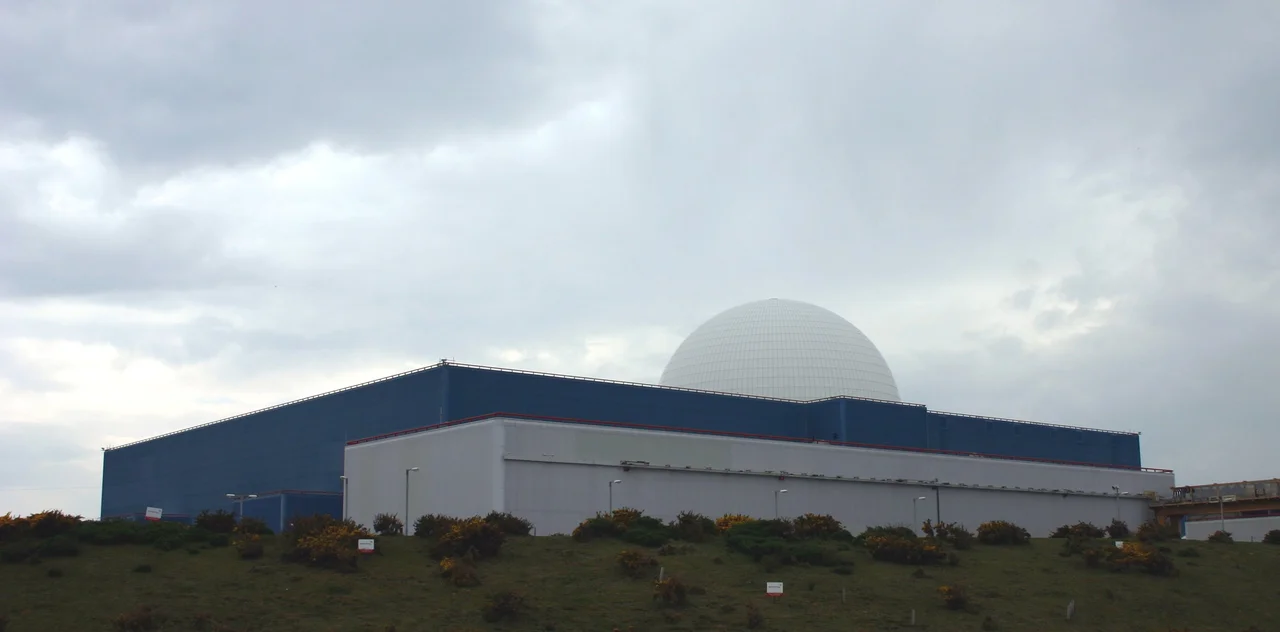

Sizewell Nuclear Power Stations
There is a black box and a white dome on the Suffolk shingle, separated by a fence and twenty-nine years. The black box is Sizewell A, two Magnox reactors that came online in 1966 and stopped generating in 2006. The white dome is Sizewell B, the single pressurised water reactor that started up in 1995 and remains the newest operating nuclear power station in the United Kingdom. Behind them, the foundations for Sizewell C are being prepared. Three generations of British nuclear technology occupy one beach.
Sizewell A: The Magnox Era
Sizewell A was a second-generation Magnox station, the carbon-dioxide-cooled, graphite-moderated reactor type that the UK essentially invented and that powered most of the British nuclear fleet from the late 1950s into the 2000s. The two reactors at Sizewell A came online in 1966 and ran for forty years before shutdown in December 2006. Magnox reactors used natural uranium fuel sealed in cladding made of a magnesium alloy called Magnox, which gave the design its name, and they produced both electricity and, in some cases, weapons-grade plutonium for the British nuclear deterrent. Sizewell A produced electricity. Defueling was completed in 2014. The decommissioning process is expected to continue until 2027, and the final site clearance is not anticipated until 2098. That timetable, more than seventy years from shutdown to clearance, is a faithful indicator of how long radioactive infrastructure outlives the working life of its reactors.
Sizewell B: The PWR That Stayed
Sizewell B was the only pressurised water reactor ever built in the United Kingdom. Construction began in 1988, the plant came online in 1995, and it has been generating ever since. A PWR uses ordinary water under pressure to both moderate neutrons and cool the core, a design pioneered in American submarines and then spread around the world. Sizewell B was built to a Westinghouse SNUPPS layout licensed for the UK, and its distinctive white containment dome quickly became the visual landmark of the Suffolk coast. The reactor is rated at about 1,200 MWe. It is currently scheduled to close in 2035, although the operator EDF has announced plans to seek a twenty-year life extension that would carry it to 2055. The question of whether the plant will reach that extension is now bound up with the politics of the UK's energy transition, the price of gas, and what kind of carbon-free baseload the grid needs in the 2040s.
Sizewell C: The Long Approval
Sizewell C has been on the drawing board for more than a decade. The plant would consist of twin EPR reactors, the same Areva-Framatome design used at Hinkley Point C in Somerset and at Flamanville in France. By May 2013 there were significant public doubts about whether agreement with the UK government would be reached on financing. In October 2021 a new funding model was announced, the Regulated Asset Base, in which consumers help finance construction through electricity bills in exchange for lower long-term capacity costs. The model addresses the central difficulty of large nuclear projects in liberalised electricity markets: the up-front capital is enormous, the build takes a decade or more, and no private financier wants the risk. Local opposition in the surrounding Suffolk Coast and Heaths AONB, organised under Suffolk Energy Action Solutions, has focused on the impact of construction traffic, water use, and the cumulative scale of energy infrastructure now landing on this coast.
What the Beach Has Become
Sizewell is now one of the densest concentrations of energy infrastructure on the British coastline. The Sizewell A box is being slowly taken apart. The Sizewell B dome is generating. The Sizewell C site is being prepared. Offshore, the cables from East Anglian wind farms are landing here, and the SeaLink interconnector to the European grid is in development. The Sizewell Marshes Site of Special Scientific Interest survives between and around all of it, with rare invertebrates and the wetland flora that East Anglia's drainage of farmland has otherwise removed. The fishing hamlet of Sizewell itself sits between the power station perimeter and the open sea, a refreshment kiosk and a pub called the Vulcan Arms looking out at a horizon that has been steadily mechanised since 1966. The local view of nuclear power has been complicated for generations. Anti-nuclear campaigners once used the slogan, Welcome to Sizewell, twinned with Chernobyl. The campaigners are still here. So are the reactors.
From the Air
The Sizewell nuclear site sits at 52.215 N, 1.620 E on the Suffolk coast, about two miles north of the village of Sizewell and the same distance east of Leiston. From 1,500-4,000 feet the white dome of Sizewell B and the boxy dark profile of Sizewell A are unmistakable against the shingle beach and the green of the Sizewell Marshes inland. Sizewell C ground works will be visible south of the existing site. Nearby airfields: Wattisham (EGUW) 25 miles southwest, Norwich (EGSH) 35 miles northwest. There is a notified restricted area over the nuclear site; check current charts before transiting.
Nearby Stories
- Burgh Castle 5.7 km away
- East Bergholt 6.7 km away
- RAF Great Ashfield 8.7 km away
- Battle of the Gabbard 15 km away
- Four Days' Battle 34 km away
- Southern Bight 57 km away
- SS Elbe 90 km away