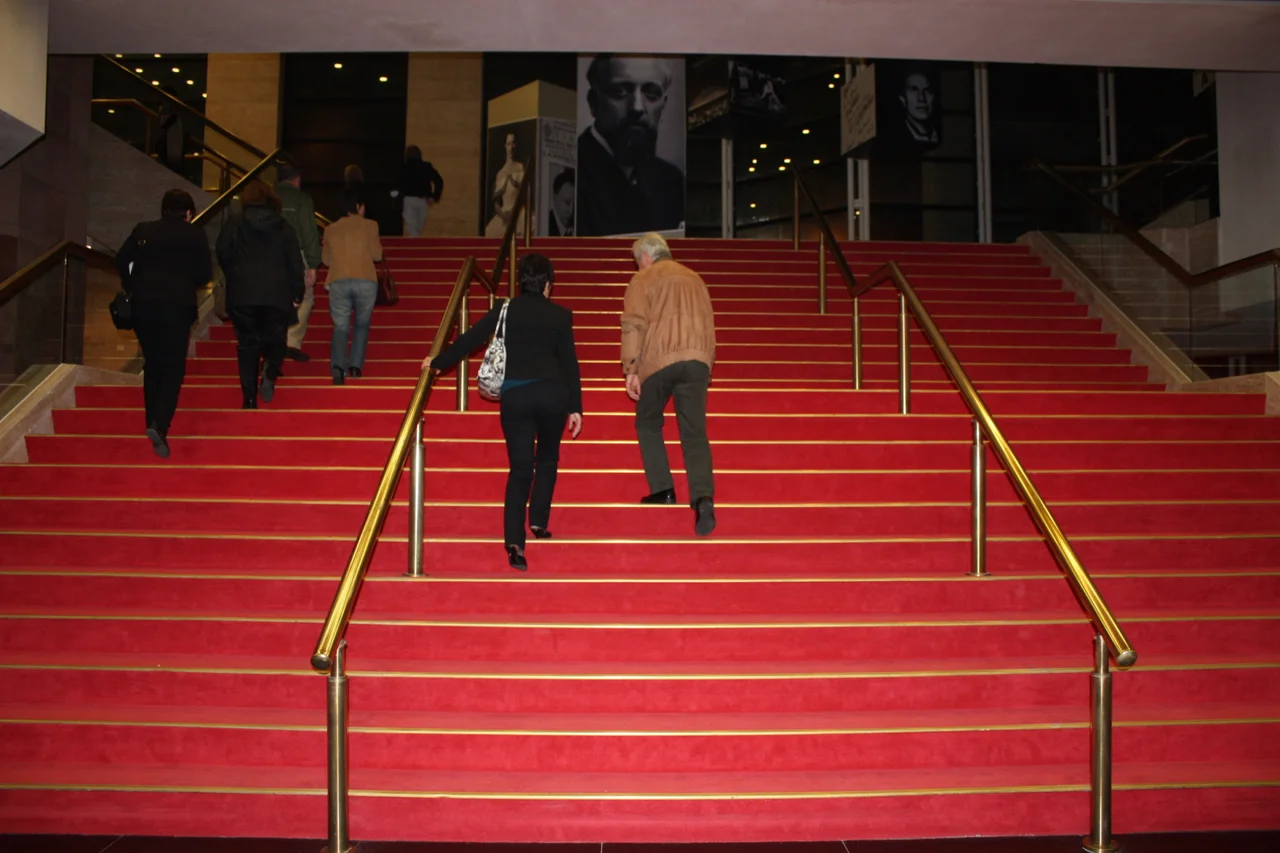

Sodre National Auditorium
On the night of September 18, 1971, fire tore through the Urquiza Theater on the corner of Andes and Mercedes, gutting the main hall, the stage, and much of the archive. For nearly four decades, downtown Montevideo carried the scar of that loss. Then, in 2009, something remarkable rose from the ruin: the Auditorio Nacional del Sodre, a gleaming 25,000-square-meter performance complex built on the very ground where the old theater had stood. The phoenix had a name, too. The auditorium honors Adela Reta, the lawyer and culture minister whose vision helped bring it back to life.
Four Decades in the Dark
Loss lingers in a city's memory longer than triumph. The Urquiza had been one of Montevideo's cultural anchors, and when the flames took it in 1971, they took the country's premier stage with it. Rebuilding stalled, decade after decade, while Uruguay weathered dictatorship and recovery. It was not until November 21, 2009 - almost forty years after the fire - that the doors finally opened again. The wait gave the project an emotional weight that few new buildings ever carry. This was not merely a concert hall. It was restitution, a debt to the past finally paid in glass and steel and acoustically tuned wood.
The Largest Stage in the Country
Everything about the Eduardo Fabini Hall is built for grandeur. Roughly two thousand seats curve toward a stage that is the largest in Uruguay, soaring 27 meters in clear height. The orchestra pit can hold more than a hundred musicians on three movable platforms driven by an automated lifting system, rising and sinking as a production demands. This is a room engineered for opera, symphony, and ballet on the most ambitious scale - a space where the full machinery of a grand performance can be deployed without compromise. Beside it, the intimate Hugo Balzo Hall seats around 280 and shifts shape for chamber music and small-format work, its built-in recording suites capturing every note.
Where the Ballet Lives
A great hall needs a great resident company, and the Sodre is home to the National Ballet of Uruguay. In March 2010, just months after the reopening, the celebrated Argentine dancer Julio Bocca took over as director of the Sodre's dance corps, lending his international stature to a company finding new footing in a new house. Under his direction the ballet drew crowds and acclaim, and the auditorium became what its builders had hoped: not a museum of past glory but a working stage, alive with rehearsal and performance, where dancers train in studios upstairs and step onto the country's grandest boards below.
More Than a Stage
Step inside and the scale announces itself. Spread across roughly 25,000 square meters on the corner of Andes and Mercedes, the complex is far more than its two concert halls. There is an amphitheater, broad exhibition galleries, sweeping circulation spaces, and - tucked behind the public rooms - the rehearsal studios and workshops where the real labor of performance happens. Costumes are sewn, sets are built, dancers stretch at the barre, and musicians run their passages again and again. It is a vertical village dedicated to a single purpose, and on a performance night the whole machine hums, from the prop shops in back to the chandeliers above the Fabini Hall's two thousand seats.
A Monument by Decree
On August 29, 2019, Uruguay's Ministry of Education and Culture made the auditorium's significance official, designating it a Historical Monument of the nation. The recognition was telling. A building barely a decade old earned a status usually reserved for centuries-old landmarks - acknowledgment that the Sodre's importance lay not in its age but in what it represented. It stood for resilience, for a culture that refused to let a fire have the last word, and for the conviction that a small country deserves a great stage. From the historic corner of Andes and Mercedes, the auditorium now anchors the cultural life of the capital, a modern monument to an old idea: that art is worth rebuilding for.
From the Air
The Sodre National Auditorium stands at 34.904°S, 56.199°W, on the corner of Andes and Mercedes streets in downtown Montevideo, a few blocks inland from the Bay of Montevideo and the Rambla. From the air, the large rectangular complex sits within the dense grid of the city center, near the Centro and Ciudad Vieja districts; the nearby Antel Tower to the north and the waterfront promenade help orient the approach. The nearest major airport is Carrasco International (ICAO: SUMU), about 18 km to the east along the coast, with Ángel Adami Airport (SUAA) inland to the northwest. Best viewed at low altitude over the city center in clear daytime conditions.
Nearby Stories
- Piriápolis 24 km away
- Minas 40 km away
- Tronador (rocket) 67 km away
- Nueva Helvecia 69 km away
- La Plata Museum 122 km away
- Battle of Sarandí 126 km away
- Mundo Marino 145 km away
- South Georgia Island 2584 km away