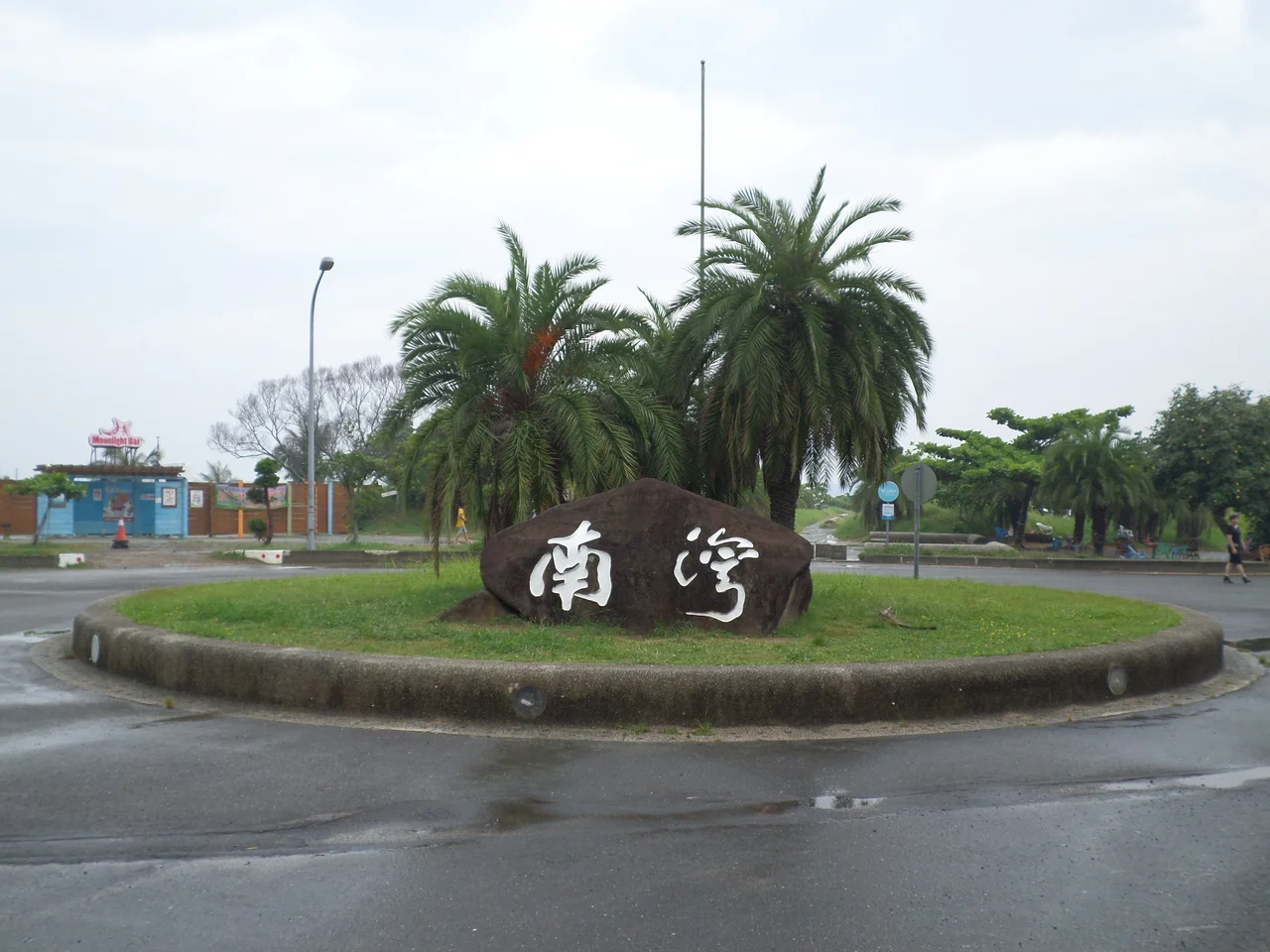

South Bay (Taiwan)
In the 1920s, a humpback whale was hauled out of the waters near here, its great mass laid on the beach near Cape Eluanbi while workers from the whaling station documented the catch. The photograph survives, a record of a different ocean economy. Today, the water at South Bay belongs to swimmers, surfers, and snorkelers, and the bay's calm arc draws a different kind of crowd entirely — people who come to Kenting for the sun, the warmth, and the fact that this is about as far south as Taiwan goes. Nanwan, as the bay is also known, sits just inside the national park boundary, sheltered enough from the open Pacific to make the water predictable, close enough to the peninsula's southern tip to feel like the edge of things.
The Name and the Place
South Bay translates directly from the Mandarin Nanwan — nan meaning south, wan meaning bay. The name is a description, not a history, chosen because the bay faces south along a coast that trends otherwise east-west near the peninsula's tip. In Taiwanese, the name works the same way. There is nothing ambiguous about where you are: the bay curves around a pocket of protected water just west of Cape Eluanbi, which marks the island's southernmost reach. Kenting National Park, Taiwan's first national park, encompasses both the cape and the bay, which has preserved the coastline from the development that has otherwise transformed much of the Hengchun area into a resort zone. The bay's waters are warm year-round, fed by currents that circle up from the tropics and kept temperate by the same geography that makes the peninsula a distinct ecological zone.
What the Water Offers
The range of activities at South Bay reflects the quality of the marine environment. Swimming is the baseline — the bay's sheltered position reduces the wave action that can make Taiwan's exposed Pacific and strait-facing coasts demanding — but the underwater terrain quickly becomes more interesting than the surface. Snorkeling and scuba diving draw visitors who want to see what lies beneath the clear, warm water. The reef systems along this part of the coast are part of the larger coral ecosystem that underpins the Kenting marine environment, and the water clarity in good conditions rewards any investment in fins and a mask. Surfing is also practiced here, though South Bay is not the primary surf destination on the peninsula; the more exposed breaks draw dedicated surfers to other stretches. The beach itself is well serviced: changing rooms, equipment rental, restaurants, and parking are all available, which makes it accessible to visitors arriving by bus from Kaohsiung or Xinzuoying Station.
Two Seas, One Peninsula
South Bay occupies a specific geographic position that gives it a particular quality of light and weather. The Hengchun Peninsula is narrow enough that a short drive or bike ride carries you from one coastline to the other. The Taiwan Strait side is exposed to winds that push down from the north and northwest in winter, making it rougher and windier during the cooler months. The Pacific side, where South Bay lies, tends to be more sheltered but faces the typhoon corridor during summer and autumn. The bay's orientation — generally southward, with the cape blocking some of the eastern exposure — means it can be a relatively calm pocket even when conditions are more energetic elsewhere on the coast. The nuclear power plant visible on the headland to the west is a reminder of how much infrastructure the peninsula supports alongside its tourist economy, but from the beach, it reads as just another feature of the coastline.
The Edge of the Island
There is something about being at the bottom of a place that registers in the body before it registers in the mind. Taiwan narrows to a point here, and South Bay is among the last beaches before that point. The bus from Kaohsiung that delivers visitors to Kenting passes through farmland, then forest, then the resort strip, and then the bay. Beyond the bay, the road curves around the cape and the island ends. Humpback whales no longer come close enough to be hauled to shore — the ocean economy has changed entirely — but the water at Nanwan remains warm, clear, and unusually alive for a bay so close to a busy resort corridor. The infrastructure of tourism is present but not overwhelming. What draws people back is simpler: the water, the warmth, and the particular feeling of having reached the end.
From the Air
South Bay (Nanwan) is located at approximately 21.954°N, 120.772°E on the southeastern side of Taiwan's Hengchun Peninsula. The bay's curved shoreline is clearly visible from the air, sheltered by the headland where the Maanshan Nuclear Power Plant sits to the west. Cape Eluanbi, with its distinctive lighthouse, lies a few kilometers to the south and is the primary navigation landmark at the island's tip. RCKH (Kaohsiung International) is approximately 65 kilometers to the north-northwest. The bay's emerald-to-turquoise color gradient is a strong visual identifier at altitudes between 2,000 and 5,000 feet. In clear weather, both the strait to the west and the open Pacific to the east are visible simultaneously from low cruise altitude over the peninsula.
Nearby Stories
- Mudan Incident 2 km away
- Lanyu Flying Fish Cultural Museum 30 km away
- Zhaori Hot Spring 59 km away
- Ten Drum Rende Creative Park 88 km away
- Mavulis Island 89 km away
- Barclay Memorial Park 121 km away
- 1991 Eruption of Mount Pinatubo 722 km away
- Scarborough Shoal 762 km away