
The Bottle That Humbled France
The bottle now sits in the Smithsonian, alongside Neil Armstrong's spacesuit, Abraham Lincoln's top hat, and the Spirit of St. Louis. It is a 1973 Cabernet Sauvignon from Stag's Leap Wine Cellars, a Napa Valley winery that had been in existence for only six years when its wine defeated the most prestigious reds of Bordeaux in a blind tasting organized by a British wine merchant in Paris. The result stunned the French judges, who had been so confident in the superiority of their own vintages that they agreed to the tasting as a promotional event for their wines. It did not go as planned.
From Machiavelli to Merlot
Warren Winiarski's path to winemaking wound through Renaissance political theory. A Chicago academic, he first encountered wine during a year-long trip to Italy studying the works of Niccolo Machiavelli. The experience redirected his life. Back in Chicago, he began making wine at home, and by the early 1960s what had started as a hobby had become an obsession. In 1968, he moved his wife and children to Napa Valley, taking a job first at Chateau Souverain and then at the newly founded Robert Mondavi Winery, learning the practical craft of California viticulture from the ground up. What Winiarski was searching for was something most American winemakers at the time did not dare articulate: a California wine with the depth and structure to rival the great estates of Bordeaux.
A Taste of What Was Possible
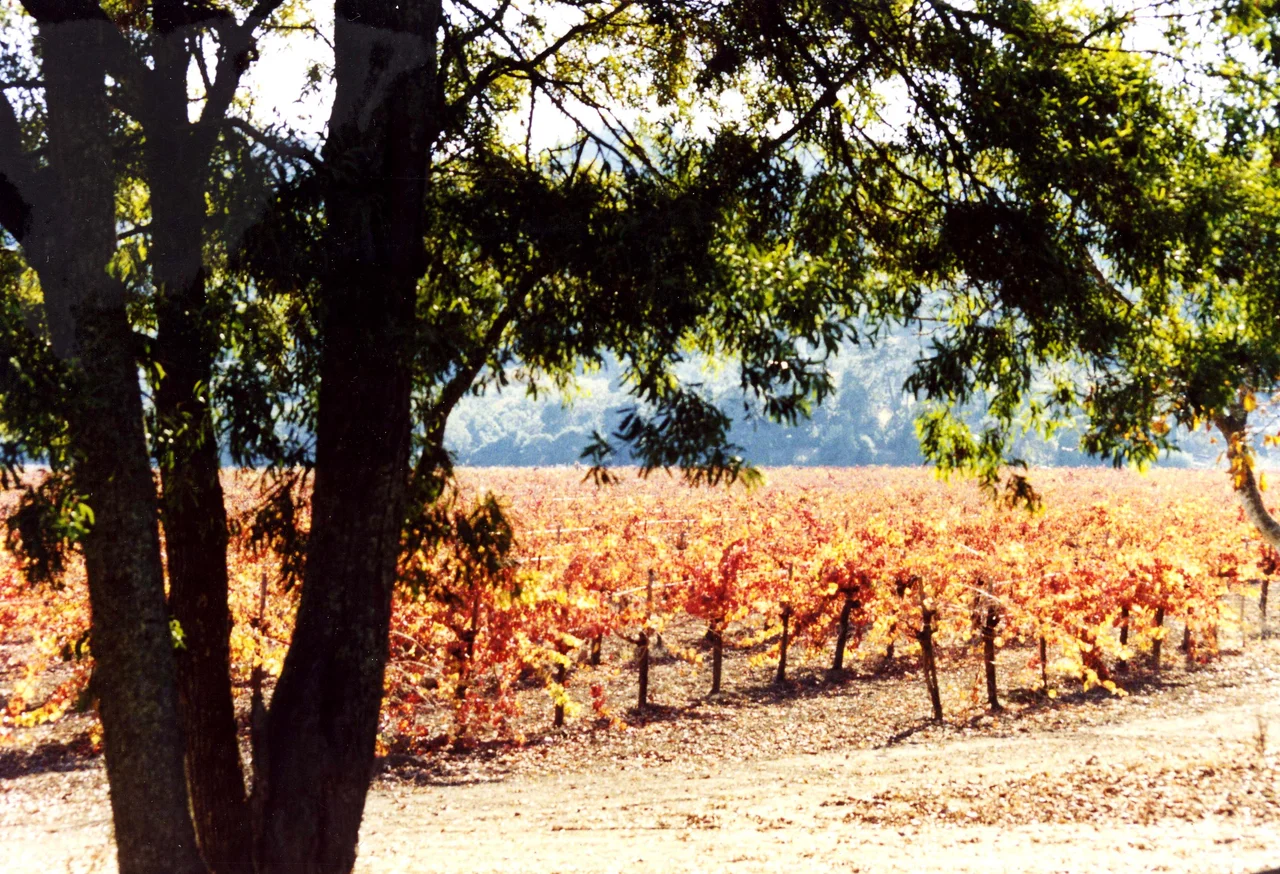
In 1970, Winiarski tasted a homemade wine from the vineyard of Nathan Fay, a pioneer growing Cabernet Sauvignon in the rocky soils east of the Silverado Trail. The effect was immediate. "I said to myself, Eureka! That's it," Winiarski later recalled. "This wine satisfied what I hoped was possible in the Napa Valley. It had not only regional character but also elements of classic or universal character." He purchased a 44-acre block of land next to Fay's vineyard for under $200,000 -- a sum that seems almost comically modest given what would follow. The soils were volcanic, the exposure was warm, and the Vaca Mountains to the east sheltered the vines from Pacific fog. Winiarski's first vintage, in 1972, was produced in a rented facility. His second, from 1973, was the first made at the estate in commercial quantities. It was also the vintage that changed everything.
The Judgment of Paris
On May 24, 1976, British wine merchant Steven Spurrier organized a blind tasting in Paris pitting California wines against the elite of France. The French judges -- restaurateurs, sommeliers, and critics of the highest rank -- tasted ten red wines without knowing which were American and which were French. The California entries were considered curiosities, included to make the French wines look better by comparison. When the scores were tallied, Stag's Leap Wine Cellars' 1973 Cabernet Sauvignon had beaten Chateau Mouton-Rothschild, Chateau Haut-Brion, Chateau Montrose, and Chateau Leoville Las Cases. The only journalist present was George Taber of Time magazine, and his article announcing the result detonated across the wine world. Decanter magazine later described it as "a victory that put California on the winemaking map." Stag's Leap won again at the San Francisco retasting in 1978, and placed second when the same wines were tasted at the 30th anniversary rematch in 2006.
The War of the Apostrophe
Success brought legal complications. In the same year Winiarski founded his winery, Carl Doumani established a neighboring operation called Stags' Leap Winery. Both men claimed first use of the name, which derived from a local legend about a stag leaping across the rocky palisades above the valley. The lawsuit and counter-suit dragged on until 1986, when the California Supreme Court ruled that since both wineries were named after the geographic area, both could keep the name -- with one meticulous distinction. Winiarski would place his apostrophe before the "s" (Stag's Leap), while Doumani would place his after (Stags' Leap). It may be the only court case in American viticultural history decided on the placement of punctuation.
An Italian Ending
The 35-acre S.L.V. vineyard -- the original Stag's Leap Vineyard whose grapes produced the 1973 Judgment of Paris winner -- still produces Cabernet Sauvignon from the same volcanic soils Winiarski chose more than fifty years ago. The winery was sold in 2007 to a partnership between Marchesi Antinori, one of Italy's oldest wine families, and Ste. Michelle Wine Estates. In 2023, the Antinori family acquired sole ownership. There is a certain symmetry in this: a winery founded by an American who discovered wine in Italy, now owned by Italians who recognized what that American had built in California. The estate produces wines ranging from the flagship Cask 23 to the Artemis Cabernet Sauvignon, but its identity remains inseparable from that single afternoon in Paris when a blind tasting revealed what Winiarski had believed all along -- that the Stags Leap District could produce wines of universal character.
From the Air
Located at 38.40N, 122.33W in the Stags Leap District on the eastern side of Napa Valley, California. The winery sits at the base of the Stags Leap Palisades, a dramatic volcanic rock formation visible from altitude that rises sharply above the vineyard floor. The geometric patterns of vineyards along the Silverado Trail provide orientation. Nearby airports include Napa County Airport (KAPC) approximately 5nm southwest and Buchanan Field (KCCR) approximately 30nm south. The Napa Valley floor runs northwest-southeast with the Mayacamas Mountains to the west and Vaca Mountains to the east.
Nearby Stories
- Six Seconds on Moorland Avenue 2.5 km away
- The Lost Flight to Sacramento 2.8 km away
- Rancho Nicasio 7.2 km away
- Yocha Dehe Wintun Nation 8 km away
- The Geysers: Earth's Steam Engine 13 km away
- Feather River 13 km away
- The Last Lakes in the Valley 14 km away
- Before the Cake Was Cut 29 km away