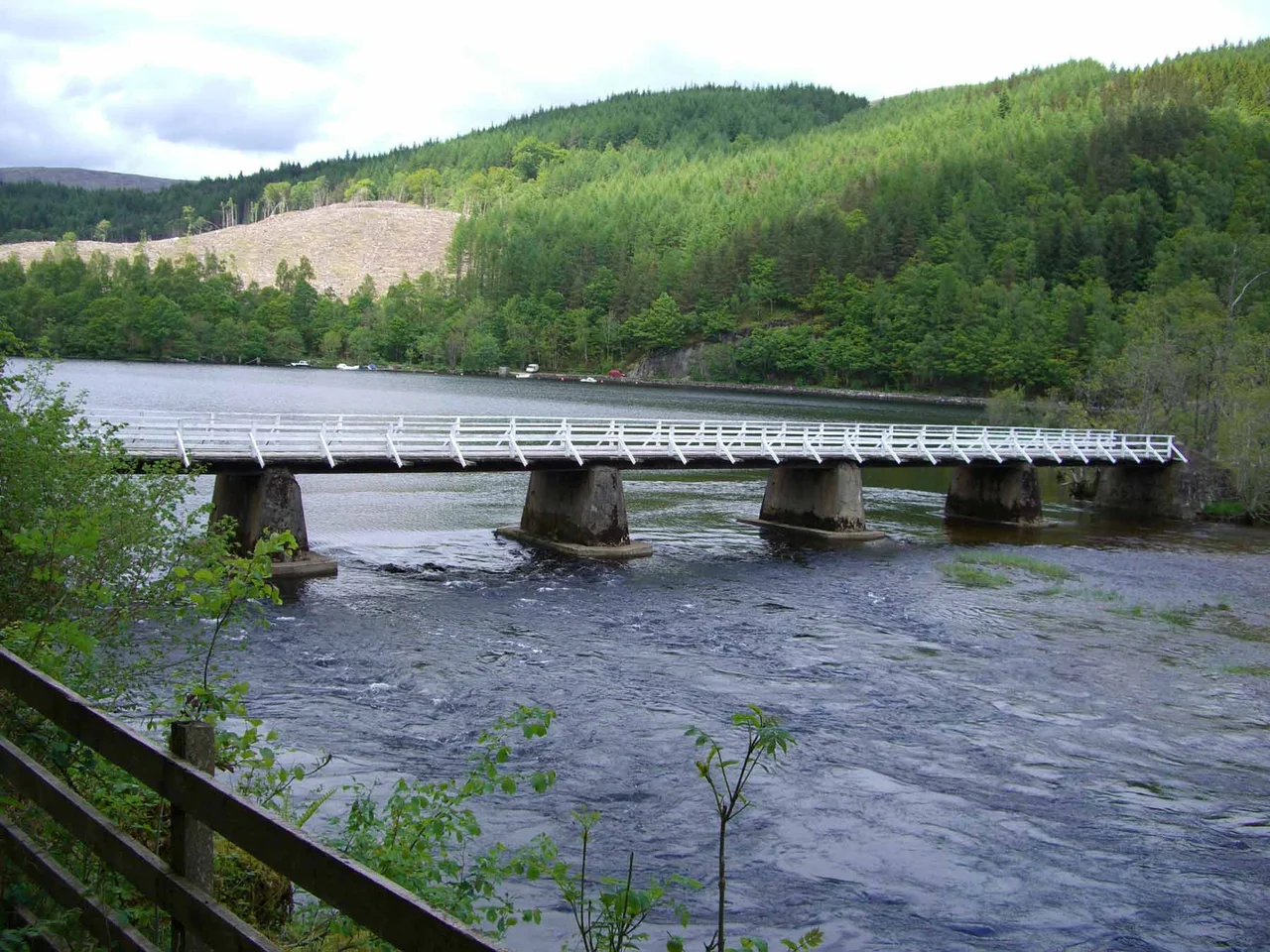

Stand-off at the Fords of Arkaig
By September 1665 the quarrel was older than the men fighting it, older than their grandfathers, older than the Scottish state most of them recognised. Three hundred and sixty years earlier, the Camerons and the Mackintoshes had begun arguing over the lands around Loch Arkaig and Glen Loy. They had fought their first battle at Drumlui in the 1330s. They had taken each other to court. They had lobbied kings and chancellors. Now the Mackintosh chief led 1,500 men of the Chattan Confederation to the south end of Loch Lochy, intending to settle it with steel. Clan Cameron met them at the ford with their own muster, plus MacGregor allies and MacIans of Glencoe. For a week the two armies stared at each other across the water. Then a Campbell negotiator arrived from Edinburgh, papers were drawn at the House of Clunes, and the Camerons bought the land for cash.
An Argument That Outlived Centuries
The dispute reached back to before 1291, when the lands at Loch Arkaig had belonged to Dougal Dall MacGilleCattan, chief of the ancient Clan Chattan. That year his daughter Eva married Angus Mackintosh, sixth chief of Clan Mackintosh, and the two clans united in what became the Chattan Confederation. The Mackintoshes claimed the Arkaig lands as part of Eva's inheritance. The Camerons, occupying the ground, claimed it as their own. They fought at Drumlui in either 1330 or 1337, depending on which chronicle you trust. They went on fighting, on and off, for the next three centuries. Multiple kings tried to settle the matter. The Court of Session in Edinburgh took it up repeatedly. None of the rulings stuck. By the 1660s, both clans had committed substantial resources to the Royalist cause during the civil wars, which gave the Camerons useful political leverage.
The Failed Diplomacy of 1662
In June 1661, Lord Glencairn wrote from London urging the Edinburgh courts to freeze any Mackintosh action against the Camerons, hinting that Charles II had a plan to reward Cameron loyalty. No royal plan ever materialised. So in July 1662, Mackintosh obtained a Decree of Removal against the Camerons. The next year he pushed further and had the entire Clan Cameron declared outlaws under a Commission of Fire and Sword. The noblemen authorised to enforce it all told Mackintosh to take the cash settlement Cameron had been offering, about 3,600 pounds in English money, and stop wasting everyone's time. The Duke of Rothes, Lord Chancellor of Scotland, suspended the Commission in January 1665 pending a Privy Council review. Mackintosh, arrested in Edinburgh and bound to keep the peace, simply went home and called out the clan.
Two Armies at the Ford
Mackintosh led 1,500 men south from his territory to the foot of Loch Lochy. Cameron, knowing they were coming, assembled his own force, joined by MacGregors who owed him favours from the 1650s Royalist rising, and by MacIans of Glencoe. The Camerons withdrew across the Arkaig river to Achnacarry, securing the only crossable ford. For seven days the two armies faced each other across the water. Then a Campbell of Glenorchy, the future Earl of Breadalbane, arrived with orders from Edinburgh to end the dispute by negotiation or by force. While he opened talks with Mackintosh, Cameron sent the bulk of his men on an eighteen-mile flanking march around the western end of Loch Arkaig and back along the north shore, aiming to surprise the Mackintosh army from behind. Before that movement was completed, the Mackintoshes accepted terms.
A Pyrrhic Cash Deal
The contract was signed at the House of Clunes. The Camerons bought Loch Arkaig and Glen Loy outright. To raise the money, Cameron took a loan from the Earl of Atholl, who hoped to weaken the Campbells in the region, but Argyll counter-offered a lower rate with strings: the Camerons had to pay 100 pounds Scots in feu duty annually and acknowledge Argyll as feudal superior of the lands they were buying. Cameron took the deal. His descendants were still paying rent to Argyll's factor in 1749. The Camerons themselves called it a Pyrrhic victory, because pursuing the claim across the centuries had cost them lands worth four times what they paid to settle it. Achnacarry Castle, where they had met the Mackintosh army, still stands in Cameron hands today, though the war that came eighty years later, the 1745 rising, would damage it heavily.
From the Air
The Stand-off at the Fords of Arkaig site is at 56.951 degrees North, 5.001 degrees West, in Lochaber's central Highlands, on the river running out of Loch Arkaig toward Loch Lochy. Achnacarry Castle, the Cameron seat, sits beside the same river. The nearest airport is Oban (EGEO) about 50 nautical miles south, with Glasgow (EGPF) the main commercial gateway 90 nautical miles south and Inverness (EGPE) 50 nautical miles northeast. Best viewed at 2,000 to 4,000 feet AGL to see the river, Achnacarry, the eastern end of Loch Arkaig, and the Great Glen line beyond. Frequent low cloud in the central Highlands; Ben Nevis rises 10 miles south-southwest.
Nearby Stories
- Morvern 4.8 km away
- Gavin Maxwell 5.7 km away
- Lochaber 6.5 km away
- Ben Alder 8.6 km away
- Meggernie Castle 13 km away
- Battle of Glen Shiel 14 km away
- Foyers hydropower schemes 16 km away
- Castle Stalker 18 km away