
Stavoren
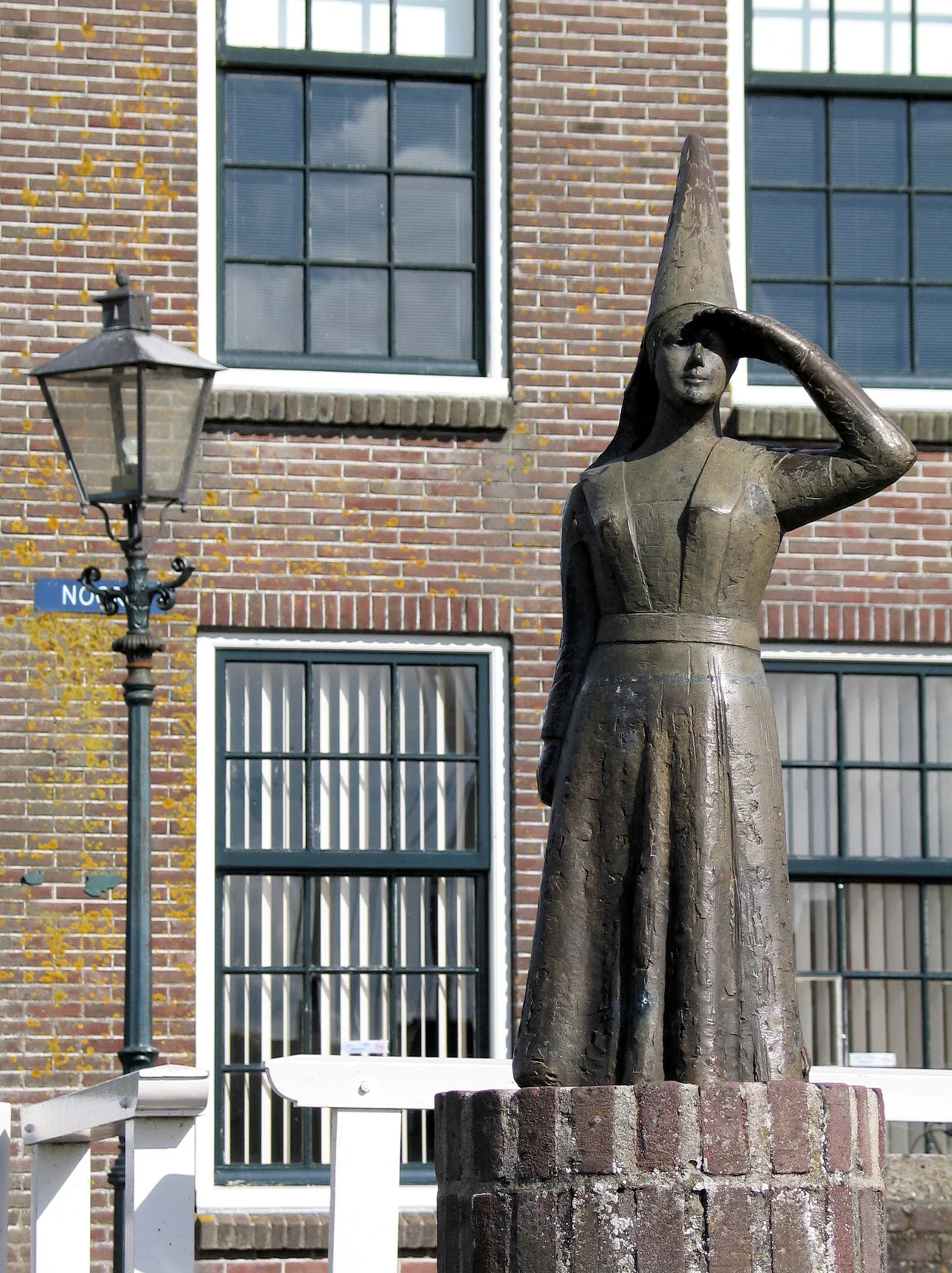
A rich merchant's widow stands on the harbour wall of Stavoren. Her captain has returned from a long voyage with what he insists is the most precious cargo in the world. She demands to see it. He uncovers - wheat. Plain Polish wheat, the kind that feeds the poor. Furious, humiliated in front of her Hanseatic peers, she orders the entire shipload thrown into the sea. When a beggar warns her that pride goes before a fall, she pulls a ring from her finger and flings it into the harbour. "I am as likely to fall into poverty," she says, "as I am to see this ring again." That night, at a banquet she throws to impress her fellow merchants, she cuts into a freshly served fish - and finds the ring inside. So begins the slow ruin of the Vrouwe van Stavoren, and so, the Frisians will tell you, begins the slow ruin of Stavoren itself.
The Oldest City in Friesland
Strip away the legend and the place is real enough. Stavoren - Starum in Frysian - sits on the eastern shore of the IJsselmeer, where the lake narrows toward the dyke. It received city rights in the 1060s, which makes it the oldest city in Friesland, and probably one of the oldest in the Netherlands. Old chronicles name it as the burial place of early Frisian kings. By 1285 it had joined the Hanseatic League, the medieval trading network of northern European ports, and at its height Stavoren did the kind of business that built churches and warehouses and a self-regard substantial enough to inspire its own cautionary tale. The bronze statue of the Vrouwe, looking eternally out over the water she once owned, was unveiled in 1969. She still gazes seaward, still without her ring.
A Harbour That Refused to Stay Open
What actually undid Stavoren in the late Middle Ages was not divine justice but sand. The harbour silted up. Ships could no longer reach the docks; the Hanseatic trade slipped away to deeper ports like Amsterdam and Lübeck. The Vrouwe legend - the wheat thrown overboard, transformed into a sandbank that strangled the city - is the kind of myth a small place tells itself when something has gone irreparably wrong and no single villain will do. It rolls a moral lesson and a geographic fact into one tidy story: this is what happens when you despise the poor. The historical Stavoren had no single moment of fall. It dwindled. It reinvented itself modestly in the seventeenth and eighteenth centuries, declined again in the nineteenth, and arrived in the twentieth as a quiet harbour town of about a thousand people, with a railway terminus and a summer ferry to Enkhuizen on the opposite shore.
The Sea That Used to Be Here
Until 1932, the water beyond Stavoren's harbour was the Zuiderzee - a shallow saltwater bay open to the North Sea, prone to storm surges that periodically erased villages along its margins. Then the Afsluitdijk closed the bay, the IJsselmeer was born, the salt slowly flushed away, and the sea that had defined Stavoren's geography for a thousand years quietly became a freshwater lake. Stavoren's port had not been commercially important for centuries by then, but the dyke completed something the Vrouwe could not. The risk of flooding, which had haunted every Frisian coastal settlement since the early Middle Ages, simply ended. The water you see from the harbour today still moves with wind and weather, but it no longer answers to the tide.
Of Ice and Eleven Cities
Stavoren has another claim on the Frisian imagination, one tied to the rarer and rarer cold winters of the northern Netherlands. It is one of the eleven cities on the route of the Elfstedentocht, the legendary ice-skating tour that loops about two hundred kilometres through Friesland on frozen canals and lakes. The race is held only when the ice is everywhere thick enough to support thousands of skaters - a condition that has been met exactly fifteen times since the first official Elfstedentocht in 1909. The last race, in 1997, has not been followed by another. Climate has stopped cooperating. But the route remains marked, the cities remain ready, and every cold December the news in Friesland turns to whether the Elfstedentocht might, this year, return. Stavoren, with its old harbour and its statue of the Vrouwe, waits with the rest of them.
Walking the Town
Modern Stavoren has the feel of a place that has accepted what it is and stopped pretending otherwise. The streets are short and the views are long. The harbour is full of yachts in summer, empty in winter, and almost everything that matters can be reached on foot in fifteen minutes. The walk from the train station to the IJsselmeer-front passes brick houses, a few eighteenth-century buildings, the inevitable cafe terrace facing west toward the water. The pedestrian ferry to Enkhuizen, on the North Holland shore directly across the lake, still runs in summer and still carries only foot passengers. From the deck of that ferry, looking back at Stavoren as it recedes, you can see why the Vrouwe's legend has stuck. A small town, low against the water, with all the wind and weather of an inland sea on its doorstep - exactly the kind of place a moral story would attach itself to and never quite leave.
From the Air
Stavoren sits on the eastern shore of the IJsselmeer at 52.88N, 5.36E, with the village pressed up against the lake and the rest of Friesland fanning east. EHLW (Leeuwarden) is 35km northeast; EHLE (Lelystad) 35km south across the water; EHAM (Schiphol) 80km southwest. The Afsluitdijk runs north of town; the historic port-mouth and the bronze statue of the Vrouwe are visible from the air just south of the railway terminus. On a clear day you can see most of the lake at once - useful for picturing what it looked like when this was the Zuiderzee and saltwater ran all the way to Amsterdam.
Nearby Stories
- Exposure 4.4 km away
- Aylvapoldermolen 7.5 km away
- Action of 24 October 1798 7.7 km away
- Drachten 8.4 km away
- Vrouwenhuis 9.2 km away
- Zaanstreek-Waterland 9.5 km away
- Battle of Krabbendam 10 km away
- Giethoorn 11 km away