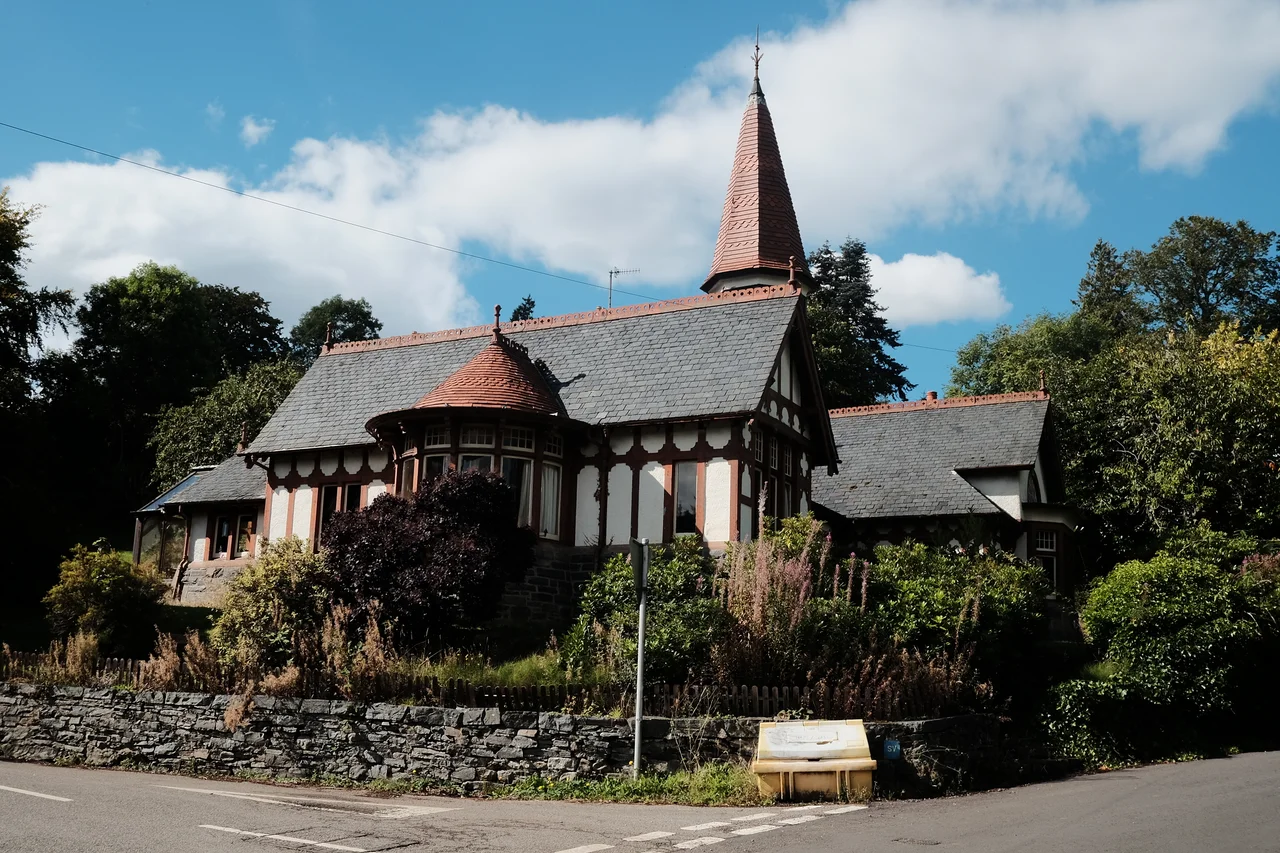

Strathpeffer
The smell, frankly, is the first thing. Sulphur. Strathpeffer's wealth was built on water that famously smelled like rotten eggs and was famously good for what ailed you, and from the 18th century onwards the well-to-do of Britain made the long journey north to drink it. In its prime this small Highland village was the most northerly spa in Europe, a place where dukes and consumptives shared the pump room. Today it is still here, still recognisably Victorian, and every January it hosts a 24-hour mountain bike race called the Strathpuffer that punishes its competitors at temperatures the Victorians would have called bracing.
Battlefields Before the Spa
Long before anyone took the waters, Strathpeffer was a strategic crossroads where Highland clans settled scores. Blar Nan Ceann, the Field of the Heads, lies at the western end of the modern village, scene of a forgotten battle between the MacKenzies of Seaforth and the MacDonells of Glengarry. The Battle of Blar Na Pairce in roughly 1486 saw the MacKenzies defeat a large invading MacDonald force; Kenneth MacKenzie was said to have ridden out to meet them from a crannog on Loch Kinellan, an artificial island that had served as a hunting seat of the Earls of Ross and was reportedly visited by Robert the Bruce. In 1497 came the Battle of Drumchatt, on the ridge they called the Cat's Back to the south-east.
The Sulphur Boom
The springs were discovered in the 18th century, and once word got out that the water cured things, Strathpeffer transformed. The pump-room in the middle of the village dates from 1819. A hospital and a hotel followed. The Strathpeffer Pavilion opened in 1881 to entertain the visitors. The arrival of the railways in Dingwall in 1862 made the journey from Edinburgh or London bearable; the branch line into Strathpeffer itself, opened in 1885, made it almost easy. By the late Victorian period the village had reinvented itself entirely as a destination for the moneyed and the wheezy.
Decline and Reinvention
The First World War broke the spa economy. The hospital, by then a US Naval convalescent unit, treated wounded sailors. In 1942 the spa hospital itself burned down. The branch railway closed to passengers in 1946 and entirely in 1951. The Pavilion drifted in and out of use. But the bones of the Victorian village remained, and so did the Castle Leod estate, seat of the Earl of Cromartie and chief of Clan MacKenzie, whose grounds still host the annual Strathpeffer Highland Gathering every August. Strathpeffer's old hotels are still here, doing brisk trade with walkers, cyclists, and a steady stream of visitors who come for the architecture rather than the water.
The Strathpuffer
Every January, the village hosts what has become one of the world's most extreme mountain bike races. The Strathpuffer is a 24-hour event held at the darkest, coldest, wettest point of the Scottish winter. Riders pound the local trail network through 17 hours of darkness, often in conditions that involve actual ice. More than 400 competitors regularly enter. The race is organised by a local bike shop called Square Wheels, which is exactly the kind of detail that sums up Strathpeffer: a Victorian spa village whose modern claim to fame is a brutal endurance ride run out of a shop with a self-aware name.
The People Here
Charles Kennedy, the Liberal Democrat leader who served as MP for Ross, Cromarty and Skye, lived in Strathpeffer in the 1980s and early 1990s. The shinty club Caberfeidh Camanachd, who play their home games on the grounds of Castle Leod, have twice lifted the sport's biggest prize, the Camanachd Cup, in 1934 and 1939. The Strathpeffer and District Pipe Band, formed in 1980, plays in the square every Saturday from late May to September. The Pictish Eagle Stone, a Class 1 symbol stone, stands in the village as a reminder that people have been living here far longer than the sulphur boom suggests.
From the Air
Located at 57.5832 N, 4.5457 W in Ross and Cromarty, about 5 miles west of Dingwall. The village sits in a strath at elevations from roughly 200 feet upwards, sheltered on the west and north, with a comparatively dry and warm climate. Castle Leod and its grounds lie immediately east. Nearest airport is Inverness (EGPE), 20 miles south-east; EGPN (Dundee) is much further south. Best viewed at 2,500-4,000 feet AGL on a clear day, when the white Victorian buildings stand out against green hillsides.
Nearby Stories
- Nairn 1.7 km away
- Portmahomack Sculpture Fragments 2.4 km away
- Loch Ness Monster 3.4 km away
- Ardgay 5.8 km away
- Glen Affric 5.9 km away
- Strathspey Railway (preserved) 9.2 km away
- Battle of Leckmelm 11 km away
- Corrieshalloch Gorge 22 km away