
Sycuan Band of the Kumeyaay Nation
The Sycuan Bingo Palace opened in 1983 on a reservation east of El Cajon, on land that had been federally recognized Kumeyaay territory since the late nineteenth century. It was not the first tribal gaming operation in California — that distinction belongs to other nations — but it was early, and it worked. The revenues it generated over the following decades funded a hotel purchase downtown, a college, a massive casino expansion, and a stake in a Major League Soccer franchise. The Sycuan Band of the Kumeyaay Nation went from subsistence-level poverty in the mid-twentieth century to anchor investor in San Diego FC within the span of a single generation.
The Kumeyaay and the Reservation
The Sycuan Band is one of four Kumeyaay ethnic groups indigenous to San Diego County, with a presence in the region that predates European contact by thousands of years. The reservation east of El Cajon — rugged, dry, not particularly suited to the agriculture that American settlement assumed was the proper use of land — was what remained after the mechanisms of dispossession had run their course. Federal recognition gave the Sycuan Band the legal framework for sovereignty, and sovereignty gave them the right to conduct gaming on tribal lands — a right that, in the early 1980s, was being established through a combination of litigation, federal legislation, and the determination of tribal governments to exercise it.
Anna Prieto Sandoval and the Bingo Palace
Former chairwoman Anna Prieto Sandoval is credited with pioneering the Sycuan Band's entry into casino gaming. The Sycuan Bingo Palace opened in 1983, converting a legal right into a revenue stream at a moment when that conversion was contested by California authorities and uncertain in outcome. The federal courts had already established that states could not prohibit tribal gaming when similar gaming was permitted elsewhere in the state; the Indian Gaming Regulatory Act of 1988 created the formal framework. Sycuan was positioned to benefit. The bingo palace expanded into a full casino operation, and the gaming revenues began to accumulate in ways that made other investments possible.
The U.S. Grant and Beyond
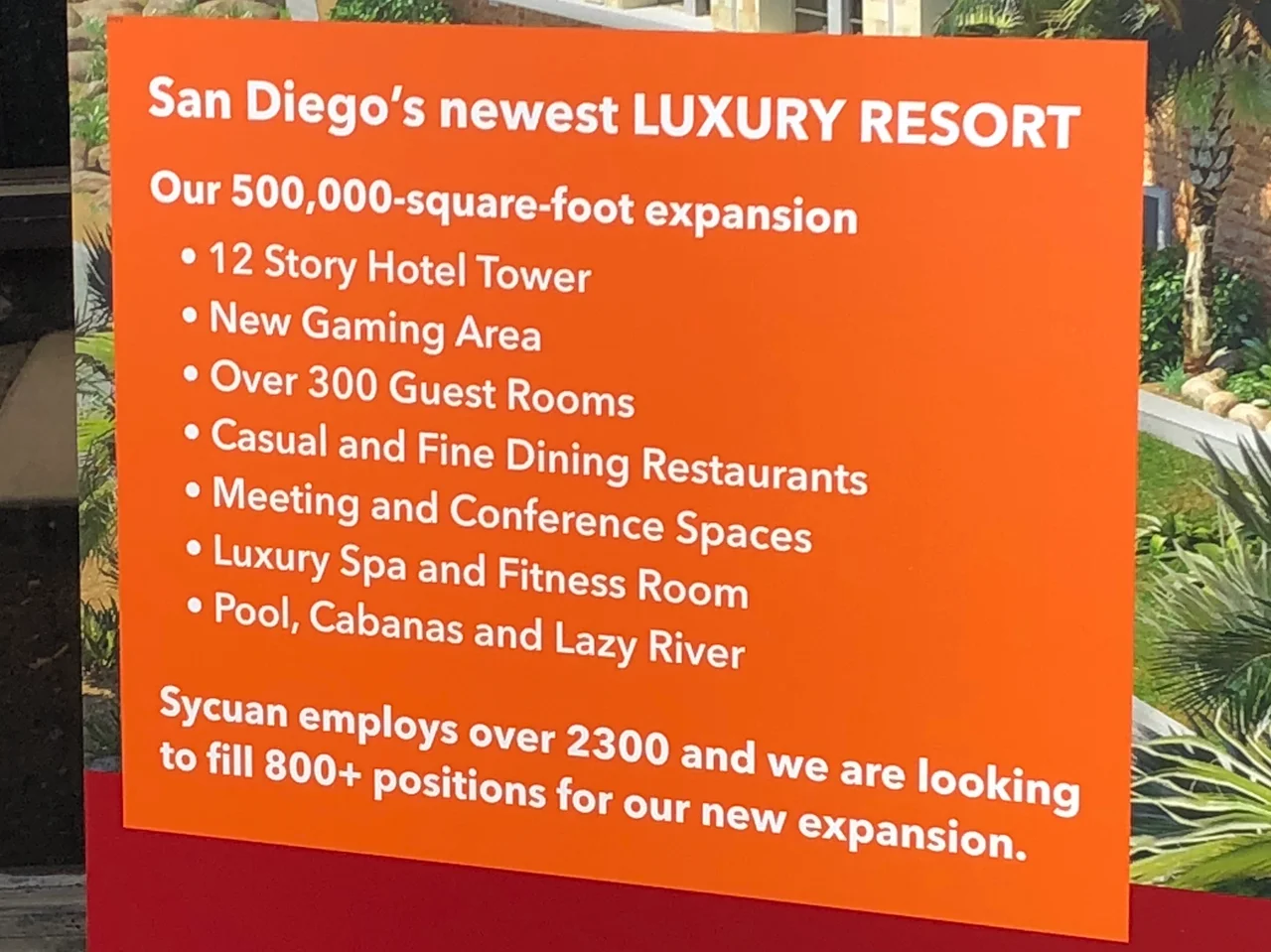
In 2003, the Sycuan Band purchased the U.S. Grant Hotel in downtown San Diego — a 1910 National Historic Landmark that had fallen into decline before being restored. The acquisition placed a Kumeyaay tribal nation in the ownership of one of San Diego's most storied properties, a reversal of the colonial-era land relationships that the surrounding city was built on. The hotel was one investment among several. The $260 million expansion of the Sycuan Casino and Resort, completed in March 2019, added over 2,300 slot machines, dozens of table games, and amenities that positioned the property at the top end of the Southern California tribal gaming market.
The Future and the Game
In 2024, the Sycuan Band joined the ownership group for San Diego FC, the Major League Soccer expansion team launched in 2025. Co-investors included Mohamed Mansour and baseball star Manny Machado. The Sycuan Institute on Tribal Gaming at San Diego State University, which the Band endows, offers academic programs on the economics and policy of Indian gaming. Kumeyaay Community College, which the Band founded in 2004 using gaming revenues, provides higher education rooted in Kumeyaay language and culture. These institutions — a tribal college, a university institute, a downtown hotel, a sports team, a resort casino — are the portfolio of a nation that turned a bingo palace into an economic foundation, and that economic foundation into something that looks like permanence.
From the Air
The Sycuan Band's reservation and casino are located at approximately 32.783°N, 116.833°W in the hills southeast of El Cajon in San Diego County. The resort and casino complex is identifiable from the air in the relatively undeveloped terrain east of the suburban corridor. Nearest airports: KSEE (Gillespie Field) 10 miles northwest, KSAN (San Diego International) 20 miles west. Best viewed at 3,000–5,000 feet MSL; the casino complex is visible against the surrounding chaparral and hillside terrain.
Nearby Stories
- Manzanita Band of Diegueno Mission Indians 3.7 km away
- San Pasqual Battlefield State Historic Park 9.9 km away
- El Vallecito 11 km away
- Tijuana: The Border City That Became Its Own Third Country 14 km away
- The Slot at Anza-Borrego 19 km away
- Mission Basilica San Juan Capistrano 56 km away
- Aliso Canyon 88 km away
- USS Higbee 239 km away