.jpg)
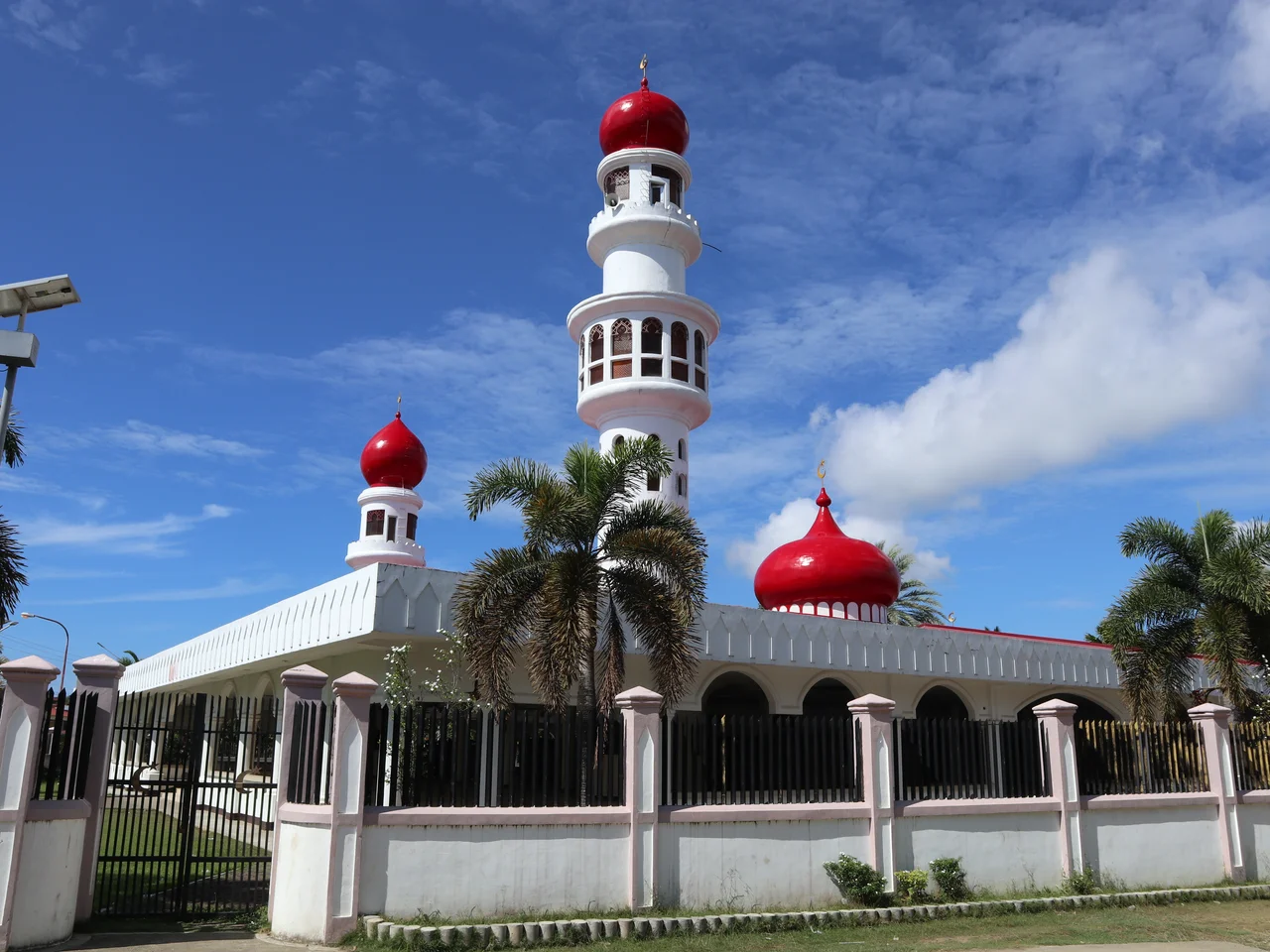
Taluksangay Mosque
The village of Taluksangay sits on the coast east of Zamboanga City, and its residents will tell you plainly: they were never conquered. The Sama Banguingui, the seafaring people whom colonial histories branded as pirates of Southeast Asia, settled here generations ago, and their descendants remain the majority of the village's population. In 1885, Hadji Abdullah Maas Nuno built a mosque in the barangay, making it the oldest mosque in the entire Zamboanga Peninsula -- and a physical marker of a faith that arrived in these islands centuries before the Spanish did.
Crossroads of the Faithful
Taluksangay was not merely a mosque site but the first center of Islamic propagation on the Zamboanga Peninsula. Muslim religious missionaries traveled from Arabia, India, Malaysia, Indonesia, and Borneo to this coastal village, drawn by its established community of believers and its strategic position along trade and migration routes. In the later part of 1914, a representative of the Sultan of Turkey, bearing the title Sheik-Al Islam, visited Taluksangay -- a recognition that placed this small Philippine barangay on the map of global Islamic networks. That a village of modest size could attract such attention speaks to the depth of its religious roots.
Unconquered People
The Sama Banguingui who form the heart of Taluksangay's community carry a complex legacy. Spanish, American, and later Filipino governments labeled them pirates, but their maritime traditions predated the colonial powers that sought to control their waters. They raided, traded, and navigated the seas of Southeast Asia with a seamanship that made them formidable to every would-be conqueror. What distinguished them was endurance: through centuries of colonial pressure, military campaigns, and political upheaval, the Sama Banguingui of Taluksangay maintained their community, their faith, and their identity. The mosque Hadji Abdullah Maas Nuno built stands as evidence of that persistence.
Through Conflict and Curiosity
Even during the most dangerous years, Taluksangay drew visitors. In 1973, at the height of the Moro National Liberation Front's military conflict with the Philippine government, members of the Quadripartite Committee -- including Generals Fidel V. Ramos and Romeo Espino -- traveled to the village. Ramos would later become president of the Philippines. Throughout the violence and instability of the 1970s, tourists continued to arrive at this historical village, drawn by the mosque and the living culture it represented. The willingness of outsiders to visit during a conflict, and of the community to receive them, suggests something about the character of Taluksangay: a place that remained open even when the world around it closed down.
Standing Still in a Changing City
Zamboanga City is a place where Roman Catholic cathedrals and mosques coexist within the same metropolitan area, where Chavacano, Tausug, and Sama are spoken in adjacent neighborhoods. Taluksangay's mosque anchors the Muslim identity of the eastern barangays in a city that is often defined by its Christian-colonial heritage. The National Historical Commission of the Philippines has placed an official marker at the site, acknowledging its significance. But for the families who worship there, the mosque's importance does not require government validation. It is where their great-grandparents prayed, where their own children learn the rituals of the faith, and where the call to prayer still carries over the water at dawn.
From the Air
Taluksangay Mosque is at 6.951N, 122.181E on the eastern coast of the Zamboanga Peninsula, roughly 12 km east of Zamboanga's city center. From altitude, look for the coastal settlement of Barangay Taluksangay along the shoreline east of the main urban area. Zamboanga International Airport (RPMZ) is approximately 10 km to the west. The mosque is within the village's built-up area near the waterfront. The Santa Cruz Islands are visible to the south across the Basilan Strait.
Nearby Stories
- 2018 Lamitan Bombing 8.2 km away
- Philippine Air Lines Flight F26 17 km away
- 1955 Lanao Earthquake 72 km away
- Patikul Massacre 91 km away
- 2021 Philippine Air Force C-130 Crash 120 km away
- Jose Rizal's Farm 186 km away
- Tubbataha Reef 275 km away
- November 2023 Mindanao Earthquake 287 km away