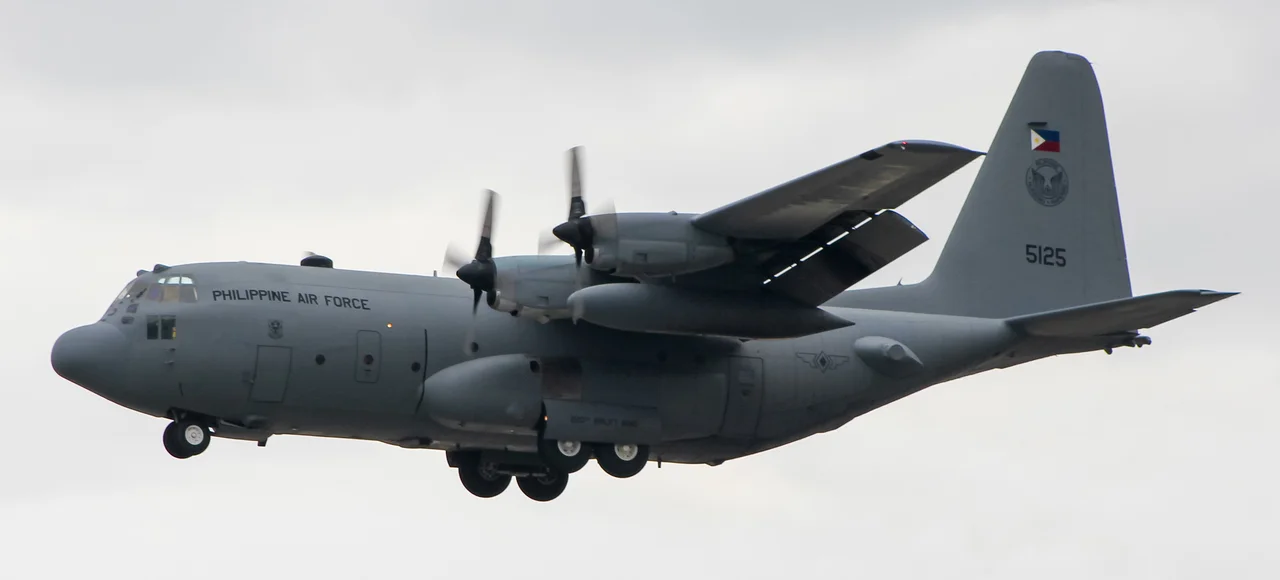

2021 Philippine Air Force C-130 Crash
The soldiers aboard were on their way to fight Abu Sayyaf. On July 4, 2021, a Lockheed C-130H Hercules carrying 104 military personnel overshot the runway at Jolo Airport in Sulu, Philippines, crashed into the nearby municipality of Patikul, and burst into flames. Fifty military personnel and three civilians on the ground died in the Philippine Air Force's deadliest aviation accident in history. The aircraft, tail number 5125, had been in service since February 1988 as a United States Air Force plane before being transferred to the Philippines through a grant from the U.S. Defense Security Cooperation Agency just six months earlier, in January 2021. The military maintained the aircraft was in good condition with 11,000 flying hours remaining before its next scheduled maintenance.
A Routine Reinforcement
The C-130 had taken off from Villamor Air Base in Pasay, flown to Lumbia Airfield in Cagayan de Oro to pick up troops, and then headed for Jolo. Among the 104 personnel aboard were three pilots, five crew members, and fifty soldiers from the Philippine Army's 4th Infantry Division training unit in Malaybalay, Bukidnon. Five military vehicles were loaded in the cargo hold. The troops were reinforcements for the Jolo-based 11th Infantry Division, which was engaged in ongoing operations against Abu Sayyaf in Sulu Province. It was a routine transport mission to a conflict zone, the kind of flight the overstretched Philippine Air Force conducted regularly with its small fleet of aging C-130s. At the time of the crash, only one other C-130 in the PAF inventory was operational; two more were undergoing maintenance and repair in Portugal.
Overshoot
The aircraft overshot the runway at Jolo Airport, a facility with limited infrastructure in a province that had long been a security challenge. It crashed in Patikul, the same municipality where Abu Sayyaf fighters had ambushed soldiers searching for bombing suspects the year before. The C-130 caught fire on impact. The crash killed the pilot in command, forty-nine other military personnel on board, and three quarry workers on the ground. Forty-six occupants and four civilians on the ground survived with injuries. Most of those who died were burned beyond recognition. Identifying them required DNA testing, analysis of surviving clothing and accessories, and examination of body marks. The crash surpassed the 1971 Douglas C-47 Skytrain disaster in Floridablanca, Pampanga, which killed forty people, as the deadliest Philippine Air Force accident.
Community and Response
In the immediate aftermath, Tausug civilians from the surrounding area rushed to the burning wreckage to pull survivors free. Members of the Citizens Armed Forces Geographical Unit, a local militia, joined the rescue. It was a striking moment: in a province long defined by conflict between government forces and local insurgents, civilians risked their lives to save the soldiers who had come to fight in their province. The Manila Times later celebrated these Tausug rescuers as heroes. The Armed Forces of the Philippines declared a six-day mourning period, and President Rodrigo Duterte traveled to the Western Mindanao Command in Zamboanga City the following day to pay his respects. The United States sent an emergency medical services unit to assist survivors.
No Single Cause
The crash prompted an investigation that examined the aircraft's condition, the runway, the possibility of human error, and whether the plane had been overloaded. Both the flight recorder and cockpit voice recorder were recovered and sent to the United States for data retrieval. In September 2021, the military disclosed that there was no single attributable cause. The accident was, in their words, most probably due to actual or perceived material factors and induced human factors aggravated by local and environmental conditions, a combination of aircraft issues, weather, and crew response that led to an unrecoverable stall during a critical phase of flight. The crash also reignited debate in the Philippine Congress about the military's modernization program and its policy of acquiring second-hand assets through foreign military aid. The AFP resumed C-130 flights on December 11, 2021, five months after the disaster.
From the Air
Coordinates: 6.05°N, 121.03°E, near Jolo Airport (RPVJ) in Sulu Province, Bangsamoro Autonomous Region. Jolo Airport has a single runway with limited infrastructure on a volcanic island. The crash site is in the municipality of Patikul, just beyond the runway. Pilots should note the short runway length and challenging terrain. Zamboanga (RPMZ) is the nearest major airport, approximately 160 km northeast. The area has historically seen military air operations related to counterinsurgency.
Nearby Stories
- Japanese Destroyer Tanikaze 49 km away
- Basilan 51 km away
- Isabela, Basilan 79 km away
- Tawi-Tawi 87 km away
- 2018 Lamitan Bombing 115 km away
- Sheikh Karimul Makhdum Mosque 153 km away
- Tubbataha Reef 303 km away
- November 2023 Mindanao Earthquake 378 km away