
Where Tigers Return and Addicts Heal
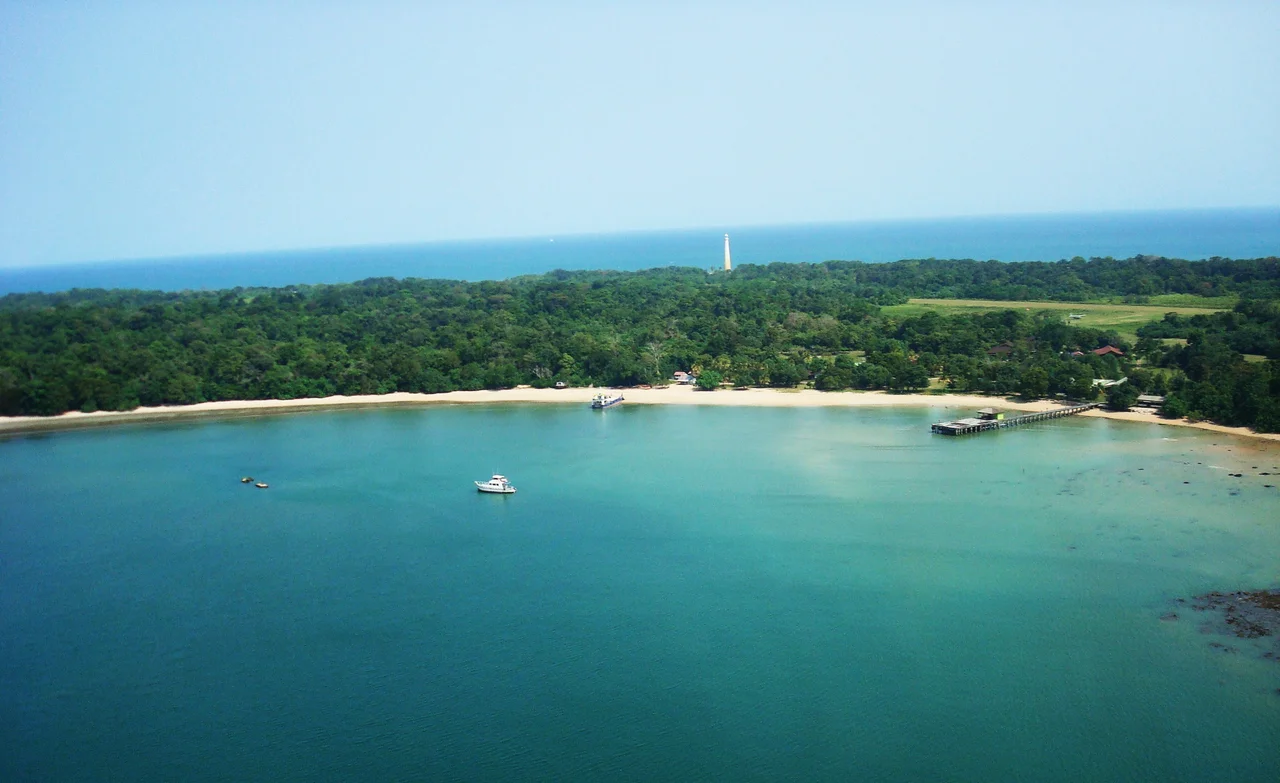
In 2011, three Sumatran tiger cubs were born in the forests of Tambling to parents that had been rescued from human conflict. Fewer than 300 Sumatran tigers remained in the wild at the time, and every birth mattered -- but these cubs represented something larger than arithmetic. They proved that a forest ravaged by illegal logging and poaching could recover enough to sustain the most demanding predator in the ecosystem. Tambling Wildlife Nature Conservation occupies 45,000 hectares of forest and 14,082 hectares of marine habitat on the southern tip of Sumatra, at the edge of Bukit Barisan Selatan National Park. It is one of the few places in Indonesia where the food chain remains complete from the forest floor to the apex predator.
A Forest That Nearly Disappeared
When the Artha Graha Peduli Foundation began restoration work at Tambling in 1998, the damage was extensive. Illegal logging, poaching, unauthorized land use, and unregulated fishing had destroyed roughly 20 percent of the forest within Bukit Barisan Selatan National Park. Coral reefs across an approximately 20,000-hectare marine zone surrounding Tambling had been degraded by exponentially increasing fishing pressure. The area is remote -- no public transportation reaches it -- and that isolation had made enforcement nearly impossible. Recovery was slow. The foundation spent years simply stabilizing the rate of deforestation before restoration could begin in earnest. Since 1998, more than 10,000 trees of endemic species have been planted, including waru, bayur, and nyamplung, gradually rebuilding the canopy that poachers and loggers had torn open.
The Tiger's Return
Tambling's signature conservation achievement is its work with Sumatran tigers. In partnership with Panthera, an international organization focused on big cat conservation, the foundation has rescued eight Sumatran tigers from conflict situations since 1998, returning five to their natural habitat within the conservation area. Between 30 and 40 tigers now live in the Tambling forests -- a significant population for a subspecies numbering fewer than 300 individuals. Camera traps occasionally photograph them moving through the undergrowth. The three cubs born in 2011 to rescued parents were a milestone: proof that the rehabilitated forest could support breeding. In 2014, Panthera awarded Tambling for its success in tiger conservation at the annual Tigers Forever meeting in Jakarta. The absence of tiger-human conflict within the reserve is itself a marker of ecological health -- it indicates that prey species are abundant enough that tigers do not need to venture beyond the forest's boundaries.
Healing People, Healing Land
Perhaps the most unexpected program at Tambling links drug rehabilitation to conservation work. In cooperation with Indonesia's National Anti-Narcotics Agency, the foundation employs former addicts in forest restoration and ecotourism activities, using the discipline of conservation work as a framework for recovery. The logic is practical: Tambling needs labor for reforestation and patrol work, and former addicts need structure, purpose, and distance from the environments that sustained their addiction. The program encourages participants to pursue careers in conservation and eco-tourism, offering a livelihood tied to the health of the landscape rather than the urban economies they came from. Tomy Winata, the Indonesian businessman who founded both the Artha Graha Group and the conservation foundation, presented the program at the United Nations Office on Drugs and Crime annual meeting in Vienna in 2013. It remains one of the few initiatives in the world that treats ecological and human rehabilitation as the same project.
Threats That Do Not Pause
Conservation at Tambling is not a problem that can be solved and set aside. The mantangan plant, a flowering vine in the morning glory family, smothers tree canopies and blocks sunlight, requiring constant management. More fundamentally, rising sea levels are eroding Tambling's coastal areas -- some sections have lost as much as 20 meters of shoreline. Indonesia has already seen its island count drop from 17,508 to approximately 17,400 as small islands disappear beneath rising water. The financial challenge is equally persistent. Although Indonesia is classified as the world's third-largest "lung of the world" for its carbon-absorbing forests, the country struggles to sustain funding for conservation at the scale required. Tambling's existence depends on the continued commitment of a private foundation in a nation where government conservation budgets are perpetually stretched thin.
Sumatra's Southern Edge
Visitors to Tambling have included Kylie Minogue, fifteen foreign ambassadors during the 2009 Krakatau Festival, journalists from The New York Times, and delegations from UNESCO and the UN Office on Drugs and Crime. The ecotourism program is deliberately limited -- biodegradable products, tree-planting activities, small groups. The remoteness that once made the area vulnerable to poachers now serves as a natural filter, ensuring that only visitors willing to make the effort reach the forest. From the air, the conservation area is visible as a dense green promontory at Sumatra's southernmost point, where the Bukit Barisan mountain range meets the sea. The forest canopy is unbroken, a vivid contrast to the patchwork of cleared and cultivated land visible across much of the rest of southern Sumatra.
From the Air
Located at 5.92°S, 104.56°E on the southern tip of Sumatra, within Bukit Barisan Selatan National Park. The conservation area is visible as dense, unbroken forest canopy at the peninsula's tip, contrasting with cleared agricultural land to the north. The Sunda Strait and Krakatau volcano are visible to the southeast. Nearest significant airport is Radin Inten II (WIRL) in Bandar Lampung, approximately 150 km to the northeast. Best viewed from 5,000-10,000 ft AGL. The coastline and marine conservation zones are particularly visible in clear weather.
Nearby Stories
- The Eye of Krakatoa 36 km away
- Islands That Refuse to Hold Still 41 km away
- Surfing in Indonesia 51 km away
- 1933 Sumatra Earthquake 56 km away
- Way Kambas National Park 104 km away
- Ujung Kulon National Park 106 km away
- Enggano Island 209 km away
- Sainte-Rose, Réunion 5450 km away