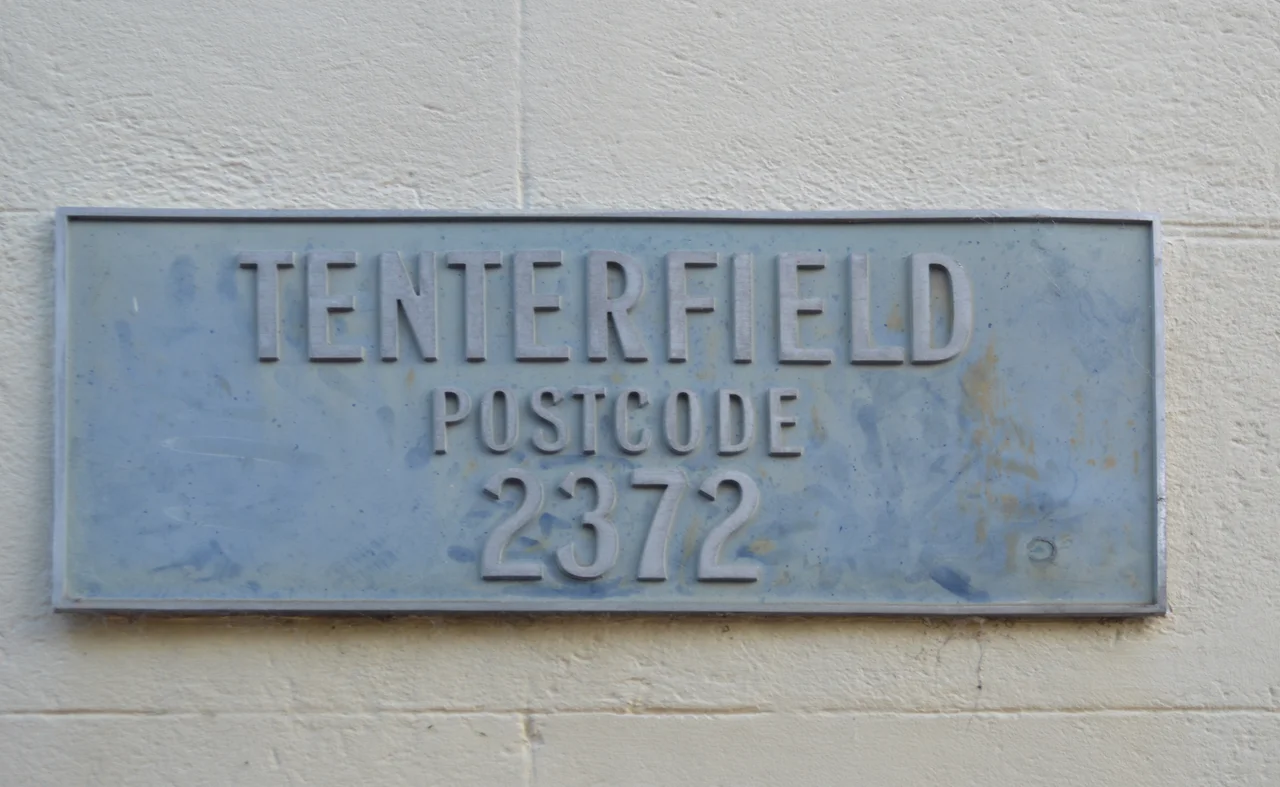

Tenterfield, New South Wales
On the evening of 24 October 1889, in a modest hall called the School of Arts in a small New South Wales border town, an old politician named Henry Parkes stood up and argued that the six separate Australian colonies should become one nation. The speech he gave that night - the Tenterfield Oration - is remembered as the moment the idea of an Australian federation stopped being a debate among officials and became a call to the public. Twelve years later, in 1901, the Commonwealth of Australia came into being. People here will tell you, with some justification, that the nation was born in Tenterfield.
The Oration That Made a Country
Parkes had been turning the idea of federation over for years, but Tenterfield is where he made it a rallying cry. Speaking at the School of Arts, he argued that a united Australia could raise a single national army from the colonies' separate militias, and could finally settle the maddening problem of railways built to different gauges that forced passengers to change trains at every border. As a first step he proposed a convention of delegates from each colony to draft a constitution. He spent the night in town, the Sydney papers carried his words, and over the next nine months he repeated the appeal in some fifteen other places. History remembers him as the Father of Federation, and remembers the hall, now the Sir Henry Parkes Memorial School of Arts, as the birthplace of the idea.
The Saddler on High Street
Tenterfield's other claim on the national memory is gentler, and set to music. George Woolnough, born in 1884, was the town saddler - the third man to own a saddlery on High Street, where he worked leather for more than half a century. His grandson, the entertainer Peter Allen, was born in Tenterfield in 1944 and grew up around that shop. In 1970 Allen wrote "Tenterfield Saddler," a quietly devastating song that braids his grandfather's steady craft together with the harder threads of the family's story - a father lost to drink and a gun, a grandson who left for the wider world. The song became an Australian classic, and it turned an ordinary country saddlery into a small national shrine to family, memory and the bush.
Granite Country
Tenterfield sits high in the New England tableland, in country defined by granite. Great rounded boulders the size of houses lie scattered across the hills around town, on Kildare Road and beyond, the weathered bones of an ancient batholith pushing up through the soil. The climate matches the altitude: warm, stable summers where most days top 23 degrees, sharp thunderstorms that can turn severe, and genuine cold in the depths of winter. The town's recorded high reached 39.9 degrees in February 2017. Autumn brings real colour to the streets, an unusual sight in Australia, and curiosities abound - among them a cork tree brought from England in a jam tin in 1861 and planted to take root in the local soil, still growing today.
A Town of Characters
For a town of around four thousand people, Tenterfield has produced a remarkable cast. Sir Harry Chauvel, born at nearby Tabulam, became the first Australian to command an army corps. Major J. F. Thomas, who once owned the local Tenterfield Star newspaper, won lasting fame for his dogged defence of Harry "Breaker" Morant, a story later told in the 1980 film Breaker Morant. The botanist William Blakely was born here in 1875; the singer Gary Shearston, the metallurgist and war hero Oliver Woodward, and the Aboriginal artist and veteran Dr Leonard Smith all belong to the town's story too. Even its sporting record is distinctive - the first campdraft run to formal rules was held in Tenterfield around 1885, a quintessentially Australian contest of horse and rider born in this granite border town.
From the Air
Tenterfield lies at 29.06 degrees south, 152.02 degrees east, high on the New England tableland of New South Wales near the Queensland border, on the New England Highway. The surrounding granite country - rounded boulders and the cleared high plains - is distinctive from the air, and the town sits at roughly 850 m elevation, so plan for high terrain and cooler, often gusty conditions. Tenterfield has a local aerodrome (YTFD); nearest commercial service is at Armidale (YARM) to the south and Ballina Byron Gateway (YBNA) toward the coast, with Brisbane (YBBN) the major hub to the north. Recommended viewing 3,500 to 5,500 feet AGL; watch for severe summer thunderstorms and strong frontal winds in spring.
Nearby Stories
- Washpool National Park 28 km away
- Kyogle 47 km away
- Susan Island Nature Reserve 49 km away
- Casino, New South Wales 52 km away
- Inverell 60 km away
- Glengallan Homestead 81 km away
- Inverell Post Office 86 km away
- Jimbour Homestead 210 km away