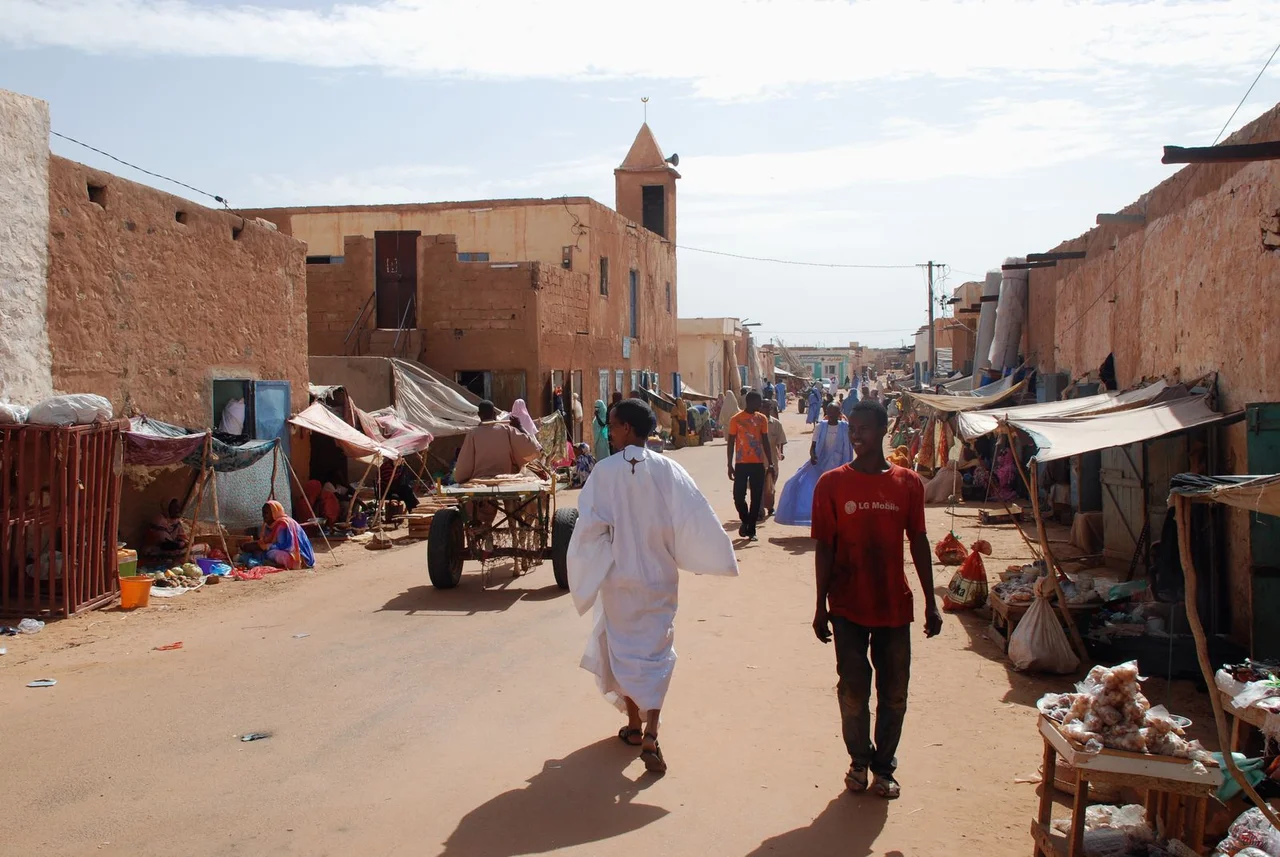

Tidjikja
Once a year, the great open square at the center of Tidjikja - the Bathaa - fills with tents, and the desert comes to taste the dates. Visitors arrive from across Mauritania for the Date Festival, drawn to a town that has built its identity around fruit and palm shade for more than three centuries. Tidjikja was founded in 1680 on the high stone shelf of the Tagant plateau, and around it spreads what many consider the most important palm grove in the country. In a land defined by what it lacks, this oasis is a small green argument for permanence.
Where the Caravans Met
Tidjikja did not grow up around nothing. Its old quarter, the Ksar, became a meeting place for the trans-Saharan trade - the spot where caravans from Tichit, Ouadane, Chinguetti, the Senegal River country, and distant Timbuktu found common ground. Salt caravans out of the Idjil mines made the town a natural destination. The Ksar itself is built in the Berber tradition of the fortified desert city, stone houses clustered tight against sun and raiders, and it is exactly this heritage that an organization called the Association for the Safeguarding of the Ghadima now works to restore, recognized by government decree in 2017. To walk those lanes is to read the architecture of a vanished commerce.
A Town Built on Dates
Tidjikja is famous for its dates, and not by accident. The palm grove that wraps the town is its economic and cultural heart, a stand of trees that turns brutal desert into something edible and shaded. The Date Festival each year is more than a market: tents in the Bathaa are themed around the life of the oasis itself - the techniques of cultivation, the traditional medicine of the Ehel Maghary, exhibitions of the harvest. Concerts and gatherings stretch into the evenings. For a town of roughly 11,000 people, it is a moment of gravity, pulling the wider region back toward a center that has always been about cultivation and exchange.
The Capital of Tagant
As the capital of the Tagant region, Tidjikja carries a weight beyond its size. It has an airport, a rarity in this remote interior, and it gave Mauritania one of its heads of state - Mohamed Mahmoud Ould Louly was born here. The town sits amid a constellation of other desert settlements: Rachid not far to one side, Moudjeria and the ruins of Ksar el Barka within reach, and the famous old city of Ouadane well to the north. Each is a node in the same ancient network of wells, palms, and caravan routes that once stitched the Sahara together, and that Tidjikja, more than most, has managed to keep alive.
From the Air
Tidjikja sits at 18.55 degrees N, 11.43 degrees W on the Tagant plateau, with its own airport on the edge of town. From the air, look for the dense green smudge of the palm grove against pale stone and sand - an unmistakable oasis signature in otherwise empty country. Nouakchott (GQNN) on the Atlantic coast is the nearest major airport to the west; Nouadhibou (GQPP) lies northwest. Desert visibility is excellent except during harmattan dust events.
Nearby Stories
- Ksar el Barka 32 km away
- Aoudaghost 108 km away
- Geography of Mauritania 133 km away
- Tichit 149 km away
- Maaden El-Irvane 204 km away
- Aoukar 210 km away
- Brakna region 248 km away
- Tenoumer Crater 460 km away