.jpg)
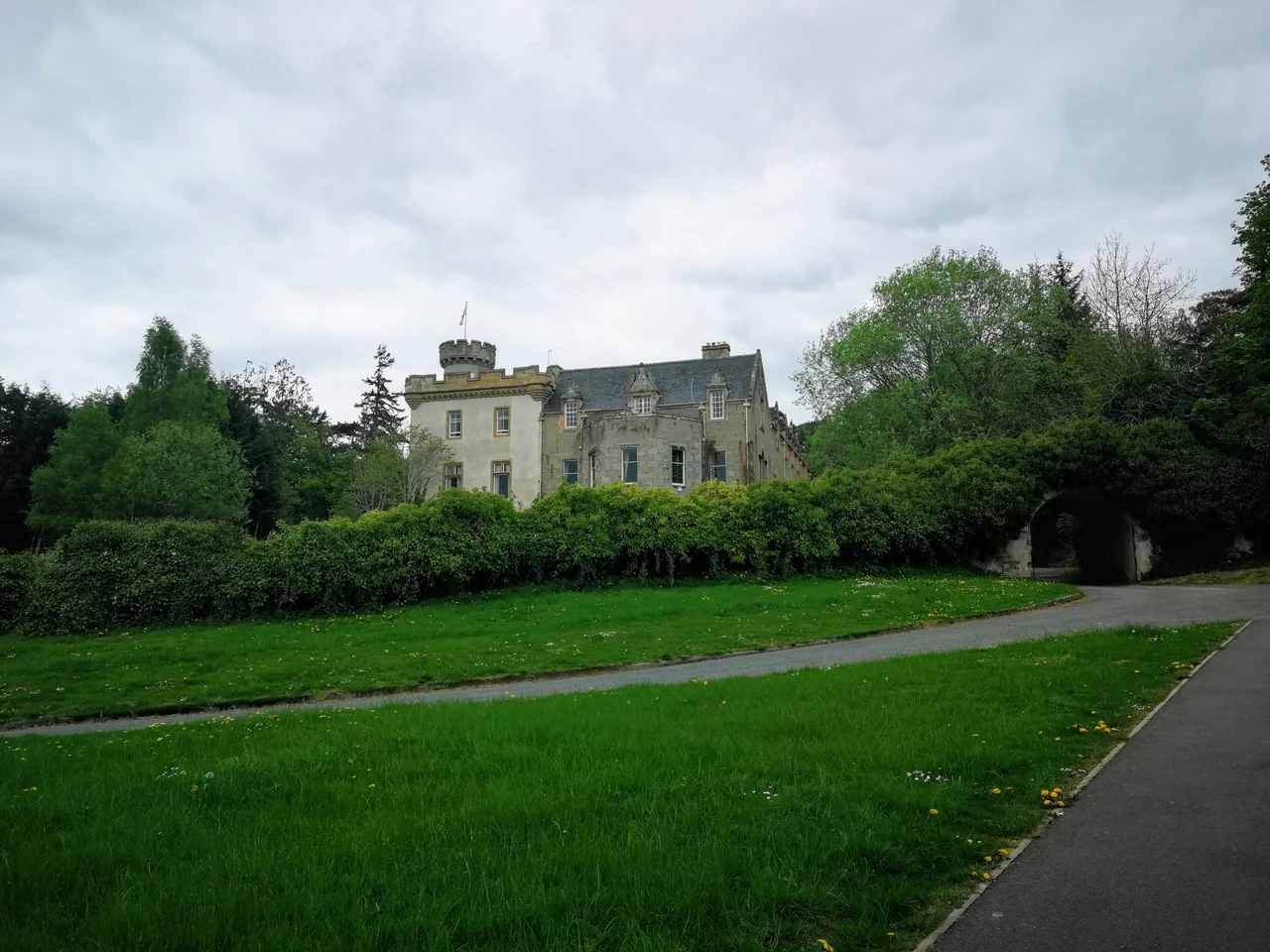
Tulloch Castle
On 28 May 2008, a fourteen-year-old boy named Connor Bond claimed he had photographed a ghost. The picture, taken on a digital camera at Tulloch Castle, appeared to show a disembodied hand on a stair railing with something pale floating behind it. The castle's owners were unsurprised. Tulloch had been gathering ghost stories for centuries, including the famous Green Lady who is said to haunt the building, and one more sighting changed nothing. The castle was already a hotel by then, and the kind of guests who book a stay in a reputedly haunted Highland tower were not put off by a teenager with a camera.
Born in the Tower
Tulloch's history begins in the late 14th century, when it was the birthplace of Mariota Leslie, daughter of Euphemia I, Countess of Ross. Mariota became the wife of Donald Macdonald, Lord of the Isles, which made the tower a footnote in the long Atlantic story of the western seaboard. Several of Euphemia's children by Walter Leslie were born here too. In the mid 16th century the lands passed to the Bain family, when Duncan Bane received a charter in 1542. King Charles II elevated Tulloch to a free barony in 1678 in favour of Sir Donald Bain.
The Davidsons
In 1762 Kenneth Bayne sold the estate to his cousin Henry Davidson, and a Davidson dynasty settled in for the next 150 years. Henry's brother Duncan, who inherited in 1781, served as MP for Cromartyshire. Four generations of Davidsons followed, until Duncan Davidson, the 11th baron of Tulloch, died in 1917 and left castle and barony to his daughter and her son, Colonel Angus Vickers of the Vickers aircraft company. Fire damaged the castle in 1845; it was extended in 1891. Sir Robert Lorimer, the architect who shaped much of early 20th-century Scottish country house design, was brought in to do alterations in the early 1920s.
Dunkirk and After
In 1940, with British soldiers being plucked off the beaches at Dunkirk, Tulloch Castle was turned into a hospital for the wounded. After the war the Vickers family let it go. In 1957 the local education authority bought it and turned it into a hostel for west coast students attending Dingwall Academy. The students were gone by 1976 and the building drifted into disrepair, the standard mid-century fate of Scottish country houses too large to keep and too historic to demolish. Renovation came in 1996 when the MacAulay family bought it and converted it to a hotel. In October 2007 it hosted the official Clan Davidson Gathering.
Tunnel and Folly
A tunnel is said to have run from the basement of Tulloch under the town of Dingwall to the old site of Dingwall Castle. It has collapsed now, though for years it could be glimpsed through an air vent on the front lawn. There is a Davidson family cemetery in the grounds, fenced off, slowly being reclaimed by undergrowth, with some headstones still legible for family members and the occasional pet. Up on a hill to the north stands Caisteal Gorach, a late 18th-century folly designed by Robert Adam, the most celebrated architect of Georgian Britain, for Duncan Davidson of Tulloch. A ruined round tower with flanking walls, deliberately built to look like a ruin, it is now a category A listed building, which is to say a fake ruin protected as a national treasure.
From the Air
Located at 57.6093 N, 4.4332 W in Dingwall, Ross-shire, on the north shore of the Cromarty Firth. The castle stands on a small hill north-west of the town centre, with Caisteal Gorach folly on higher ground beyond. Nearest airport is Inverness (EGPE), about 15 miles south. EGPN (Dundee) is far to the south-east. Best viewed at 2,000-3,500 feet AGL in clear weather; look for the white-harled tower against tree cover, with the Cromarty Firth as orientation reference to the east.
Nearby Stories
- Nairn 1.7 km away
- Portmahomack Sculpture Fragments 2.4 km away
- Loch Ness Monster 3.4 km away
- Ardgay 5.8 km away
- Glen Affric 5.9 km away
- Strathspey Railway (preserved) 9.2 km away
- Battle of Leckmelm 11 km away
- Corrieshalloch Gorge 22 km away