.jpg)
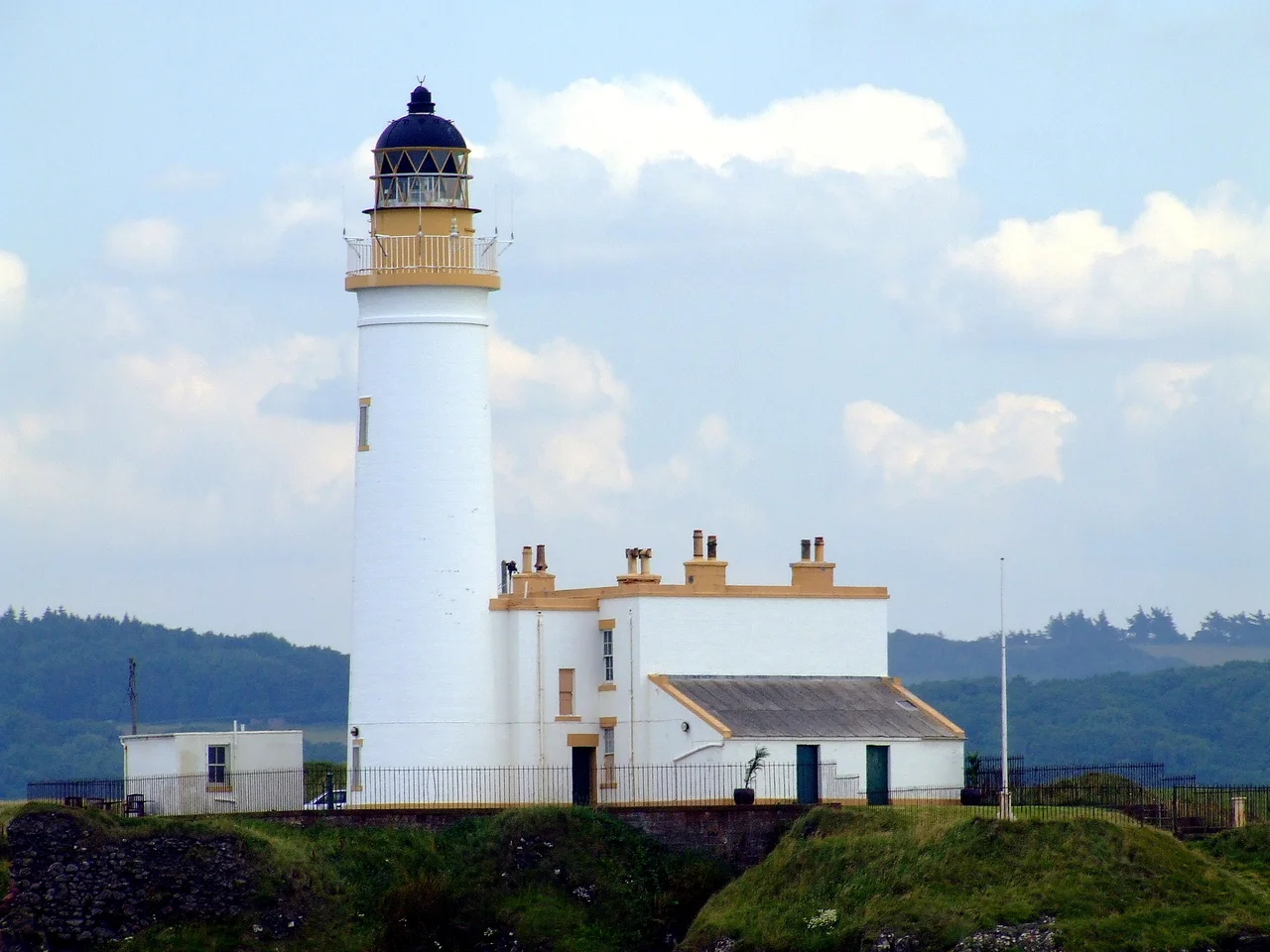
Turnberry Lighthouse
Bristo Rock had a reputation. By 1869 it had wrecked so many ships that the Receiver of Wreck at Ayr decided enough was enough and asked for a lighthouse to be built directly on top of it. Two engineers came up from Edinburgh to look at the proposal. David and Thomas Stevenson - members of the famous lighthouse-building dynasty whose grandson Robert Louis would later make the family name into something else entirely - studied the rock, walked the shoreline, and politely told the Receiver of Wreck no. The rock was unworkable. But the headland just inshore, where Turnberry Castle's moat had once been, would do nicely.
Built on a Vanished Fortress
Construction began in 1871 at an estimated cost of £6,576 - a substantial sum, paid for in the hope of saving sailors who had previously had no warning at all. John Barr of Ardrossan won the contract for the masonry. Milne and son built the lantern and the brass mechanism that would turn inside it. The site was layered with history before the first stone was laid. Turnberry Castle had stood here in the 13th century, said by some to be the birthplace of Robert the Bruce. By the time the Stevensons arrived, only fragments remained, but the moat's outline still showed in the turf. The new tower would rise from ground that had once defended a king.
First Light, 1873
On the evening of 30 August 1873, the lamp was lit for the first time. One flash of white light every fifteen seconds, visible to ships up to 24 nautical miles offshore - the rhythm a sailor's eye learns to recognize and trust. The lantern sits 29 metres above high water atop a tapering white-brick tower. Inside, 76 steps spiral up past small rectangular windows, each one set into the curve like a punctuation mark. The iron lantern room is glazed with triangular panes and ringed by an iron railing where the keeper could stand and check the weather. Living quarters were built into the base on three sides - east, west, and south - because in 1873 a lighthouse without a keeper was as useful as a watch without hands.
From Helicopter Pad to Hotel Annex
For nearly a century the keepers tended the light and the families who lived in the cottages walked the cliff path to fetch supplies. Then in 1986 the Northern Lighthouse Board automated the tower, and remote-monitored it from their Edinburgh office. The cottages became, for a time, the land base for the relief helicopter that supplied Ailsa Craig lighthouse on its sheer pyramid of granite ten miles offshore. In 1992 the Board sold the accommodation block to whoever then owned the Turnberry golf course. The arrangement evolved. In 2015, the utility buildings and a bothy were leased to the resort's current owner, and in 2016 the property was renovated as holiday accommodation and a restaurant placed - somewhat surreally - next to the ninth green.
Walking Past the White Tower
The Ayrshire Coastal Path runs right beside it. Hikers come around a bend in the dunes and there it is: a small, sturdy, almost humble lighthouse keeping watch on a stretch of water that doesn't always forgive carelessness. The light still flashes its 15-second rhythm. The shadow of Ailsa Craig sits on the horizon in clear weather. Below the cliff, the same Bristo Rock that the Stevensons declared unworkable continues to sit just beneath the surface - now warned, now seen, now safer than it was in 1869.
From the Air
Turnberry Lighthouse sits at 55.326 N, 4.845 W on the south Ayrshire coast, visible from low altitudes overflying the Firth of Clyde. The 29 m white tower is recognizable against the green headland next to the Trump Turnberry resort, with the granite plug of Ailsa Craig roughly 10 nm to the southwest. Nearest airports: Glasgow Prestwick (EGPK) about 12 nm north, and Glasgow International (EGPF) further northeast. Best viewing from 1,500-3,000 ft AGL on clear days.
Nearby Stories
- Troon Lifeboat Station 4.1 km away
- Battle of Drumclog 9.7 km away
- Knockshinnoch Disaster 13 km away
- Lochranza 18 km away
- Threave Castle 18 km away
- Wigtownshire 21 km away
- Dunaverty Castle 24 km away
- SM UB-85 27 km away