
Upemba National Park
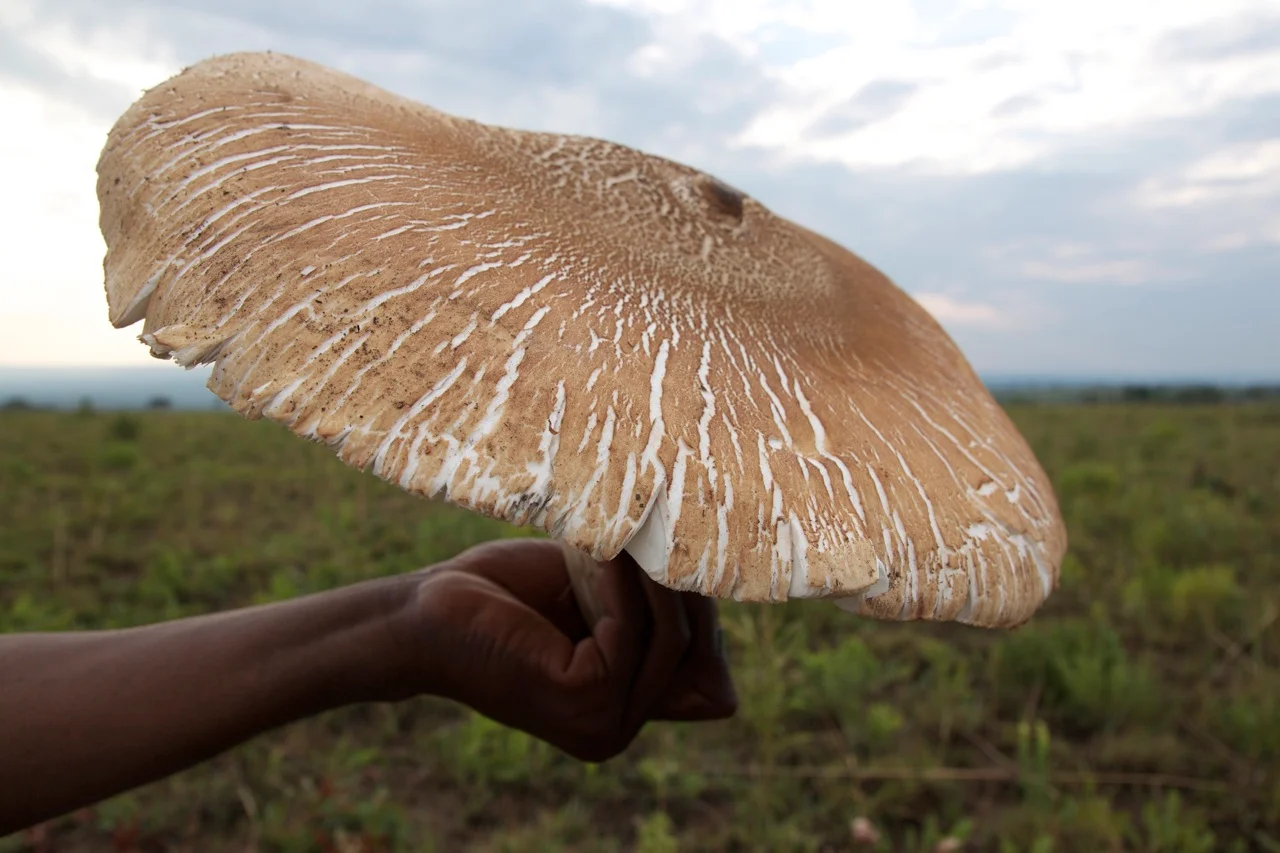
On 15 May 1939, the Belgian colonial administration of what was then the Belgian Congo signed Upemba National Park into existence. At 17,730 square kilometers, it was the largest national park in all of Africa. A 1975 boundary revision trimmed it to a still-enormous 10,000 square kilometers of core park plus a 3,000-square-kilometer annex. Within those boundaries sits the Upemba Depression - a lush maze of shallow lakes and papyrus marshes threaded by the upper Lualaba River - climbing away into the drier Kibara Plateau mountains above. Biologists counted some 1,800 species here, a few of them discovered as late as 2003. Freshwater elephant fish, cichlids, papyrus thickets, hippopotamus, and a particular species of termite whose mushroom, Termitomyces titanicus, grows to 60 centimeters across. The park is remote, under pressure, and still staggeringly alive.
The Depression and the Plateau
The Upemba Depression is one of the strangest bodies of water in central Africa. Lake Upemba itself is shallow - only 3.2 meters at its maximum depth - and the water level rises and falls with the seasons, high from March to June, low from October to January. The lake is famous for intense algae growth, giving its water a green tint that shifts with the light. Surrounding it lies an archipelago of smaller lakes, streams, and marshes where papyrus, Nile lettuce, and water caltrop form dense floating mats. To the north and east the land rises into the Kibara Plateau, where Afromontane grasslands and forests replace the lowland wetlands. In between run miombo woodlands and pockets of tropical rainforest. It is one of the few African parks where a traveler can move from swamp to savanna to mountain forest in a single day's drive.
Life on the Water
The lakes, rivers, and swamps of Upemba support a particularly diverse freshwater fauna. More than 30 species of Cyprinidae swim here, along with Mormyridae - freshwater elephant fish, with their distinctive long snouts and weak electric fields used to navigate murky water. Barbus, Alestidae, Mochokidae, and Cichlidae all contribute additional dozens of species. Hippopotamus and Nile crocodiles patrol the larger water bodies. The papyrus marshes hide sitatunga, the swamp antelope whose splayed hooves let it walk on floating vegetation that would swallow anything heavier. Overhead, fish eagles announce themselves with the wild yelping cry that no one forgets after hearing it in the wild. The Upemba Depression has been a wetland for a very long time, and its ecosystems have had time to elaborate.
Poaching, Militia, and the Slow Fight to Hold On
Upemba has faced every pressure an African park can face. Poaching has always been present, and militia violence during and after the Second Congo War reached into the park's remote reaches. Refugee settlements inside park boundaries added pressure on wildlife and water. Pollution from upstream mining operations along the Lualaba introduced contaminants into the lake system. In January 2023, the Armed Forces of the Democratic Republic of the Congo launched an operation against Mai Mai Kata Katanga rebels who had taken refuge in the Kundelungu and Upemba National Parks - a reminder that park boundaries can become hiding places for the armed groups they are not equipped to police. Conservation organizations have worked for decades to maintain ranger patrols and monitor wildlife populations, often under conditions that other African parks would find unmanageable.
Old Kingdoms Under the Water
The Upemba Depression holds more than natural history. Archaeological work in the area has documented the Upemba culture - a pre-colonial kingdom that flourished in the depression from roughly the 8th to 19th centuries, whose people fished the lakes, forged iron, traded copper from the Katanga mines to the south, and left behind burial sites rich with metal ornaments and pottery. The Luba people, whose kingdoms dominated central Africa before European contact, trace significant cultural threads to the Upemba region. When park staff walk the ranger tracks today, they walk over ground that has supported complex human societies for more than a thousand years. The park protects wildlife. It also preserves, incidentally, one of the least-studied archaeological landscapes in central Africa - a region whose story is being slowly recovered, piece by piece, from the same wetlands that hide its lake-dwelling fish.
From the Air
Located at 9.02 degrees south, 26.58 degrees east in Haut-Lomami, Lualaba, and Haut-Katanga Provinces of southeastern DR Congo. From altitude, the distinctive landmark is the Upemba Depression - a vast wetland mosaic of shallow lakes, with Lake Upemba as the largest - bordered by the Lualaba River on one side and rising into the Kibara Plateau mountains on another. The visual contrast between bright water, green marsh, and upland forest makes the park easy to identify.
Nearby Stories
- Katanga Province 6.1 km away
- Ciments du Katanga 70 km away
- Bunkeya 129 km away
- Dikulushi Mine 133 km away
- Luapula River 160 km away
- Luba Empire 163 km away
- Piana-Mwanga Hydroelectric Power Station 170 km away
- Luvua River 230 km away