
Virginia-Maryland College of Veterinary Medicine
Two states, two land-grant universities, one veterinary college. The arrangement is rare in American higher education and unique in veterinary medicine. The Virginia-Maryland College of Veterinary Medicine treats students from both states as in-state for tuition and admissions. The main campus is on Virginia Tech's grounds in Blacksburg; a branch occupies space at the University of Maryland in College Park; and a third facility - the Marion duPont Scott Equine Medical Center - sits 250 miles away in Leesburg, Virginia, treating Thoroughbreds and quarter horses for clients from across the Mid-Atlantic.
A College Built by Compact
By the early 1970s, Maryland and Virginia both faced the same problem: thousands of dollars were leaving each state every year to send veterinary students to the University of Georgia, Tuskegee University, Ohio State, Penn, and Cornell. Maryland had been doing this since 1950, swapping seats with Georgia in exchange for spots at the University of Maryland's dental school. In 1973, a Virginia commission concluded the Commonwealth needed its own veterinary college. The 1978 General Assembly approved it as part of Virginia Tech. Maryland's Board of Regents briefly planned a separate school at the University of Maryland Eastern Shore, then in May 1979 reversed course and decided to join Virginia's instead. The founding class of 64 students - 40 Virginians, 24 Marylanders - entered on September 15, 1980 and graduated in June 1984. Full AVMA accreditation came in 1990.
The Curriculum and the Hospitals
The college admits roughly 120 DVM students per class today - 50 Virginians, 30 Marylanders, and up to six West Virginians under a separate agreement, with the remainder at large. Students complete three years of classroom and laboratory work followed by twelve months of clinical rotations, and may select a track in small animal, food animal, equine, mixed species, or public/corporate veterinary medicine. The Veterinary Teaching Hospital on the Blacksburg campus operates a Small Animal Hospital and the Harry T. Peters Large Animal Hospital. Over the past five years, more than 97 percent of graduates have passed the North American Veterinary Licensing Examination on the first attempt. In 2013-14, all 95 of that year's graduates passed.
Marion duPont Scott Equine Medical Center
Three hours northeast of Blacksburg, in Leesburg, the Marion duPont Scott Equine Medical Center is the college's full-service horse hospital. Opened in 1984, the center is named for Marion duPont Scott, the breeder whose Montpelier estate produced champion steeplechasers. It runs board-certified specialists in internal medicine, surgery, and sports medicine, supports residency programs in equine internal medicine and equine surgery, and has its share of pharmacological history. Faculty here helped develop Marquis, the first FDA-approved treatment for equine protozoal myeloencephalitis, and GastroGard, the first equine omeprazole formulation for gastric ulcers - both treatments now standard in horses worldwide.
CENTAUR, CREATE, and the Other Research Centers
The college runs a thicket of specialty research programs across both states. The Center for Molecular Medicine and Infectious Diseases - CMMID - uses both standard laboratory animal models and non-traditional ones (chickens, pigs, fish, crabs, horses) to study zoonotic disease and public health. The Center for Animal Human Relationships - CENTAUR - studies the therapeutic value of companion animals, and in 2015 partnered with Saint Francis Service Dogs in Roanoke to raise puppies for future service-dog training while teaching veterinary students about the human-animal bond. CREATE - the Center for Reproductive Excellence using Advanced Technology and Endocrinology - offers theriogenology services for horses, cattle, dogs, cats, sheep, and goats. The Laboratory for Neurotoxicity Studies investigates how pesticides, heavy metals, and nanomaterials affect nervous systems.
Hokie Stone, Then and Now
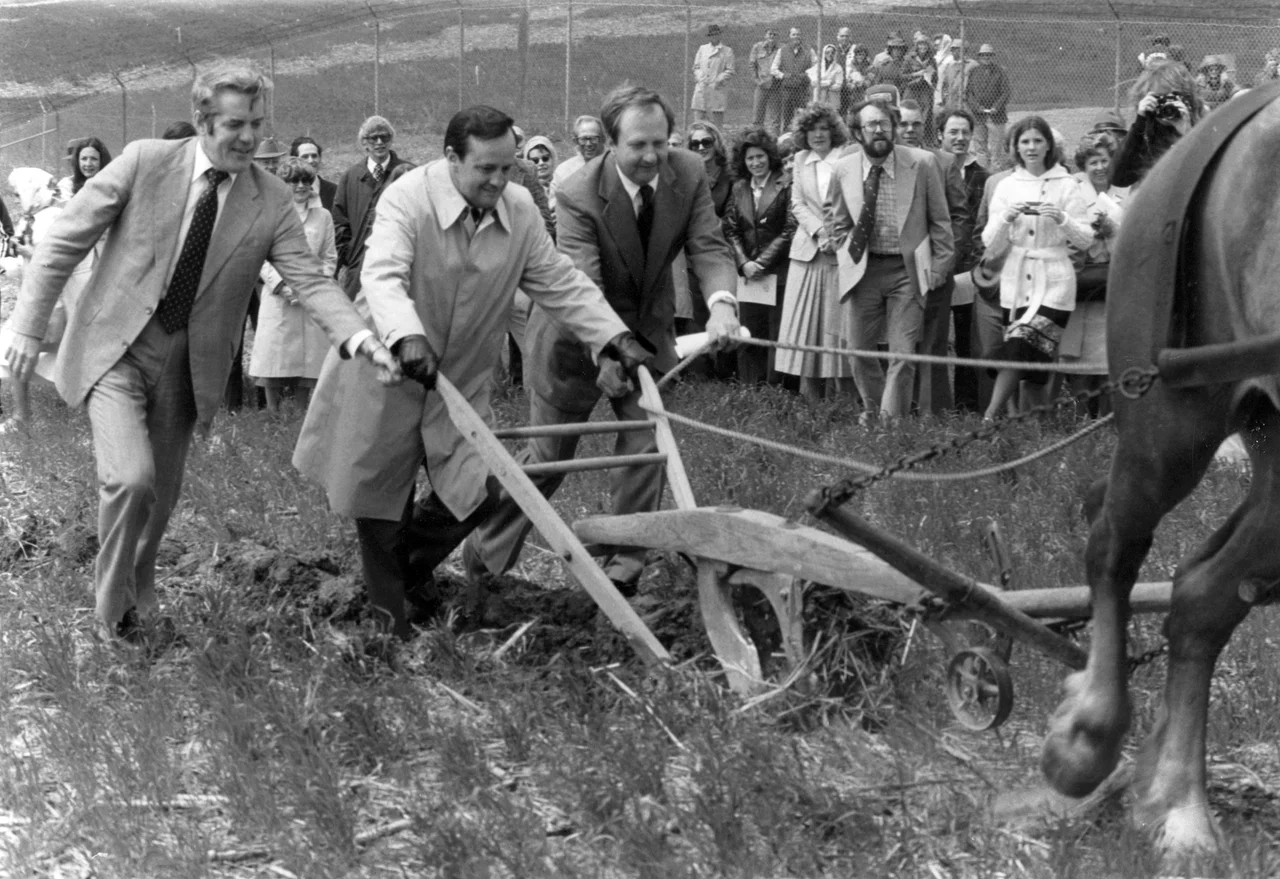
The 16,000-square-foot Infectious Disease Research Facility opened in November 2011, with a $14.1 million Veterinary Medicine Instruction Addition completing in fall 2012. Both buildings - clad, like the rest of the Blacksburg campus, in Hokie Stone - connect directly to the original college complex. Walk between them and the architecture itself tells the story: a vet school grown from a 1980 founding class of 64 into a research enterprise whose ranking by US News reached the upper teens nationally, with the DVM program tied for 17th in 2011. The breaking ground photograph from April 16, 1979 still hangs inside - the date a Virginia-Maryland coincidence that would acquire other meanings later, in Blacksburg, on a different April 16.
From the Air
The Virginia-Maryland College of Veterinary Medicine main campus sits at 37.218 N, 80.428 W on the western edge of Virginia Tech in Blacksburg, at about 2,100 feet elevation. The Veterinary Teaching Hospital and the 2012 instruction building are easily identified by their Hokie Stone exteriors connected to the main college complex. The College Park, Maryland branch lies 250 miles northeast on the University of Maryland campus; the Marion duPont Scott Equine Medical Center is in Leesburg, Virginia (KJYO ramp area). Nearest fields for Blacksburg: Virginia Tech Montgomery Executive (KBCB) less than 1 nm south; Roanoke-Blacksburg Regional (KROA) 25 nm northeast.
Nearby Stories
- Botetourt County, Virginia 12 km away
- Murders of Alison Parker and Adam Ward 13 km away
- Paint Bank, Virginia 16 km away
- 2004 Hendrick Motorsports Aircraft Crash 26 km away
- Appalachian League 27 km away
- Galax, Virginia 28 km away
- Hargrave Military Academy 37 km away
- Beckley, West Virginia 47 km away