.jpg)
Waleswood Colliery
The pit shut in 1948, but the buildings stayed. That is the unusual thing about Waleswood. Most South Yorkshire collieries were swept off the landscape when the seams ran out or the National Coal Board moved on, leaving spoil heaps, brick rubble and a bypass where a winding tower used to stand. At Waleswood, between Swallownest and Wales Bar, a few miles east of Rotherham, the shops and offices and engine sheds of the old mine were quietly absorbed into an industrial estate, and the work of the place simply changed hands.
Coal Beneath the Cornfields
The first shaft went down in the 1860s, when Skinner and Holford Limited gambled on the rich coal measures running beneath this patch of South Yorkshire farmland. The colliery sat hard against the Rotherham to Clowne road and the main line of the Manchester, Sheffield and Lincolnshire Railway, about two miles east of Woodhouse. That geography was the whole point. Coal coming up the shafts could be tipped straight into wagons and rolled away to the steelworks of Sheffield or the gasworks of half a county. By-product coke ovens were added in time, turning waste gas and tar into things saleable on their own. By the early 20th century the colliery was a small industrial town in its own right, with its own railway sidings, its own locomotives, and its own working-day rhythm of shift whistles and clanking trucks.
Pit, Pump, Industrial Estate
In 1947 the colliery passed, along with all the pits of Britain, to the newly-formed National Coal Board. A year later it closed. That sounds like an ending, but Waleswood's underground was tied into a network of neighbouring mines, and water had to be kept out of all of them. The shafts were retained as a pumping station, holding back the flood that would otherwise drown working pits at Kiveton Park and beyond. The coke ovens and by-products plant ran on another fourteen years before they too were finally shut in 1962. Above ground, the substantial brick buildings the colliery had grown into were not knocked down. They were sturdy, they were already served by roads and rails, and they were useful. Light industry moved in. Today the place is an industrial estate where the bones of a Victorian pit are still recognisable in the rooflines.
The Locomotive That Outlived the Pit
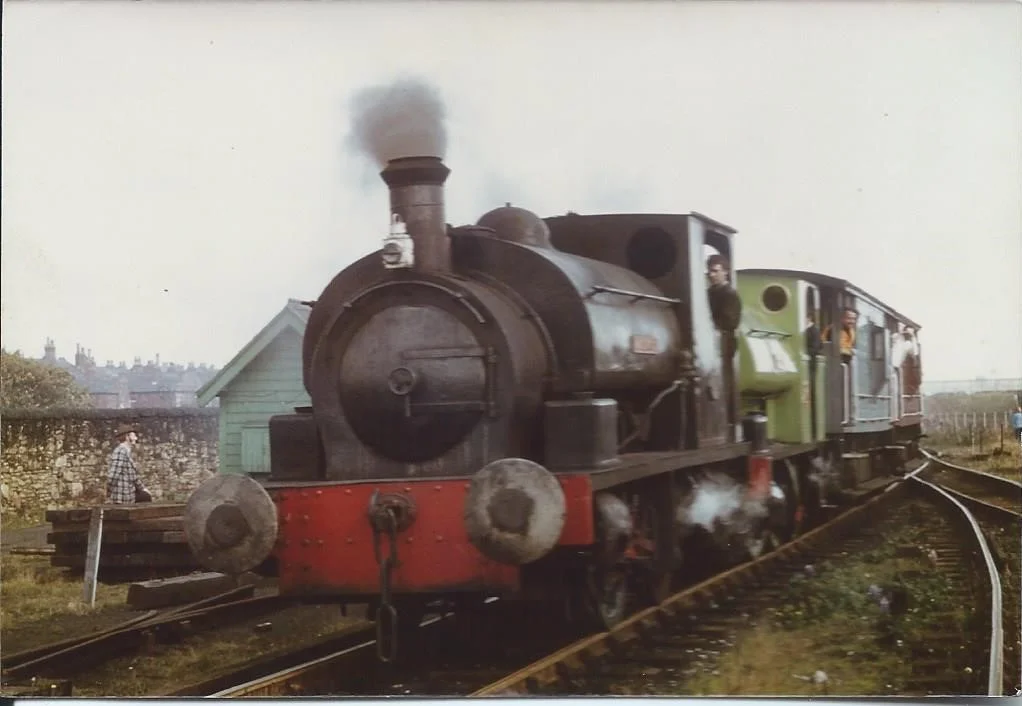
Waleswood ran four steam locomotives during its working life, never more than two at once, and one of them refuses to disappear. A Hudswell Clarke 0-4-0 saddle tank, Works No. 750, arrived in 1906 to replace the original 'Waleswood' engine that had been sold off four years earlier. The new arrival inherited the old nameplates, and the name went with it through a remarkable career. The locomotive moved to Kiveton Park Colliery in 1962, was preserved in 1972, passed through Staveley in Derbyshire and Southport's Steamport Railway Museum, and from 1990 stood at the Battlefield Line Railway at Shackerstone in Leicestershire. There it began a restoration that did not go to plan; the engine spent decades exposed to weather, first at Shackerstone, then at Statfold Barn. In 2016 it changed hands again and went to the Northamptonshire Ironstone Railway at Hunsbury Hill, where a complete overhaul was carried out. By September 2019 it was steaming again for the first time in decades, and it is now based at Peak Rail near Matlock in Derbyshire.
What the Industrial Estate Remembers
There is something quietly Victorian about an industrial estate that started as a colliery. The geometry is wrong for a modern park - the buildings sit too close together, the yards are awkward, gates open onto truck routes that used to be wagon roads. But that geometry is also a kind of memory. The men who walked these yards in pit boots, the cage drivers and the on-setters and the women who took the wages home, are gone. The coke ovens are gone. The seams beneath are full of water now, holding their breath under fields and houses and a railway that still runs east toward Worksop. What remains is a place that knew how to work, and a small green locomotive a hundred miles south that still carries its name on the saddle tank.
From the Air
Located at 53.35°N, 1.30°W in South Yorkshire, between Sheffield and Worksop. Nearest airports: Doncaster Sheffield (EGCN, closed 2022 but landmark) 18 nm NE, East Midlands (EGNX) 35 nm S, Robin Hood / Sheffield City heliport in the area. The site sits in the rolling, faintly post-industrial farmland that runs from the Pennines toward the Trent. Best viewed from 3,000-5,000 ft on a clear day when the geometry of old pit yards stands out against the surrounding fields.
Nearby Stories
- Flixborough Disaster 0.8 km away
- Peveril Castle 1.7 km away
- Newstead Abbey 2.6 km away
- Huddersfield Town Hall 3.8 km away
- Ackworth School 7.9 km away
- RAF Scampton 11 km away
- RAF Cranwell 16 km away
- Croxden Abbey 18 km away