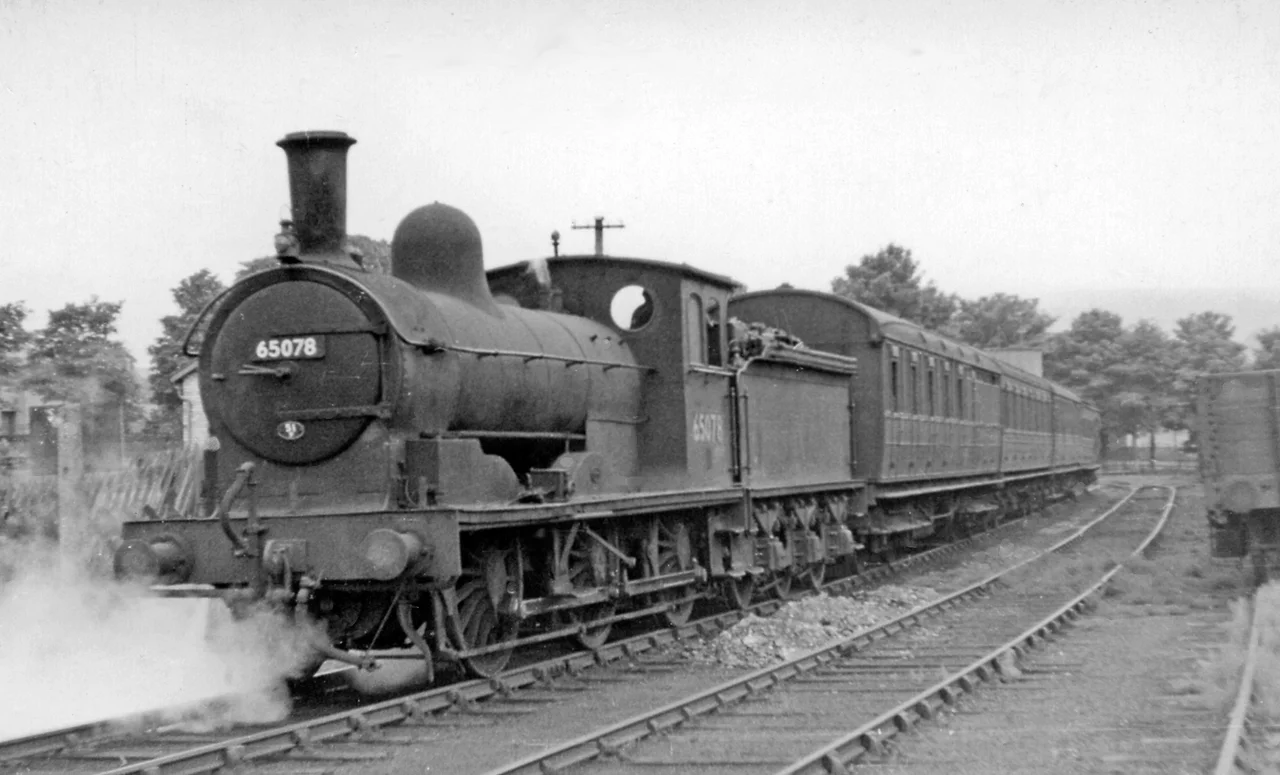

Weardale Railway
Lafarge ran the last freight train out of Eastgate in March 1993 and announced it would move its cement to the road. British Rail had been waiting for an excuse to close the line; it had it now. Within months a group of enthusiasts had organised to take it over. Three decades, two corporate bankruptcies, and one Iowa shortline-railroad takeover later, the Weardale Railway still runs - now under the Auckland Project, a County Durham charity that bought the line in 2020. The 18 miles between Bishop Auckland and Stanhope make it one of the longest preserved standard-gauge heritage lines in Britain.
Built for Limestone
The first track came in 1842, when the Stockton and Darlington Railway-backed Bishop Auckland and Weardale Railway gained powers via an Act of Parliament to push a branch up the dale. South Church got a temporary terminus in April 1842. After the completion of the Shildon Tunnel a permanent station opened to freight on 8 November 1843 and to passengers a few weeks earlier. The line was eventually extended all the way to Wearhead, 25 miles up the dale, to serve the limestone quarries and lead workings of Weardale's industrial peak. Passenger services ended in 1953, victims of postwar bus competition and dwindling population. Freight kept the line alive: the Eastgate cement works, run latterly by Lafarge, sent trains out until 1993. The Stanhope-and-Tyne and the Wear Valley Junction lines had been closed a generation earlier; by the 1980s only the surviving stretch hung on, kept open by cement and the occasional excursion. In 1983, with the patronage of the botanist and television presenter David Bellamy, Durham County Council started running summer specials under the banner of the Heritage Line.
Four Owners, One Track
The preservation society of 1993 became Weardale Railways Ltd. Grants flowed - from One NorthEast, Durham County Council, the Wear Valley District, the Manpower Services Commission - enough to recruit 40 paid staff, restore Stanhope station, and reopen the Wolsingham-to-Stanhope section in July 2004. Seven months later the company went into administration. Ealing Community Transport, a community interest company, paid £100,000 for a 75% stake and underwrote the losses; limited services resumed in August 2006. Two years on, Ealing's stake transferred to British American Railway Services, a subsidiary of the American shortline operator Iowa Pacific Holdings. Iowa Pacific's Ed Ellis declared he would reopen the line to Bishop Auckland by year's end. The plan slipped, but in October 2008 staff and volunteers undertook a "Brush Blitz" - fourteen years of vegetation cleared from the track in a frenzy of brushcutters. Network Rail re-laid the missing points at Bishop Auckland in September 2009, reconnecting the branch to the national network. Regular passenger trains to Bishop Auckland West ran from May 2010 to 2012. Coal trains briefly ran east from Wolsingham to steel works at Scunthorpe and the Ratcliffe-on-Soar power station - until UK Coal's 2013 collapse, triggered by a landslip at Hatfield Colliery and an underground fire at Daw Mill, killed the traffic.
The Auckland Project Era
Iowa Pacific announced it would sell in February 2020. The Auckland Project - the County Durham charity that had transformed Auckland Castle into a regional tourist destination - bought the line in March, intending to fold it into the wider regeneration of Bishop Auckland. Closure for licensing dragged through the pandemic. Services to Wolsingham resumed in May 2022 and to Bishop Auckland in April 2023. Today the line operates on selected weekdays and weekends with DMU trains - some running the full route, some only as far as Wolsingham. A 0-6-0 Sentinel shunter handles driver experience days. Themed services - Dine and Ride, the Polar Express at Christmas - fill in the calendar. A bid to the Restoring Your Railway fund in 2021 looked promising; the Department for Transport allocated business-case money in October 2021. By 2024 the fund had been scrapped and the project to reconnect regular national-network services appeared stalled. The line itself runs. The 18 miles between Bishop Auckland and Stanhope still carry passengers up a dale that lost its limestone trade thirty years ago, past stations the line has lost and won back across decades of administrations and renewals.
From the Air
Coordinates 54.7433N, 2.0031W (Stanhope area, upper end of line). The Weardale Railway runs roughly east-southeast for about 18 miles, from Stanhope down the Wear valley through Frosterley, Wolsingham, Witton-le-Wear and Bishop Auckland West, paralleling the A689. From the air the track is visible as a single-track ribbon following the river south of the road. Best viewed at 1500-3000 ft AGL. Nearest aerodromes: Durham Tees Valley (EGNV) about 25 nm southeast of Stanhope, Newcastle (EGNT) about 25 nm northeast. The line lies within the North Pennines National Landscape.
Nearby Stories
- RAF Ouston 3.9 km away
- Cross Fell 6.1 km away
- RAF Spadeadam 9 km away
- Seaham 10 km away
- Howgill Fells 11 km away
- Mount Grace Priory 14 km away
- Richmond Castle 16 km away
- SM UB-115 22 km away